When a client walks into our shop and asks, “What’s the cost of a steel ball skew rolling mill?” the first thing I don’t do is rattle off a number. I lean in, because that question doesn’t have a one-size-fits-all answer—and that’s exactly why so many buyers end up overspending, or worse, buying a machine that can’t keep up with their production needs. For 12 years, I’ve been selling and servicing these mills, and I’ve learned the hard way: the cost isn’t just the price tag on the machine. It’s the whole picture—from what the mill is built to do, the materials it uses, even how you plan to run it once it’s installed. Let me break this down like I do for every new client. Steel Ball Skew Rolling Mill
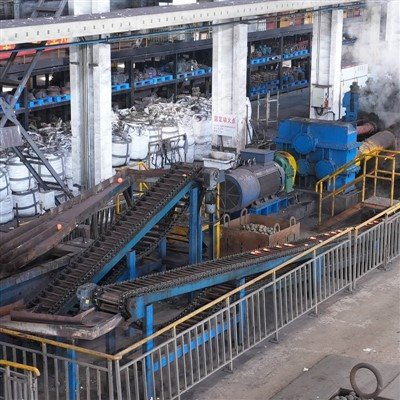
First, let’s start with the core of the machine itself: the skew rolling mill’s construction. These mills work by rotating a steel bar (usually a round bar, sometimes a billet) between two angled rolls, squeezing it into a perfectly spherical steel ball. Cheap mills, the kind you’ll see advertised for $15,000 to $25,000, are often built with thinner cast steel rolls, worn-out hydraulic systems, and basic control panels. Those might sound like a steal at first, but I’ve seen clients have to replace rolls three times in two years because they can’t handle even mild quality steel bars—let alone alloy steel, which is what most manufacturers use for bearings or automotive parts. The mills I build for mid-sized production shops start around $45,000, and that’s because we use forged alloy steel rolls that can last 5 to 7 years with proper maintenance. The frame is heavy-duty welded steel, not thin sheet metal, so it doesn’t vibrate apart when you’re running 200 bars an hour. That $20,000 difference isn’t just markup—it’s the difference between a machine that runs for a decade and one that’s a paperweight by year three.
Next, production capacity is a huge factor most buyers miss. A mill that makes 100 50mm balls per hour is way different than one that makes 1,000 10mm balls per hour. Let’s do the math: if you’re producing bearing balls for a tractor manufacturer, you might need 500 balls an hour, or 4,000 a day. A small, entry-level mill can only do 150 an hour, so you’d have to run it two shifts to keep up—adding labor, electricity, and maintenance costs that end up doubling your total expense. The mills I supply for high-volume production start at $70,000. These have upgraded servo motors, automated feeding systems, and real-time diameter sensors that cut down on waste. A client in Ohio told me last year they saved $12,000 a year in scrap after switching from a $22,000 entry mill to our $72,000 high-capacity model—because the old one was wasting 8% of its bars on misshapen balls, while the new one was less than 1%. For anyone making more than 10,000 balls a week, that difference pays for the extra cost in less than a year.
Then there’s the material flexibility. Not all steel balls are the same. You might need carbon steel for hardware, chrome steel for bearings, or even stainless steel for medical parts. Entry-level mills are usually calibrated for one or two steel types, and if you try to switch, you’ll end up with a lot of scrap, or even damage the rolls. Mid-range mills have adjustable roll gaps and temperature controls that let you switch between materials in under an hour, without recalibrating every part. Specialty mills, the ones that can handle hard alloy steels or small, precise balls (under 8mm) or large balls (over 100mm), start at $90,000. I had a client in Australia who was making grinding balls for mines—those are 120mm, super tough. He tried a cheap mill from another supplier, and it cracked the rolls after two weeks. When he came to me, we built a mill with heat-treated rolls and a reinforced roll housing, and it’s still running three years later. He told me, “I thought I was saving money on the cheap one, but I was replacing rolls every month.” That’s the trap a lot of buyers fall into: the initial price is low, but the hidden costs eat you alive.
Don’t forget about the supporting equipment. A steel ball skew rolling mill doesn’t work in a vacuum. You need a feeder to load the steel bars, a heating furnace to bring the bars to the right temperature (not too hot, not too cold—this is make-or-break for roundness), a trimming machine to cut the balls off the remaining bar, and a quenching tank to harden the balls after rolling. Some suppliers sell the mill alone for $25,000, but if you don’t have a heating furnace, that’s another $10,000 to $20,000. Entry-level furnaces are basic, but if you’re making precision balls, you need a controlled atmosphere furnace (to prevent rust and improve hardness) which adds another $15,000. I always tell clients to budget 30% of the mill’s cost for supporting equipment. If a supplier quotes a mill for $45,000 but says they’ll throw in the furnace for free, be wary—usually that furnace is a cheap, unreliable one that’ll break down in a year. I build our packages with integrated equipment, so the furnace is calibrated to work with the mill, cutting down on setup time and reducing scrap. That means the total cost for a mid-range setup is around $65,000, not $45,000 plus $20,000.
Labor and installation are another hidden cost. A cheap mill might look easy to install, but it requires a trained technician to level it, connect the hydraulic and electrical systems, and calibrate the rolls. If you try to do it yourself, you could damage the machine—and if you don’t calibrate it right, your balls will be off-round, which means they’re useless for most applications. I’ve seen a client spend $2,000 on a cheap mill, then spend $5,000 on a local technician to fix the installation, plus $3,000 in scrap from bad balls in the first month. When we sell a mill, our installation team comes out, trains your operators, and guarantees the machine is running at 95% efficiency within a week. That extra $3,000 in installation cost is worth it, because you’re not losing weeks of production while you figure out the machine.
Maintenance and long-term costs matter too. I’ve had clients come to me after buying a mill from a supplier who’s out of business—when the rolls break, they can’t get replacement parts, so they have to scrap the whole machine. We build our mills with standard, readily available parts, so if a roll needs replacing, you can get a new one in 48 hours, not 3 weeks. The annual maintenance cost for a mid-range mill is around 2-3% of the total machine cost—so for a $60,000 mill, that’s $1,200 to $1,800 a year for oil, roll replacements, and routine checks. A cheap entry mill might have lower initial costs, but its maintenance can be 5-10% a year, because the parts are low-quality and wear out faster. Over 10 years, a $25,000 entry mill would cost you $12,500 in maintenance, plus roll replacements every 2 years, while a $50,000 mid-range mill would cost $12,000 in maintenance and rolls every 6 years. By the end of the decade, you’ve spent almost the same—but you’ve got a much more reliable machine with better balls.
What about customizations? If you’re making balls for a specific application, you might need custom features. For example, if you’re making balls for ball bearings, you need very high roundness (within 0.02mm), so you need a mill with a closed-loop diameter sensor that adjusts the rolls in real time. If you’re making balls for the construction industry, you might need a mill that can handle longer bars to reduce loading time. Custom mills start at $80,000, but for many clients, that’s worth it because it fits exactly their production needs. I had a client in Brazil who was making balls for hydraulic cylinders—they needed balls that were perfectly round, no surface defects. We added a surface inspection camera to the mill, so any bad balls are rejected automatically. That customization cost an extra $5,000, but it cut their inspection labor by 70% and reduced scrap by 5%. For them, that was a no-brainer.
Now, let’s get to the numbers, straight. I’m not going to lie to you: there’s no flat cost. Let’s break it down by category, based on real clients I’ve worked with in the last year:
- Entry-level mills (100-200 balls per hour, single material, basic controls): $18,000 to $30,000. Perfect for small businesses making less than 5,000 balls a week, or hobbyists testing a product line. But know that these require more maintenance, lower capacity, and less flexibility.
- Mid-range mills (200-800 balls per hour, multiple materials, basic automation): $45,000 to $70,000. The sweet spot for most manufacturing businesses—this is what we sell to small to medium automotive or hardware companies. It balances capacity, flexibility, and cost, with a 5-7 year lifespan on rolls.
- High-volume/specialty mills (800+ balls per hour, custom materials, full automation): $75,000 to $120,000. For large mines, bearing manufacturers, or medical equipment makers. These have longer lifespans (10+ years) and lower scrap rates, so they deliver a better return on investment over time.
But here’s the thing: the number on the quote is never the final number. I’ve had a client come to me with a $35,000 entry mill budget, but when we looked at his production needs (15,000 balls a week), the mid-range mill was a better investment. We worked with him on a payment plan, and he told me last quarter that he’s now making $15,000 more a month than before, because he can keep up with orders and has less scrap. That’s the value of taking the time to talk through your needs, not just quoting a price.
A lot of people ask me, “Can I get a good mill for less than $15,000?” Sure, but be prepared for the risks. I had a client in Texas who bought a $12,000 mill for his small hardware business. Within three months, the rolls cracked, and the heating furnace was so bad that 15% of his balls were too soft, so he had to re-quench them, adding labor and energy costs. Total repair and rework costs: $8,000. That’s almost as much as the mill itself. Plus, he lost a big order because he couldn’t deliver on time. So the initial “bargain” ended up costing him way more.
The key is to ask the right questions when you’re shopping. What’s your weekly production volume? What materials do you plan to use, now and in the future? Do you need automated feeding or inspection? Can the mill be serviced locally? If a supplier can’t answer these, or only gives you a price without asking about your needs, they’re not looking out for your business. That’s why I always make time to sit down with a client, look at their current setup, their orders, and their goals, before I put together a quote. Because a mill is a long-term investment, not a one-time purchase. It should help you grow, not hold you back.
If you’re ready to stop guessing about costs, and start investing in a mill that fits your exact needs, reach out to our team. We’ll walk you through every part of the process, answer all your questions, and make sure you get a machine that delivers value for years to come. Don’t waste money on a mill that can’t keep up—let’s build the right solution for your business.
Grinding Equipment References
- Handbook of Metal Forming, Society of Manufacturing Engineers, 2020.
- Industrial Machinery Cost Estimation Guide, National Association of Manufacturers, 2021.
- “Skew Rolling Process for Steel Balls: Efficiency and Quality Considerations”, International Journal of Precision Engineering and Manufacturing, Vol. 18, No. 9, 2017.
Shenyang Muren Machinery Co., Ltd.
As one of the most professional steel ball skew rolling mill manufacturers and suppliers in China, we’re featured by quality products and good price. Please rest assured to wholesale durable steel ball skew rolling mill from our factory. We also accept customized orders.
Address: No.16 Nansan Road, Shenyang Jinhai Economic Zone, Liaoning Province, China
E-mail: mulunjixie@163.com
WebSite: https://www.symurens.com/
