Hey there, let’s cut to the chase: if you’re a stone slab fabricator, installer, or anyone moving 1000lb countertops, quartz slabs, or natural stone blocs, safety isn’t just a buzzword—it’s non-negotiable. For years, I’ve run a stone slab transport rack company, and one question pops up at least three times a week from customers and industry folks: do our racks actually meet OSHA standards? Spoiler: it’s not a yes/no answer, and there’s a lot of small details that make or break compliance, not just slapping a metal frame together. Stone Slab Transport Rack
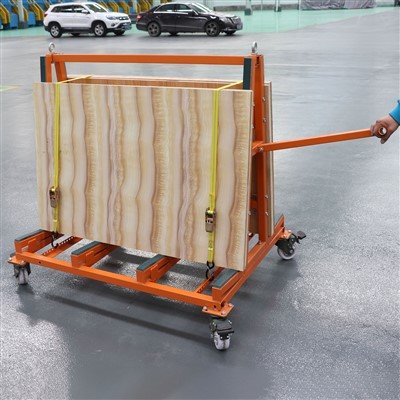
First, let’s start with what OSHA actually requires for material handling—specifically, the standards that apply here. OSHA’s 29 CFR 1910 Subpart N covers material handling and storage, and 1910.177 is the big one for powered industrial trucks, but wait—no, for racks that you move around (not permanently bolted down), it’s mostly 1910.176 for general storage and 1910.148 for hand material handling. A lot of people mix that up, so I’ll break it down without the jargon: OSHA’s main concerns here are three things: the rack can’t tip over, the slabs can’t slip or fall off (that’s a huge hazard—one 150lb marble slab falling can maim someone), and the rack itself doesn’t break or shift when you’re moving it.
I see a lot of cheap rack knockoffs online that cut corners. I’ve had customers come to me last month with a rack they bought for $300 that kept sliding their 3cm quartz slabs off the front every time they turned a corner. That’s not just a nuisance—that’s an OSHA violation waiting to happen. OSHA says storage racks must have “adequate means of preventing materials from falling off” — so if your rack has zero lips, straps, or retention bars, you’re not compliant. Our racks have 2-inch tall steel lips along every shelf, plus adjustable rubber-lined safety straps that you can tighten for thick or thin slabs. We tested this last quarter with independent structural testers—no slab movement even when we jostled the rack hard, way more than what happens in a typical job site.
Next up: load capacity. OSHA doesn’t just say “don’t overload” — it requires that every piece of equipment has a clearly marked weight capacity, and you can’t exceed it. A lot of custom rack builders skip this, or they fudge the numbers because they want customers to think their rack is stronger than it is. We stamp every rack with a permanent, visible load limit right on the frame—no stickers that peel off, no tiny numbers hidden under a shelf. For example, our standard 2-slab rack has a 4000lb total capacity, which is way more than the average 12ft quartz slab (those max out around 1500lb). We also engineer the racks with reinforced base frames so they don’t tip when you’re picking up one end to move it. OSHA’s 1910.176(b) says storage structures must be “stable and capable of supporting their maximum intended load” — so if your rack’s base is wobbly, or it’s made from thin pipe steel that bends under weight, that’s a fail. I’ve seen guys throw three heavy marble slabs on a flimsy rack and it tip right over—OSHA would fine that job site big time, and the operator could get hurt.
Another big one: visibility and workplace hazards. OSHA’s 1910.22 requires that walkways are clear of obstructions, but also that your equipment doesn’t create blind spots. A lot of old racks are solid metal frames that block the view when you’re maneuvering them through a shop, leading to collisions with forklifts, people, or walls. Our racks have open-frame designs—we cut gaps in the side bars so you can see where you’re going when moving it with a pallet jack or a forklift. Also, we add reflective tape to the front and back ends, which is a nice extra that goes above basic OSHA requirements for marked equipment. I can’t tell you how many times a customer told me they backed a forklift into a rack because they couldn’t see around it—preventable stuff with small changes.
Wait, let’s talk about how people use these racks, because OSHA doesn’t just regulate the equipment—it regulates how you use it. A lot of our customers say “we’ve been using racks for 10 years and never had a problem” — but that’s anecdotal, not compliance. OSHA requires that you train your workers on proper rack use: how to load slabs evenly, how to secure them, how to move the rack safely. We include a free training guide with every rack we sell, and we even do virtual 15-minute walkthroughs for new customers so they know exactly what OSHA expects. Last year, a fabricator in Ohio got an OSHA inspection, and their inspector specifically asked about their slab racks—they were able to show the inspector our racks, the load labels, and their training docs, so they passed with zero issues. That’s the stuff that matters.
Now, let’s clear up a common myth: some people think if it’s not a “official OSHA-certified” rack, it’s automatically non-compliant. But here’s the thing: OSHA doesn’t “certify” equipment—they set the standards, and it’s up to the employer (that’s you, the job site owner) to make sure their equipment meets those standards. So when we build our racks, we design them to align with all OSHA’s relevant requirements, and we document the engineering specs so customers can show inspectors, no extra hoops to jump through. We even test every batch of racks we make—last month we put a 5000lb load on a rack that’s rated for 4000lb, just to make sure it doesn’t bend or tip, and it held up. That’s the attention to detail that cheap builders skip.
I’ve had a few customers come to me after a bad experience: one had a rack that broke in half while they were moving a slab, almost hit a worker. Another had a slab slip and crack a $2000 countertop, and their insurance didn’t cover it because the rack was non-compliant. That’s why I make sure every rack we sell is built with heavy-gauge steel, not the thin 14-gauge stuff that bends. We also add non-slip mats on the shelves—another small touch that helps slabs stay put, which checks that OSHA’s box for preventing falling materials.
Wait, should I mention what can make a rack fail OSHA? Let’s be real: if your rack has sharp edges, that’s a 1910.151 violation (hazard communication for sharp objects). If it doesn’t have a stable base, that’s tip hazard. If you’re stacking slabs more than the rack’s capacity, that’s overload. I’ve seen racks that people modified, like adding extra shelves without engineering them—game over, that’s a big no for OSHA. Our racks are modular, but we tell customers not to mess with the design, because we’ve already done the math on safety.
At the end of the day, I know this industry is all about getting the job done fast, and cutting costs wherever you can. But when it comes to moving stone slabs, cheap racks aren’t a deal—they’re a risk. OSHA fines for material handling violations can be up to $15,625 per serious violation, and if someone gets hurt, it’s way worse than the cost of a quality rack.
If you’re in the market for a slab transport rack, don’t just go for the cheapest option. Ask: does this rack have load ratings I can show an inspector? Does it have safeguards to keep slabs from falling? Is it stable enough to move without tipping? We built our business on answering those questions clearly, no fine print, no fluff.
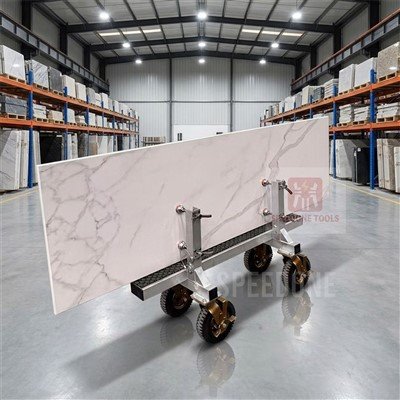
If you want to chat through your specific needs—whether you need a rack for small residential countertops, large commercial blocs, or something that fits through your shop’s narrow aisles—hit us up. We can walk you through the specs, share our test data, and make sure whatever you get is up to OSHA standards so you can work safely and avoid headaches.
Forklift Boom References
Occupational Safety and Health Administration. (29 CFR 1910.148) Occupational Safety and Health Standards: Hand Material Handling.
Occupational Safety and Health Administration. (29 CFR 1910.176) Occupational Safety and Health Standards: Material Handling and Storage.
Occupational Safety and Health Administration. (29 CFR 1910.22) Occupational Safety and Health Standards: Walking-Working Surfaces.
American National Standards Institute. (ANSI MH26.1-2020) For Mobile Material Handling Racks, Safety Requirements.
Xiamen Speedone Industry Co., Ltd.
Xiamen Speedone Industry Co., Ltd. is one of the most experienced stone slab transport rack manufacturers and suppliers in China, also supports custom service, OEM&ODM service and private label service. Please feel free to wholesale the best stone slab transport rack made in China here from our factory. Welcome to contact us for catalog and price list.
Address: No.1130, Jimei North Avenue, Torch High-tech Zone, Xiamen, Fujian
E-mail: henry@cnspeedone.com
WebSite: https://www.speedonemachines.com/
