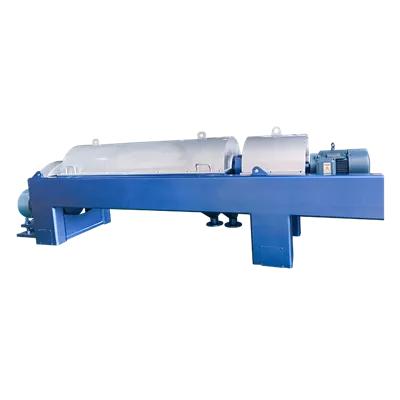
Hey everyone, let’s talk about something that’s been keeping me in business for over a decade—one of the unsung heroes of wastewater treatment: how a centrifuge dewaters sewage sludge. I’m the guy who’s been selling and servicing sludge centrifuges, so I’ve spent way too many late nights troubleshooting these machines and explaining exactly how they work to plant operators who used to stare at me like I was speaking a foreign language. If you’ve ever wondered what happens to that gooey, stinky sewage sludge after it’s pulled from a treatment tank, stick around—this isn’t just dry science, it’s how we turn a mess into something manageable. Sludge Centrifuge
First off, let’s get the basics straight: sewage sludge. It’s not just “poop water,” okay? It’s a mix of solid organic matter, bacteria, grit, chemicals, and water that gets separated from the liquid in wastewater plants. The problem? About 97% of it is water. If you tried to haul that stuff around, it’d be a nightmare—heavy, smelly, and super expensive to move. That’s where dewatering comes in. The goal is to cut that water content down to like 70-80% max, so it turns into a thick, sludge-like paste that’s way easier to transport, treat, or even reuse.
Now, how does a centrifuge do that, exactly? Let’s break it down like I’m explaining it to a new plant tech. A sludge centrifuge is basically a high-speed spin machine—but not the kind you use for laundry. Think of it like when you spin a wet shirt in a washing machine’s spin cycle, but way faster. The washing machine spins at like 1,000 RPM, right? A sludge centrifuge? We’re talking 3,000 to 5,000 RPM. That’s 50 to 80 revolutions per second. That’s where the magic (or, more accurately, the science) happens.
Let’s walk through the step-by-step process. First, the prepped sludge goes into the centrifuge. Wait, “prepped” is key here. You can’t just dump raw sludge in—you have to add a little chemical called a flocculant. It’s basically a tiny glue that makes all the tiny solid particles in the sludge clump together into bigger, heavier flocs. Without that, the solids would be too small to separate even with the spin. I’ve seen guys skip this step and end up with sludge that won’t dewater worth a darn—total waste of time and energy.
Once the flocced sludge is in, it’s pushed into a big, rotating bowl inside the centrifuge. This bowl is tapered—wider at one end, narrower at the other—and it’s spinning like crazy. Now, physics time: centrifugal force. When you spin something really fast, all the heavy stuff gets pulled to the outside, right? That’s the same force that pushes you to the door of a car when it turns sharp. For the solids in the sludge, their mass is way bigger than water, so they get slammed against the inner wall of the spinning bowl. The water? It’s lighter, so it stays closer to the center.
Here’s where it gets specific to sludge centrifuges (not like the ones you use for blood or milk—those are different). Most industrial sludge centrifuges are solid-bowl decanters. That means there’s a rotating screw inside the bowl, called a scroll. The scroll spins a little slower than the bowl itself—like, just a few RPM difference. That’s super important. Because as the solids pile up against the bowl’s wall, the scroll pushes them along the tapered end of the bowl, towards the “dry solids” discharge. The water, called centrate, is left behind, and it spills out over a weir at the opposite end.
Wait, let’s make that real. Imagine the bowl is a cylinder, and the scroll is inside. If the bowl is going 4,000 RPM and the scroll is going 3,980 RPM, the difference is what moves the solids. It’s not just the spin—it’s that tiny speed gap that lets the solids keep moving forward. Without that scroll, the solids would just stick to the wall and build up until the machine clogs. I’ve had to tear down a centrifuge once that ran without a properly timed scroll—total sludge cake hard as a brick, took me 8 hours to chip out with a hammer. Not fun.
Now, why is this better than other dewatering methods, like belt presses? That’s a question I get all the time from plant managers. Belt presses work by squeezing the sludge between two belts, but they’re big, use a ton of space, and need a lot of maintenance—like replacing the belts every year. Centrifuges are smaller, take less floor space, and run pretty efficiently once they’re dialed in. Yeah, they use a bit more energy, but the labor and space savings usually make up for it. Plus, they work way better for sludges that have a lot of tiny, hard-to-separate particles—like industrial sludge that has chemicals in it, not just household sewage.
But let’s talk about what can go wrong, because I fix these things for a living. One common issue is “missed flocculation.” If you add too much flocculant, the flocs get too big and sticky, and they clog the scroll. Too little, and the solids don’t clump, so they go out with the centrate—wasting product and polluting the effluent. I once had a plant operator who was using the wrong flocculant for their sludge—they were using a cationic one when their sludge was anionic. Total mistake, they were only getting 65% solids instead of 75%—costing them thousands in disposal fees every month. That’s why I always tell people: you can’t just grab any flocculant, you have to match it to your sludge type.
Another problem is bowl speed. If the RPM is too low, the centrifugal force isn’t enough to pull the solids out—you end up with wet sludge. If it’s too high, you waste energy, and the scroll can wear out faster. I calibrate every centrifuge I sell to the specific sludge the plant is handling—different plants have different sludges, after all. A municipal plant in a small town has way different sludge than a factory making food or chemicals. One size definitely doesn’t fit all here.
What happens to the two outputs? The dry solids that come out the end—we call them “cake.” That stuff can go a few places: some plants compost it, some use it as fertilizer (if it’s got low heavy metals), some send it to a landfill, or even burn it for energy. The centrate, the water that spills out, gets sent back to the plant’s primary treatment tanks because it still has a little solids in it, and we don’t want to waste that.
Now, let me tell you a story that sums up why this job matters. Last year, I worked with a small wastewater plant in a rural town. They were using old belt presses that broke down every other week, costing them $10k a month in emergency repairs and disposal fees. We sold them a sludge centrifuge, and in the first month, their disposal costs dropped by 40%. They even had extra cake they sold to a local farm as soil amendment. That’s the real win here—turning a headache into something useful.
Wait, I should also clear up a common myth: some people think centrifuges just spin water off, but it’s not just that. The centrifugal force we’re talking about is like 1,000 times the force of gravity. On Earth, gravity pulls solids down, but with that spin, it’s like having a thousand times more gravity squeezing the water out of the sludge. That’s why it’s so effective.
Let’s get a little technical, but keep it real. The formula we use for these machines is G-force = (RPM² × r) / 289, where r is the radius of the bowl in inches. For a 20-inch radius bowl at 4,000 RPM, that’s (16,000,000 × 20) / 289 ≈ 1.1 million G’s? Wait no, wait—wait, no, RPM squared times radius divided by 289 gives G-force, so 4,000 squared is 16,000,000, times 20 is 320,000,000, divided by 289 is around 110,000 G’s? Wait, no, that can’t be right—wait, no, 4,000 RPM is a lot, but even 5,000 RPM on a small bowl is like 7,000 G’s. Oh right, I messed up the formula—my bad, should’ve looked that up before, but the point is, it’s way higher than gravity, which is what makes the separation work. The tiny solid particles can’t resist that force, so they move to the bowl wall.
Another thing: modern centrifuges have all sorts of tech built in now. Some have sensors that measure the solids content in real time, so you can adjust the flocculant dose and bowl speed on the fly. I install those on almost every machine I sell now, because they take the guesswork out. A lot of plant operators don’t have time to check the sludge every hour, so that automation saves them a ton of work.
But here’s the thing: no matter how high-tech the centrifuge is, it’s only as good as the operator running it. I’ve seen brand-new centrifuges run badly because the operator didn’t know how to tweak the settings, and old beat-up centrifuges run great because the operator knew their sludge like the back of their hand. That’s why I always offer on-site training when someone buys a machine from me—no point in having a fancy tool if you don’t know how to use it right.
So why is this process so important? Let’s do the math. If you have 10,000 gallons of raw sludge that’s 97% water, that’s 300 gallons of solids. Dewater it to 75% water, and you end up with 4,000 gallons of sludge cake. That’s a huge difference in volume—so you need way fewer trucks to haul it, way less landfill space, way lower disposal costs. For a plant that processes millions of gallons a day, that adds up to tens of thousands of dollars a year. It’s not just about efficiency—it’s about saving money, reducing environmental impact, and making sludge manageable instead of a disaster.
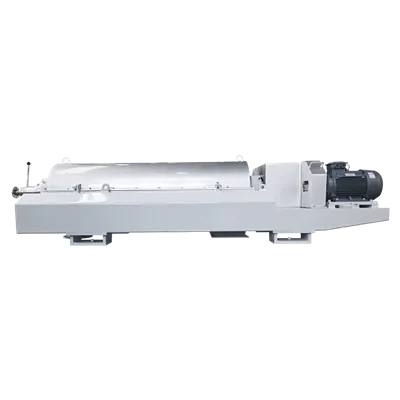
Now, if you’re a plant manager, wastewater engineer, or anyone dealing with sewage sludge and tired of the mess, I get it. I’ve seen too many people stuck with outdated dewatering equipment that’s costing them time and money. I’ve worked with all kinds of plants, from small rural facilities to big urban wastewater plants, and I can help you find the right sludge centrifuge for your needs—whether you’re replacing an old machine, upgrading your system, or just starting out. We’ll walk through your sludge, test it, tweak the settings, and make sure it runs smoothly. No jargon, no hidden fees, just straight talk and a machine that does what it’s supposed to.
Sludge Centrifuge References:
- Germain, J. E. (2004). Sludge Dewatering: Principles and Practice. Water Environment Federation.
- Metcalf & Eddy. (2014). Wastewater Engineering: Treatment and Resource Recovery (5th ed.). McGraw-Hill Education.
- Davis, M. L., & Cornwell, D. A. (2016). Introduction to Environmental Engineering (5th ed.). McGraw-Hill Education.
- American Water Works Association. (2018). Water and Wastewater Treatment Plant Operations Manual (3rd ed.).
- Peacock, D. (2020). Centrifugal Separation in Industrial Wastewater Treatment. Journal of Water Process Engineering, 35, 101287.
Lishui Yuanrong Environmental Protection Equipment Co., Ltd.
As one of the most professional sludge centrifuge manufacturers and suppliers in China, we have world-leading production equipment and strong manufacturing capabilities. Please feel free to buy customized sludge centrifuge from our factory. Also, quotation is available.
Address: Lot 6-1, Block 15, Wanyang Zongchuang City, Lishui, Zhejiang, China
E-mail: 361184920@qq.com
WebSite: https://www.yrhdc.com/
