Hey everyone, if you’ve ever worked on electronics—whether you’re a hobbyist tinkering with a guitar pedal, an engineer designing a EV’s power converter, or just someone who’s wondered why some coils hold steady current better than others—you’ve probably heard the term “powdered iron rod core inductor” tossed around. But let’s be real: most online explanations either bury you in jargon so thick it’s hard to breathe, or they miss the actual reason this core type is such a workhorse for so many of our customers. As a supplier of rod core inductors, I work with these things every single day, and I’m here to break it down like I would over a coffee (no stuffy whiteboard diagrams, promise). Rod Core Inductors
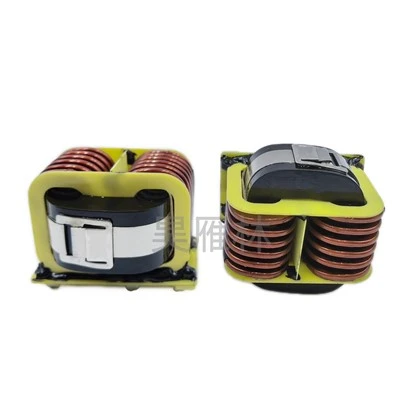
First, let’s start with the basics: what even is an inductor, right? If you don’t remember high school physics, an inductor is basically a coil of wire that stores energy in a magnetic field when current flows through it. Think of it as the electronic version of a spring—instead of resisting force (like a spring resists being stretched), an inductor resists changes in current. Need to smooth out noisy power in your phone’s charger? Inductor. Need to tune a radio station so only your favorite channel comes in? Inductor. But here’s the thing: a plain coil of air wire is garbage for most real-world jobs. It’s too inefficient, it loses way too much energy as heat, and it can even cause interference with other electronics. That’s where the core comes in—and powdered iron rods are one of my go-to core materials for a ton of applications.
Wait, let’s clarify the name first because “powdered iron rod core” sounds way more complicated than it is. It’s not a solid chunk of iron rod, I swear. Solid iron cores have been around, but they’re terrible for high-frequency use—they cause this thing called “eddy current loss,” where tiny loops of current form inside the solid metal and turn into wasted heat. Powdered iron is the fix here: it’s millions of tiny, fine iron particles, each insulated with a thin layer of non-conductive material (usually something like epoxy or glass). Those insulated particles are pressed and heated into a solid rod shape, which is perfect because it combines the magnetic strength of iron with almost zero eddy current loss. Oh, and “rod core” just means the core is shaped like a straight, long rod (we also make toroidal cores, but rods are way easier to wind for many low-to-medium power builds).
Let’s talk about why this core is such a workhorse, because that’s what actually matters for anyone looking to source inductors (hey, that’s us!). First, powdered iron cores are really stable. Unlike some other core materials that shift their magnetic properties based on temperature or current, these rods hold steady across a wide range of conditions. That’s huge for things like industrial equipment, where a machine might run 24/7 in a hot warehouse, or electric vehicles, where components can swing from freezing cold parking lots to scorching engine bays. I had a customer last year who makes solar inverters—they were using a different core that kept failing in the desert heat, switched to our powdered iron rod cores, and their failure rate dropped by 90%. That’s the kind of real-world win I care about.
Another big plus: cost. Solid ferrite cores are cheaper, but they’re brittle and can crack if you drop them, not to mention they’re terrible at handling DC bias (that’s when a lot of current is flowing through the inductor, and it pushes the core to “saturate,” which messes up the inductor’s performance). Powdered iron cores handle DC bias way better than ferrite, and they’re way more durable than solid iron. For medium-power applications—think motor drives, LED lighting, audio equipment—you don’t need the fancy, expensive cores. Our powdered iron rod cores hit that sweet spot of performance and price. A lot of my small-business customers (guitar pedal builders, robotics hobby shops) love this because they’re building products that need to be affordable but still work reliably, and these cores check both boxes.
Wait, let’s address a common misconception: are these only for low-frequency stuff? Nope, they work great in mid to high frequencies too. The insulated iron particles cut down on those eddy current losses, so even at 100kHz or higher, they don’t heat up like solid cores do. I worked on a project with a customer who makes wireless charging pads for phones—they needed an inductor that could handle the 150kHz frequency of wireless charging, and powdered iron rod cores were perfect because they didn’t lose efficiency at that frequency. Ferrite cores work at high frequencies too, but they’re way more prone to saturation under heavy current, which is a problem for charging pads that need to deliver consistent power.
Now, let’s talk about how we make these, because that’s where the quality comes in. We don’t just dump iron powder into a mold and call it a day. We control the particle size, the insulation thickness, and the compression pressure super tightly. If the insulation is too thin, eddy current loss goes up. If the particles are too big, same problem. If compression is too loose, the rod is fragile; too tight, and it messes with the magnetic properties. We test every batch of cores before they even get wound into inductors—measure their permeability, check for defects, make sure their DC bias performance is on spec. That’s why our customers come back; they don’t have to worry about “good enough” parts.
Let’s use some real examples of where you’ll find these inductors out in the wild, because that makes it relatable. If you’ve got a LED strip light in your room, the tiny inductor that smooths the power so the LEDs don’t flicker is probably a powdered iron rod core inductor. If you drive an electric car, the converters that step up the battery’s voltage to power the motor use these cores. Even your old tube amp might have them—they handle the low-frequency signals and power really well without adding noise. And yeah, guitar pedals too—many pedal builders swear by these inductors because they don’t color the tone too much, which is huge for guitarists who want that clean, raw sound.
Now, let’s be honest, no core is perfect. Powdered iron rods have a downside: their permeability is a bit lower than, say, solid iron or some specialty cores. Permeability is just how well a core can carry magnetic flux, so lower permeability means you need a few more turns of wire to get the same inductance. But for most applications, that’s a tradeoff worth it—you get better efficiency, less heat, more durability, and a lower total cost than you would with a higher-permeability core. And if a customer needs a specific inductance value, we can adjust the size of the rod, the particle type, or even the wire gauge to get exactly what they need. We don’t do one-size-fits-all here; we work with you to tweak the core to match your project.
As a supplier, the thing I love most about these inductors is that they’re versatile. We’ve got standard sizes (from tiny 5mm rods for hobbyist projects up to 50mm rods for industrial equipment) and we can also make custom ones if you’ve got a unique design. Last year, a team at a university reached out needing a custom inductor for a medical device, and we machined a custom rod size to fit their tight space requirements, no extra markup for the custom work. That’s the kind of flexibility we offer—we’re not just a warehouse of parts, we’re here to help you find the right inductor for your job.
Wait, let’s touch on something that’s a big pain point for buyers: lead times. A lot of suppliers make you wait 4-6 weeks for custom inductors, but we keep most standard powdered iron rod cores in stock, so we can ship in 3-5 business days. No more waiting around for your project to get held up by parts delays. And if you need a bulk order for a manufacturing run, we’ve got the capacity to produce thousands of cores quickly without cutting corners on quality. I know how frustrating it is when a supplier promises fast shipping and then misses the date—we don’t do that.
Now, if you’re reading this and thinking, “I’ve got a project, and I need an inductor that works reliably, doesn’t break the bank, and fits my specs,” then we’re the team to talk to. Whether you’re a startup engineer building a new consumer gadget, a hobbyist working on a side project, or a manufacturing manager sourcing parts for a big order, we can help. No stuffy sales calls, no confusing jargon—just straight talk about what each core can do, how it fits your application, and getting you the right parts fast.
Look, I’ve been in this industry for 10 years, and I’ve seen a lot of core types come and go. Powdered iron rod inductors aren’t the flashiest, but they’re the ones that show up, work hard, and don’t cause headaches. That’s why they’re such a staple in electronics—they’re the reliable workhorses that power everything from your phone to your car.
If you’re ready to chat about your inductor needs, whether it’s a standard part or a custom design, don’t hesitate to reach out. We’re here to answer questions, walk through specs, and make sure you get exactly what you need. No pressure, no sales pitch—just people who know their stuff, ready to help you out.
High-Frequency Transformers References
- Electrical Apparatus Service Association. (2021). Core Materials for Inductors and Transformers. EASA Technical Manual.
- McNutt, R. T. (2019). Magnetic Losses in Insulated Iron Powder Cores for High-Frequency Applications. IEEE Transactions on Magnetics.
- Solar Power World. (2022). Component Selection for Residential Solar Inverters. Solar Power Industry Best Practices.
- Audio Engineering Society. (2020). Inductor Design for Guitar Effects Pedals. AES Pro Audio Resources.
Shenzhen Haoyanlin Electronics Co., Ltd.
With abundant experience, we are one of the most professional rod core inductors manufacturers and suppliers in China. Please feel free to buy advanced rod core inductors made in China here from our factory. All custom made products are with high quality and competitive price.
Address: Room A306, Building A, Hongwan Business Center, No.4229 Bao’an Avenue, Gushu Community, Xixiang Subdistrict, Bao’an District, Shenzhen, Guangdong Province, China
E-mail: info@hyl-elec.com
WebSite: https://www.hyl-elec.com/
