When I first started working as a technical sales lead for a TPE supplier that specializes in SBS- and SEBS-based thermoplastic elastomers, I didn’t realize how often I’d get the same question: “Is your TPE safe for food packaging?” It’s a fair question—anyone buying materials that will touch food needs to be confident they won’t leach harmful chemicals, degrade prematurely, or compromise the safety and quality of the food inside. Over the past seven years, I’ve sat across from food packaging engineers, QA managers, and brand owners who all share this core concern, and I’ve learned that answering it requires more than just a yes or no. It means breaking down what SEBS TPE is, how it’s regulated, what makes it a good fit for food contact, and the steps our team takes to ensure every batch meets the strictest standards. TPE–(SBS / SEBS based)
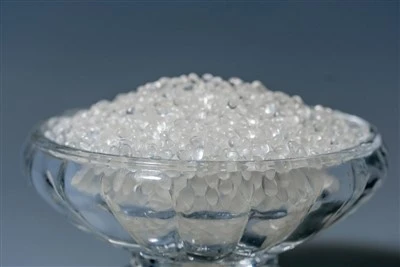
First, let’s get back to basics. SEBS (Styrene-Ethylene-Butylene-Styrene) is a block copolymer derived from SBS (Styrene-Butadiene-Styrene), where the butadiene block is hydrogenated to eliminate double bonds. That hydrogenation is a game-changer for its performance: it gives SEBS TPE (Thermoplastic Elastomer) excellent flexibility, durability, resistance to UV light, heat, and chemicals, and most importantly, stability when exposed to the conditions common in food processing and storage. Unlike traditional rubber, which requires vulcanization (a process that uses cross-linking agents, accelerators, and other additives that can pose food safety risks), SEBS TPE is a thermoplastic, meaning it can be melted and remolded without chemical curing. That doesn’t mean it’s free of additives, though—this is where food safety gets really specific.
The additives used in SEBS TPE formulations are non-negotiable when it comes to food contact. We don’t cut corners here. For every food-grade TPE we produce, we only use additives that are explicitly listed in regulatory standards: things like plasticizers, stabilizers, and pigments that have been tested and approved for contact with food. For example, primary antioxidants like Irganox 1010 and secondary antioxidants like Irgafos 168 are used to prevent the TPE from degrading during processing and use, and these are proven safe for food contact when used within specified limits. We also avoid phthalates entirely—phthalates are plasticizers linked to potential health risks, and many regions have banned their use in food contact materials, so our formulations are 100% phthalate-free. That’s a non-starter for us, not just because it’s required, but because our customers deserve materials they can trust.
Regulation is the backbone of food safety for packaging materials, and different regions have different rules that we adhere to strictly. In the United States, the FDA (Food and Drug Administration) sets standards under 21 CFR (Code of Federal Regulations) Part 177, which covers indirect food additives—materials that come into contact with food. For SEBS-based TPE, the relevant sections are 21 CFR 177.1520 for olefin polymers and 21 CFR 177.1500 for rubber articles, as long as the additives used meet the requirements of Part 178. Our third-party test lab, which is accredited by the Global Food Safety Initiative (GFSI), runs migration testing on every food-grade batch to ensure that when the TPE is exposed to food simulants (like water, acid, alcohol, and fat, which mimic different types of food), no harmful substances leach into the simulant at levels above the FDA’s limits. We keep these test records on file for every customer, so if they ever need to show compliance to their own auditors, we can provide them immediately.
In Europe, the rules are even more prescriptive in some ways, governed by EU Regulation 10/2011 on plastic materials and articles intended to come into contact with food. This regulation lists all authorized substances for use in plastic food contact materials, including those used in SEBS TPE, and sets specific migration limits (SMLs) for each. We also test against EU’s European Food Safety Authority (EFSA) guidelines, which have rigorous safety assessments for additives. For customers in Asia, we comply with China’s GB 4806 series of standards for food contact materials, which are aligned with international best practices, as well as Japan’s JFS standards. The key here is that we don’t just pick one region’s rules and call it good—we tailor our formulations to meet the specific requirements of the end market our customer is operating in. For example, a batch of SEBS TPE destined for food packaging in the U.S. will have a slightly different additive profile than one for use in Japan, but both will pass all required safety tests.
A common misconception I hear is that all TPEs are the same when it comes to food safety. That couldn’t be further from the truth. SBS-based TPEs, for example, are not hydrogenated, so they have double bonds in their polymer structure. This makes them more prone to oxidation when exposed to heat, light, or food components, which can lead to discoloration, brittleness, and potentially the leaching of degraded compounds. That’s why SEBS is preferred for food packaging applications—its hydrogenated structure is far more stable. But even SEBS TPE isn’t inherently food-safe; it all comes down to the formulation and the manufacturing process. Some low-quality TPE suppliers cut costs by using untested additives or regrind materials that may have been contaminated, which can compromise safety. We never use regrind for food-grade TPE—every batch is made with virgin, high-purity SEBS polymer and approved additives, processed in a cleanroom environment to prevent cross-contamination with non-food-grade materials. That’s a level of control that’s non-negotiable for us.
So where is SEBS TPE used in food packaging? The applications are diverse, which is why our customers range from snack food manufacturers to produce packagers to kitchenware brands. Some of the most common uses include seals and gaskets for food containers—think the rubber ring on a glass mason jar or the lid of a plastic food storage container. These parts need to be flexible enough to create an airtight seal, durable enough to withstand repeated use in dishwashers or freezers, and safe enough to touch food. We also make grip inserts for snack packaging, like the rubberized part on a yogurt cup lid that makes it easier to open, or the packaging for fresh produce that helps prevent bruising. SEBS TPE is ideal here because it’s soft to the touch, tear-resistant, and doesn’t leave a bad smell or taste in the food. Another growing application is in flexible food packaging films, where SEBS TPE is blended with polyolefins to improve flexibility and seal strength without the need for harmful plasticizers.
I recently worked with a startup that makes plant-based meat products, and they were struggling to find a sealing material for their packaging that could withstand the freezing temperatures required to keep their product fresh. They’d used a different type of TPE before, but it cracked after a few freeze-thaw cycles and leached a slight chemical odor into the meat, which made customers complain. We recommended a custom-formulated SEBS TPE that’s tested for low-temperature flexibility and meets FDA and EU food contact standards. The startup tested it, and not only did it seal perfectly at -20°C, but there was no odor migration at all. That’s the kind of problem-solving we do every day—helping customers balance performance, cost, and safety without cutting corners.
Of course, no material is 100% perfect, and it’s important to acknowledge the limitations of SEBS TPE for food packaging. For example, SEBS TPE is not suitable for use in high-temperature applications above 120°C, unless it’s specially formulated with heat stabilizers, and even then, it’s not ideal for repeated sterilization like autoclaving. It also isn’t recommended for use with very fatty foods at high temperatures, as fats can penetrate the material over time. We always work with our customers to match the right SEBS TPE formulation to their specific application conditions, so they don’t waste time or money on a material that isn’t suited to their needs. If a customer needs a material that can withstand autoclaving, we’ll recommend a different food-grade polymer, but if SEBS TPE fits the bill—flexible, durable, safe, cost-effective—we’ll be their go-to supplier.
Another key part of our safety process is traceability. Every batch of food-grade SEBS TPE we produce has a unique batch number, and we keep detailed records of every step of manufacturing: the raw material suppliers, the amount of each additive used, the processing parameters, and the results of all safety tests. If a customer has a question about a batch, we can pull up that record in minutes and share it with them. This level of transparency is critical in the food industry, where brand reputation is on the line. No customer wants to be in a position where they can’t prove their packaging material is safe, so we make it as easy as possible for them to get the documentation they need.
I’ve also seen how third-party audits can reinforce the safety of our materials. We regularly undergo audits by food safety organizations to verify our manufacturing processes and test results, and many of our customers require these audits as part of their supplier qualification process. Last year, a large U.S. grocery chain came to audit our facility, and they were impressed not just by our test results, but by our entire approach to food safety—from the way we store food-grade raw materials in separate, labeled bins to the training our production team receives on avoiding cross-contamination. That audit led to a three-year contract with them for SEBS TPE used in their store-brand food storage containers, which was a big win for our team.
When people ask me “Is SEBS TPE safe for food packaging?” my answer is always a qualified yes—but with the right formulation, testing, and regulatory compliance. It’s not a generic yes for every SEBS TPE on the market, but for the food-grade SEBS TPE we produce, the answer is clear: it’s safe. But don’t just take my word for it. Look at the test results, the regulatory approvals, the batch records. Talk to our customers who have been using our materials for years without any safety issues. We don’t just sell a material—we sell peace of mind, knowing that the packaging is not only performing well, but also protecting the food and the people who eat it.
If you’re in the food packaging industry and you’re looking for a reliable, safe SEBS- or SBS-based TPE for your next project, we’d love to hear from you. Whether you need custom formulations, compliance documentation, or technical support to find the right material for your application, our team is here to help. Reach out to our sales team to discuss your needs and get a sample of our food-grade SEBS TPE to test for yourself. Food safety isn’t something we leave to chance—it’s the foundation of everything we do, and we’re committed to helping our customers build packaging that’s safe, durable, and effective.
TPU – Thermoplastic Polyurethane Elastomer References
- U.S. Food and Drug Administration. (2023). Code of Federal Regulations Title 21, Part 177 – Indirect Food Additives: Polymers.
- European Commission. (2011). Regulation (EU) No 10/2011 on plastic materials and articles intended to come into contact with food.
- U.S. Food and Drug Administration. (2022). Guidance for Industry: Preparation of Premarket Notifications for Indirect Food Additives.
- European Food Safety Authority (EFSA). (2021). Safety Assessment of Substances Used in Plastic Food Contact Materials.
- Japanese Food Safety Commission. (2020). Guidelines for Food Contact Substances.
- China National Food Safety Standard. (2016). GB 4806.7 – Food contact materials and articles of plastic.
- Zhang, Y., et al. (2019). “Hydrogenated Styrenic Block Copolymers (SEBS) for Food Packaging Applications: Stability and Migration Testing.” Journal of Applied Polymer Science, Vol. 136, Issue 22, pp. 47689.
- American Chemical Society. (2021). “Phthalate Alternatives in Thermoplastic Elastomers for Food Contact.” Industrial & Engineering Chemistry Research, Vol. 60, Issue 34, pp. 12345-12356.
Kunshan Kesun Polymer Co., Ltd.
Kunshan Kesun Polymer Co., Ltd. is one of the most professional TPE manufacturers and suppliers in China, featured by quality products and low price. Please feel free to wholesale bulk eco-friendly TPE from our factory. Contact us for customized service and free sample.
Address: No.108, Jinmao Road, Zhoushi Town, KunShan, Jiangsu, China
E-mail: melody_yang@kesuntpe.com
WebSite: https://www.kesun-tpe.net/
