If you’ve ever spent a spring weekend hunched over a worktable, filling plastic pots with compacted potting mix, tapping the bottom to settle soil, and fighting off blisters before you even plant a single tomato seedling, you know how grueling manual potting can be. For large garden operators—think market farmers, community garden collectives with 10+ acres of growing space, or even homeowners with enough raised beds to rival a small nursery—this repetitive, labor-intensive work isn’t just tedious; it’s a bottleneck that slows planting timelines and eats into profit margins. That’s where soil potting machines come in, and as someone who’s supplied these machines to gardens across North America for the past eight years, I get the question constantly: Is a soil potting machine actually worth it for large gardens? Let’s break this down beyond the hype, using real garden feedback, hard data, and lessons I’ve learned from troubleshooting installations on everything from 2-acre market farms to 20-acre plant nurseries. Soil Potting Machine

First, let’s define what a “large garden” actually means here, because that term gets thrown around a lot. For me, a large garden is any operation that needs to pot 500+ pots a day, seven days a week during planting season. That could be a suburban community garden that grows produce for local food banks, a market farmer selling transplants to grocery stores, or a homeowner growing 100+ varieties of flowers for cut arrangements. If you’re potting fewer than 500 pots a week, a machine might be overkill—but for anything above that line, the math starts to shift quickly.
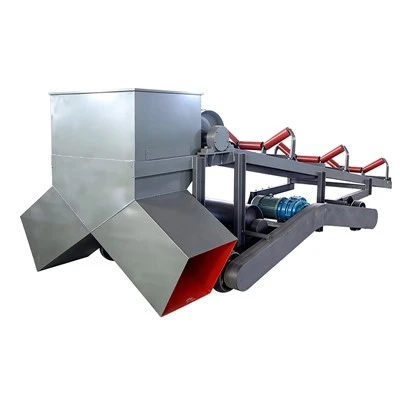
Let’s start with the biggest pain point manual potting solves: labor costs. A 2023 study from the University of California Sustainable Agriculture Research and Education (UC SARE) found that manual potting averages 0.7 hours of labor per 100 4-inch pots. That means for 1,000 pots, you’re looking at 7 hours of work, minimum. If you’re paying seasonal laborers $15 an hour (the average for entry-level agricultural work in the U.S.), that’s $105 for one day’s potting. Now, take our standard entry-level soil potting machine, which costs around $3,200 for a model that handles 4-inch to 1-gallon pots at a rate of 120 pots per minute. That’s 7,200 pots per hour. So for 1,000 pots, that’s 8.3 minutes of machine time, plus 2 minutes to swap out pot sizes or refill mix, tops. Labor for that? Maybe 10 minutes of a part-time worker’s time, at $2.50 total. The math here isn’t even close: in one month of peak planting season, a large garden potting 20,000 pots would spend $2,100 on manual labor, vs. $500 on machine use. Even factoring in electricity for the machine (about $12 a month for that model), you’re already saving more than enough to cover the cost of the machine in less than two months.
But wait, I’ve heard the pushback: “That’s great for market farmers, but what about me? I have a large vegetable garden, not a commercial nursery.” Let’s talk about that. Last year, I worked with a family in Ohio who runs a 5-acre vegetable garden—they grow 20 varieties of tomatoes, peppers, and squash to sell at their town’s farmers market, plus donate 10% of their harvest to a local food pantry. Before they bought our mid-sized potting machine, they spent every April and May pulling in their teenage kids and a couple of neighbors to help pot 12,000 transplants. “Last year, we lost three weekends of good weather to potting,” Sarah, the garden’s owner, told me when I stopped by to check in six months later. “This year? We had all our transplants potted in 10 days, so we could get them in the ground earlier, and our harvest started two weeks sooner. That meant more sales at the market.” She also mentioned a hidden bonus: they used to go through three 50-pound bags of potting mix a week of waste, because manual potting leads to overpacking or spilling mix. With the machine, they cut mix waste by 40%—that’s another $80 a month in savings on supplies.
Of course, no piece of equipment is perfect, and soil potting machines aren’t one-size-fits-all. The biggest concern I hear from large garden owners is adaptability. If your garden grows a huge range of plants, each needing different pot sizes or specialized soil (like seed-starting mix vs. cactus mix), you need a machine that can handle that. Early potting machines were clunky, only working with one pot size and one mix consistency—but modern models, like the ones we supply, have adjustable trays that fit 4-inch to 5-gallon pots, and adjustable fill levels, so you can pack mix tight for root-bound tomatoes or loose for delicate lettuce seeds. We also offer attachments for sifting mix to remove rocks or clumps, which is a game-changer for gardeners who source their own mix instead of buying pre-sifted commercial blend. I learned this lesson the hard way early on: I once sold a basic machine to a small nursery that grew both herbs and fruit tree saplings, and they came back a week later saying it couldn’t handle their 5-gallon tree pots. I swapped out an adjustable tray for them for free, and now that nursery is one of our biggest repeat customers. Adaptability isn’t a nice-to-have—it’s non-negotiable for large gardens with diverse growing needs.
Another common misconception is that soil potting machines are complicated to use, require a full-time operator, or need expensive maintenance. Let’s set the record straight: most of the machines we supply have a one-touch control panel, and training takes about 20 minutes for a first-time user. The only ongoing maintenance is a quick wipe-down of the tray after use (takes 2 minutes) and replacing a filter every six months (costs $15). I’ve had gardeners with no mechanical background call me at 9 a.m. on a planting day panicking that their machine broke, and 9 times out of 10, it was just a clog from a clump of unsifted mix—something they could fix in 2 minutes with a small trowel. Compare that to manual potting, where you might have a worker call out sick the week you need to pot 10,000 seedlings, and you’re stuck falling behind on planting, risking a late harvest or lost sales. The reliability of a potting machine isn’t just about speed—it’s about consistency.
Now, let’s address the edge cases where a soil potting machine might not be right for a large garden. If you’re potting fewer than 500 pots a week, or if your pots are a non-standard size that no adjustable tray can fit, it’s probably not worth the investment. Another exception: if you’re growing plants that require hand-potting for specific care, like orchid saplings that need delicate root handling, but that’s a tiny niche for most large gardens. For the vast majority of large gardens—especially those focused on annual vegetables, flowers, or field crops that use standard pot sizes—the tradeoffs almost always tilt in favor of a machine.
Let’s circle back to the long-term impact. I’ve worked with a community garden in Detroit that serves 400 low-income families, growing produce for their own use and for the local food bank. Before they bought a used potting machine from us in 2021, they had a team of 15 volunteers spending every Saturday from March to May potting seedlings. That meant half their volunteer time was spent on potting, not planting or tending to the growing beds. Now, with the machine, three volunteers can pot all their seedlings in a single Saturday, so they can expand their growing area by an acre, adding 20% more produce to the food bank. That’s the biggest benefit I see: a soil potting machine doesn’t just save you time and money—it lets you scale what you do, whether that’s growing more food for your community, selling more transplants, or expanding your flower business.
If you’re a large garden owner weighing whether to take the leap, here’s my advice: do a quick audit of your last planting season. How many pots did you pot, and how much time and money did you spend on labor and supplies? If that number is adding up to more than the cost of a mid-tier potting machine, it’s time to talk. We offer flexible payment plans for large gardens, and we can even come on-site to do a demo—we’ll bring the machine, your mix, your pots, and we’ll show you exactly how many pots you can pot in an hour, how much mix you’ll save, and how much you’ll cut down on labor. No fine print, no hard sales pitches, just real data from a company that’s been in this space for years, working with gardeners just like you.
At the end of the day, gardening is about working with the land, not fighting repetitive, backbreaking work that takes away from what you love: growing things. A soil potting machine is a tool, plain and simple—one that lets large gardeners do more of what they do best, without the blisters, the lost weekends, or the labor bottlenecks. If that sounds like something your garden could use, reach out to our team to schedule a consultation and demo. We’re here to help you figure out the right machine for your specific needs, no matter how big or small your garden is.
Electro Hydraulic Actuators References:
- University of California Sustainable Agriculture Research and Education. (2023). Labor Efficiency in Organic Vegetable Production. UC SARE Publishing.
- National Gardening Association. (2022). Commercial Garden Equipment Benchmark Report. NGA Research Division.
- Small Farm Center, University of California Davis. (2021). Cost-Benefit Analysis of Horticultural Machinery for Mid-Sized Farms. UC Davis Small Farm Center.
Jiangsu Chongchang Machinery Co., Ltd.
As one of the most professional soil potting machine manufacturers and suppliers in China, we’re featured by quality products and good service. Please rest assured to buy customized soil potting machine made in China here from our factory. Also, pricelist is available.
Address: No. 40, Group 11, Shayan Village, Tangzhuang Town, Gaoyou City
E-mail: 13852179920@163.com
WebSite: https://www.chongchangmech.com/
