If you’ve ever ordered a peptide API (active pharmaceutical ingredient) from a supplier, you might’ve glanced at the COA (Certificate of Analysis) and noticed a big number right up front: 98.5% purity. For folks new to peptide APIs, that number can feel arbitrary—like it’s just a made-up box we check to get the stuff to market. But if you work in pharma, biotech, or even CROs running clinical trials, that purity threshold isn’t random. It’s the backbone of keeping peptides safe, effective, and compliant with global rules. As someone who’s been in the peptide API game for over 10 years, working with labs ranging from small biotech start-ups to big pharma’s R&D teams, I’ve seen first-hand how messing with purity can derail a project, waste millions, or even put patients at risk. Let’s break this down, no stuffy jargon, just real talk about what purity for peptide APIs actually means, why it matters, and what we as suppliers hold to (and push our clients to care about too). Peptide API

First off, let’s get clear on what peptide API purity isn’t. It’s not “how much of the peptide is there, full stop.” Peptides are tiny chains of amino acids, right? When you make them—whether solid-phase (the standard way these days) or solution-phase—there’s always byproducts floating around. The main ones you hear about are impurities, and they fall into two big buckets: process-related and product-related. Process-related impurities are leftovers from the synthesis or purification steps—think unreacted amino acids, residual solvents like DMF or DCM, the resins you start with, or even small traces of the coupling reagents we use to link amino acids together. Product-related impurities are the ones that come from the peptide itself being almost right, but not quite: like deletions (missing one or more amino acids, super common in solid-phase synthesis because some coupling steps don’t go to 100% completion), truncations, or even isomers (where one amino acid is flipped, like a D-amino acid instead of an L one, which is the natural and active form most of the time).
Why do these matter? Let’s take a super common example: GLP-1 analogs, the peptides used for type 2 diabetes and weight management. If a GLP-1 peptide has a tiny 1% impurity that’s a deletion variant missing one key amino acid, that impurity might bind to the GLP-1 receptor but not trigger the right response—so it’s useless for the patient. Worse, it could block the active peptide from binding, lowering efficacy. But wait, even smaller stuff: a 0.5% trace of a residual coupling reagent or a byproduct that’s structurally similar to the API could trigger an immune reaction. I remember a project early on where a client’s pre-clinical study had weird results—turns out they’d used a peptide with 3% total impurities, including a small amount of a toxic byproduct that the previous supplier hadn’t tested for. We re-purified the same peptide to get purity up to 99.2%, and the next pre-clinical run was totally clean. That’s when I realized purity isn’t just a quality box—it’s make-or-break.
Now, what’s the actual purity requirement? It depends entirely on where the peptide is going, and what stage of development it’s in. If you’re making a research-grade peptide for in vitro lab work (like testing binding affinity in a dish), the threshold is way lower—usually 95% purity is enough, because you’re not giving it to people, just using it as a tool. But once you move to pre-clinical testing (testing in animals) that shifts to ~98% total purity, and by the time you hit Phase 1 clinical trials (testing in healthy human volunteers) and beyond, you need 99% or higher total purity, with specific limits on individual impurities (like no more than 0.1% of any single major impurity). That’s not us being picky—that’s what the regulatory bodies say: FDA, EMA, ICH Q7 guidelines, all of them. Let’s be real, regulatory stuff can feel like a pain, but it’s designed to keep everyone safe. I’ve had clients argue that “98.5% is close enough for Phase 1” and try to push for a lower purity number. But the FDA will flag that—they require that you can account for every significant impurity, and prove it doesn’t have toxic effects. Skipping that leads to delays, which no one wants when you’re racing to get a new therapy to patients.
Wait, also—people often mix up “total purity” with purity of the active peptide. No. Total purity is the sum of all the good API minus all the bad stuff (impurities). And we also have to watch for things like peptide aggregates—clumps of the API stuck together, which is a huge problem for injectable peptides. Aggregates can trigger serious immune reactions, even if the individual peptide is 99% pure. That’s why we test for aggregates using things like HPLC and SEC (size-exclusion chromatography) alongside the purity assays. I’ve had a client bring us a peptide from another supplier that was 98.8% total purity, but had 1.2% aggregates—they couldn’t use it for clinical trials because the aggregate limit was way over ICH thresholds. That’s a perfect example of why purity isn’t just one number; it’s a whole suite of tests.
As a peptide API supplier, how do we hit those high purity requirements? It’s not like flipping a switch—we have to build purity into every step of the process, not just test at the end. First, we use high-quality starting materials—every amino acid we source is already tested for purity, because if you start with a bad amino acid, you’re going to get a bad peptide, no matter what. Then, our synthesis processes are optimized to minimize byproducts. We run small-scale test runs before every production batch to tweak coupling times, reagent ratios, and temperature to cut down on deletions and truncations. Then the purification step is the big one: we use reverse-phase HPLC with well-calibrated columns, and we run the purification multiple times if needed to get that last little bit of impurity out. After that, we do a whole battery of tests: not just total purity by HPLC, but also mass spec to confirm the peptide is the right molecular weight (that’s how we catch isomers or truncations that might look pure on HPLC), NMR to check the sequence, residual solvent testing, residual resin testing, and even microbial testing to make sure there’s no contamination that could mess with samples.
But here’s the thing: it’s not just about meeting the minimum regulatory threshold. Our clients don’t just need a peptide that passes an assay—they need a peptide they can trust, that doesn’t cause delays in their trials, that works consistently every batch. So we go a step beyond. For a client in Phase 2, we’ll target 99.5% purity, even if the FDA only requires 99%. For their in-process testing, we share real-time HPLC data with them so they can follow along, which is super helpful for their own documentation. We also offer impurity profiling—we’ll identify every single impurity in your peptide, tell you where it comes from, and how we removed it, so you can submit that data to regulators. That’s a huge value add, especially for small biotechs that don’t have a big regulatory team on staff.
I get it, sometimes purity numbers can feel like a negotiating point. If you’re in early discovery, you might be working with a tight budget and a short timeline, and 95% purity is enough for your in vitro work. But as soon as you start moving toward pre-clinical, stop cutting corners on purity. I’ve seen start-ups that tried to use low-purity peptide to save money, only to have their pre-clinical data thrown out because of an impurity, costing them six months and hundreds of thousands of dollars. It’s not worth it. Good peptide API purity is an investment, not an expense.
Another thing to note: different peptide types have different purity needs. Cyclic peptides, for example, are trickier to purify because their structure means they can form more isomers or aggregates than linear peptides. Antibody-drug conjugates (ADCs) that have a peptide payload? They have even stricter requirements because the ADC is going into patients, and any impurity could change the way the whole drug works. That’s why our team has specialists who focus on different peptide classes—linear, cyclic, modified, GLP-1 analogs, etc.—so we know exactly what purity thresholds to hit for each one.
Wait, let’s talk about a common question we get: “Why can’t you just get 100% purity?” For one thing, it’s not technically possible. Peptides are complex molecules, and even with the best processes, there will always be trace impurities. But also, 100% purity isn’t necessary, and sometimes it can even be worse. Purification to 99.9% would take way more time and cost way more money, for a benefit that’s negligible for most applications. The sweet spot is the lowest purity that meets all regulatory and functional requirements for your specific use case. That’s what we help our clients figure out—we don’t just say “99% or bust,” we work with them to find the right balance of purity, cost, and timeline.
Let’s wrap this up with a real client story that sticks with me. A small biotech came to us a couple years ago with a new peptide for a rare cancer, about to start Phase 1 trials. Their previous supplier had given them a COA with 98.7% purity, but when we tested it, we found a 0.3% impurity that was a structural analog with unknown toxicology. The client was panicking—they were supposed to start dosing in 3 months, and re-synthesizing would take 6 months. We worked with them to adjust the purification process on our existing batch, re-running the HPLC step three times to get that impurity down to below 0.05%, and got them the re-purified peptide in 6 weeks. They started Phase 1 on time, and later told us that the purity of our peptide was one of the reasons the trial’s safety profile was so strong. That’s why we do what we do—purity isn’t just a spec on a sheet, it’s enabling life-saving medicines.
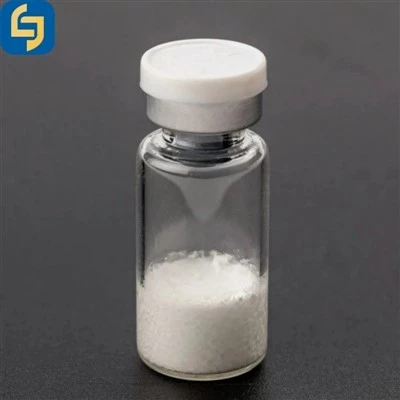
If you’re working on a project that needs peptide APIs—whether it’s early discovery, pre-clinical, or clinical development—don’t leave purity to chance. We’ve got the experience, the processes, and the regulatory track record to give you consistent, high-purity peptides that meet all your needs. We don’t do one-size-fits-all purity; we tailor our processes to your specific project stage, regulatory goals, and budget. Whether you need a quick quote, want to talk through purity thresholds for your next trial, or have questions about impurity testing, hit us up to connect on sourcing your peptide API. Let’s build something safe, effective, and on time.
Tanning Peptide References:
- ICH Q7 (R1), Good Manufacturing Practice Guide for Active Pharmaceutical Ingredients, International Council for Harmonisation of Technical Requirements for Pharmaceuticals for Human Use, 2000.
- U.S. Food and Drug Administration, “Guidance for Industry: Peptide-Based Drugs,” 2012.
- European Medicines Agency, “Guideline on the Quality of Peptide Medicinal Products,” 2015.
- Subirade, M., et al., Peptide Impurities: Sources, Characterization, and Control in Pharmaceutical Development, Journal of Pharmaceutical Sciences, 2018, vol. 107, no. 5, pp. 1225-1242.
Zhengzhou Longjia Electronic Technology Co., Ltd.
As one of the leading peptide api manufacturers and suppliers in China, we have world-leading production equipment and strong manufacturing capabilities. Please feel free to buy bulk peptide api in stock here from our factory. For free sample, contact us now.
Address: Room 2211, 22nd Floor, Unit 3, No.76 Zheng Bian Road, Guancheng Hui District, Zhengzhou City, Henan Province
E-mail: lucy@zzljtech.com
WebSite: https://www.longjiaxintide.com/
