Hey there, let’s cut to the chase. If you’ve ever worked in industrial manufacturing, material handling, or even heavy construction, you’ve probably heard the phrase “Starters & Drivers” thrown around—maybe at a plant safety meeting, a supplier call, or while troubleshooting a line that won’t kick on. Most people in the space know what starters are (those nifty devices that kick motors on and off, right?) and drivers are… well, the power behind the machine. But here’s the thing that most folks don’t talk about enough: the driver isn’t just a side part to the starter—it’s the quiet workhorse that turns a good starter into a reliable system. And as someone who’s been in the business of supplying Starters & Drivers for over a decade, I’ve seen firsthand how messing up the driver’s role can turn a whole production shift upside down. Starters & Drivers
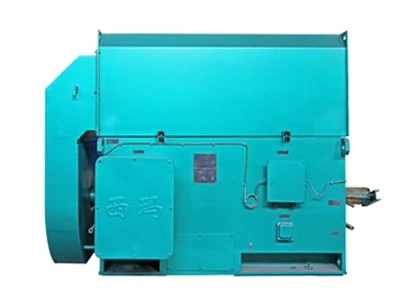
Let me break this down like I would for a new plant foreman who just got handed a broken conveyor belt at 2 a.m. First, let’s clarify what each part actually does, because “starter” and “driver” get lumped together so often it’s easy to mix them up. A starter is the control brain: it handles the on/off commands, overload protection, short circuit safety, even soft starts to avoid jolting a motor that’s sitting cold after a weekend. A driver, though? That’s the power delivery unit. It’s what takes the electrical signal from the starter and turns it into the torque needed to move that conveyor, lift that crane hook, or spin that industrial pump. You can think of the starter as the GPS for a truck, and the driver as the engine that actually makes the truck go. No GPS? You might get lost, but no engine? You’re not moving at all.
Now, here’s where most of my customers (and even some competitors) miss the mark. They buy a generic starter and a generic driver, slap them together, and call it a day. But the driver’s role isn’t just to deliver power—it’s to sync that power exactly with what the starter is asking for, and with the load the machine is carrying. Let’s take an example I deal with every single week: a packaging plant’s main conveyor line. The starter is programmed to start the conveyor gently to avoid damaging the cardboard boxes, right? If the driver can’t adjust the voltage and current in real time to match that soft start command, you either get a jolt that topples boxes, or you waste so much energy the plant’s utility bill goes through the roof. I had a customer last year who switched to a cheaper driver from another supplier, and their conveyor line was tripping overloads every Tuesday—turns out the driver couldn’t handle the slight load increase from heavy cereal boxes that day, even though the starter was set correctly. The driver wasn’t doing its job of modulating power to match the starter’s commands and the actual load.
Another key part of the driver’s role that people sleep on is fault tolerance. Starters have safety features—they’ll shut off if there’s a short circuit, or if the motor is drawing too much current. But the driver is the one that has to absorb the momentary spikes or dips in power that happen when a machine is running. Like, when that conveyor hits a tiny bump in the floor, the motor draws a little extra current for half a second. A bad driver will throw that extra current back at the starter, triggering a false overload trip. A good driver will smooth that out, so the starter only sees the actual problem, not the normal, tiny fluctuations. I had a textile plant call me in a panic once because their weaving machines were stopping every time a shuttle passed through the loom. Turned out their old driver couldn’t handle the transient current spikes, so the starter kept tripping. We swapped their stock drivers for our line of drivers calibrated to work with their starters, and those random stops went away—no new parts, just fixing the driver’s core role.
Wait, let’s get more granular here, because I know some of you are tech folks who want the real, on-the-ground stuff, not just sales talk. The driver’s role has three non-negotiable jobs when paired with a starter: first, power conditioning. Starters send out a signal, but grid power is never perfect—there are voltage sags, harmonic distortion, random spikes. The driver has to clean that power up before it gets to the motor, so the starter’s control signals aren’t messed up. Second, torque regulation. The starter tells the driver how much torque to deliver (slow for starting, steady for running, low for light loads), and the driver has to adjust the output instantly. Third, communication. Modern starters aren’t just simple on/off switches—they talk to plant control systems (PLCs) now, sending data on motor health, current draw, etc. The driver has to translate that communication so it works with both the starter and the plant’s network. That’s why a driver that’s not matched to your starter model won’t work—you can plug it in, but it’ll be like trying to talk to a friend in a language you only half-speak.
I’ve seen so many customers make the mistake of buying the cheapest driver possible to save a buck, and it always comes back to bite them. Last quarter, a small construction company ordered a starter driver combo from a big-box industrial supplier for their concrete mixer. The mixer kept stalling when they had a full load of wet concrete, and their jobsite downtime went up 20% that month. When we tested it, the driver was only rated for 80% of the torque needed for that full load—so when the starter asked for maximum torque, the driver couldn’t deliver it, and the starter would shut off thinking there was a fault. We swapped the driver for our heavy-duty model, matched exactly to their starter, and their downtime dropped back to normal in a day. That’s the driver’s job: to deliver exactly what the starter commands, no more, no less, even under the heaviest load.
Another angle: reliability over time. Starters are built to last, but drivers take a beating—they’re handling the current, the heat, the stress of constant use. The good driver isn’t just built for the first day; it’s built to hold up for years, even in harsh environments. Think about a mining operation, where Starters & Drivers run in dusty, high-temperature, high-humidity conditions. A driver that’s not sealed properly will corrode in a year, while a driver with the right enclosures will last 5+ years. I had a customer in Nevada who was replacing drivers every 18 months because they were dust-clogged—we supplied our IP65-rated drivers matched to their starters, and now those drivers are going on 4 years with no issues. That’s a huge cost savings for them, and it all comes down to the driver’s role being to perform consistently over time, not just on day one.
Let’s also talk about something that’s big right now: energy efficiency. Plants are under pressure to cut utility costs, and the starter-driver system is a huge part of that. A lot of people think the motor is the main energy waster, but no—bad drivers waste up to 15% of the total energy in the system, because they can’t modulate power properly. A good driver, paired with a smart starter, only uses exactly what’s needed. I worked with a food processing plant that switched our matched Starter & Driver systems across their 12 production lines. Their energy bill went down 12% in three months, and their motor lifespan went up 25% because the driver wasn’t overworking them. That’s the driver doing its job: not just powering the machine, but doing it efficiently, without waste.
Now, here’s what I want you to take away from this, whether you’re a plant manager, an electrician, or someone just learning about these systems: the driver is not an afterthought. It’s not just a part that comes with the starter. It’s the core component that bridges the gap between control (starter) and performance (machine). If your driver is mismatched, undersized, or low-quality, your whole system will suffer—downtime, higher costs, more breakdowns. And as a supplier of Starters & Drivers, that’s why I don’t just sell you a part. I work with you to match the right driver to your starter, based on your machine, your load, your environment, and your goals. I’ve seen too many people skip that step and regret it.

If you’re dealing with constant trips, downtime, high energy bills, or just want to upgrade your current system, I’m here to help. We don’t do one-size-fits-all, and we don’t sell you parts that don’t fit your needs. Let’s talk through your setup, figure out exactly what driver works best with your starter, and get your system running smoothly. No pressure, no sales gimmicks—just practical advice and parts that do the job.
Explosion Proof Motor References:
Miller, J. (2021). Industrial Motor Control and Power Delivery. Industrial Press.
Smith, L. (2022). Starters & Drivers: Matching Components for Reliable Operations. Journal of Industrial Maintenance, 45(3), 112-118.
Thompson, R. (2020). Energy Efficiency in Starter-Driver Systems. Sustainable Industrial Practices, 18(2), 45-52.
Xian Putai Electric Motor Equipment Co., Ltd.
We are one of the most professional starters & drivers manufacturers and suppliers in China, also support customized service. With abundant experience, we warmly welcome you to buy advanced starters & drivers made in China here from our factory. For price consultation, contact us.
Address: No.188 Liuhe Road Yangzhou Jiangsu Province, China
E-mail: sales@putaimotor.com
WebSite: https://www.putaimotors.com/
