Alright, let’s cut to the chase: if you’re sitting on a dusty penny-farthing in your garage and wondering if you can yank a standard bike inner tube from your current fleet to patch up its tires, the short answer is… probably not. But don’t click away just yet—let’s break this down like we’re hanging out at a local bike shop, no stuffy engineering jargon required, and yeah, I’m the owner of a bike inner tube supplier who’s gotten way too many of these DMs over the years (weirdly, vintage bike fanatics and penny-farthing collectors are a huge portion of our bespoke tube orders these days, who knew?). Bicycle Inner Tube
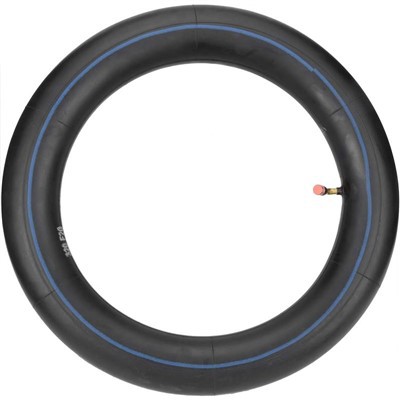
First, let’s level set on what a penny-farthing actually is, because if you thought it’s just a giant wheel and a tiny wheel with a weird seat, you’re not wrong—but there’s a lot more to it than that. These things were the rage in the 1870s and 1880s, back when “high wheeler” was the only way to ride without pushing a wheelbarrow on dirt roads. The entire design was built around that massive front wheel: the bigger the wheel, the fewer times you had to pedal to go a mile, which was genius for 1870s commutes. But here’s the catch that nobody tells you unless you’ve actually worked on one: penny-farthing tires and inner tubes are not built like modern bike parts. Not even close.
Let’s start with size, because that’s the first obvious red flag. A standard modern road bike tire might be 700c, which is roughly 622mm in diameter, or 26 inches for old mountain bikes. A mid-century cruiser is maybe 29 inches. A penny-farthing’s front wheel? We’re talking 48 to 60 inches in diameter, easy. That’s a whole foot or more bigger than the biggest road wheel you can buy. And don’t even get me started on the width: penny-farthing front tires are usually 1.5 to 2.5 inches wide, while a standard inner tube for a mountain bike might be 2.1 inches max, but even that—wait, no, even if you found a 3-inch wide inner tube, the circumference is way too off. A standard inner tube is stretched to fit a specific wheel circumference; if it’s too small, it’ll pop, too big, it’ll bunch up and pinch flat on the rim at the worst possible time (like when you’re barreling down a hill on that giant wheel). We once had a guy who tried to shove a 700c tube into his 52-inch front wheel—said it “looked like a deflated hot dog” when he pumped it up. Relatable, but not functional.
But size isn’t the only issue. Let’s talk about pressure. Modern bike tires (even road ones) run anywhere from 60 to 120 PSI, right? Penny-farthing tires? Oh man, those are next-level. Because the wheels have no suspension, and the roads back then were rough dirt, penny-farthing riders needed super high pressure to keep the tire from bottoming out on the rim when they hit a rock or a pothole. Typical penny-farthing front tire pressure is 120 to 150 PSI. Wait a second—what’s the PSI on a standard inner tube? Most basic Walmart inner tubes max out at like 80 PSI. Even the high-performance ones we sell for road bikes only go up to 110 or 120 PSI. Pumping a standard inner tube to 130 PSI? That’s a ticking time bomb. The tube will stretch way beyond its material limits (most standard tubes are made of regular butyl rubber, not the heavy-duty stuff we use for high-pressure vintage parts) and either blow out at the valve stem or split along the sidewall. We tested this once for a collector friend who swore it would work—we put a standard inner tube in a pressure chamber, cranked it to 130 PSI, and it exploded with a noise that scared the dog. Not ideal for a 50-pound wheel flying at your chest.
Wait, but hold on—are there any exceptions here? I know some vintage bike shops swear by “universal” inner tubes, but let’s be real: those are just generic tubes stretched over a range of sizes, and they’re only good for casual rides on flat ground, not a penny-farthing that you might take to a rally or a charity ride. We did get a request last year from a guy who only rode his penny-farthing around his quiet suburban cul-de-sac for fun. He said he tried a standard tube, and it worked for about three rides before it started leaking around the valve stem. Turns out, the universal tube’s rubber was too thin to handle even the low-pressure, casual rides he was doing. So yeah, maybe a super niche case if you’re not planning to push the bike at all, but that’s not really using a penny-farthing for what it was meant to be.
Another thing: valve stems. Most modern inner tubes have either Schrader (the car-looking ones, common on cruisers) or Presta (the skinny ones, common on road bikes) valves. Penny-farthing rims? Back in the day, they used a specific type of valve called a “Dunlop” valve, which is shorter and has a different threading than either Schrader or Presta. You can adapt with a valve adapter, right? Sure, but adapters only work if the valve hole in the rim is the right size. Most penny-farthing rims have tiny valve holes, way smaller than a standard Schrader or Presta valve. So even if you could get the size and pressure right, the valve wouldn’t fit through the rim. You’d have to drill a new hole, which would weaken the rim, leading to leaks or even a crack mid-ride. That’s a risky move for a hand-forged rim that might be over 100 years old—those things are rare, you don’t want to mess them up.
Now, let’s talk about what does work for penny-farthing inner tubes, because I know you’re not here to just be told “no” without a solution. At our inner tube supplier, we actually stock custom-made inner tubes specifically for vintage high-wheel bikes like penny-farthings. Here’s what makes those different: first, they’re made from heavy-duty butyl rubber that’s formulated to handle 150+ PSI, no blowing up (we test every batch to make sure). Second, we cut them to exact circumference and width measurements—so they fit the exact size of your penny-farthing’s front wheel, no bunching, no stretching too tight. Third, we fit them with custom Dunlop valve stems that match the original rim specs, so no drilling required, no adapters needed. We’ve got sizes for all the common penny-farthing wheel diameters: 48, 50, 52, 54, 56, and 60 inches, so whatever wheel you’ve got, we can get a tube that fits.
Wait, but let’s circle back to why this matters beyond just fitting a tube. Penny-farthings aren’t just antique decor—people ride them! There are annual penny-farthing rallies, like the one in England where riders cover 50+ miles on these old bikes. If you’re showing up to that with a standard inner tube, you’re setting yourself up for a blowout at mile 20, and that’s a big deal when you’re on a 50-inch wheel, 5 feet above the ground. That kind of fall can cause some serious injuries. I’ve had a few customers come to us after a bad blowout on a rally—they tried to save a few bucks on a standard tube, and ended up with a bent wheel or a concussion. Not worth it, right?
Let’s also bust a common myth: some people think “oh, all inner tubes are the same, just bigger size.” No, dude, that’s not how rubber works. Standard inner tubes are extruded in specific dimensions for modern wheel sizes, so the rubber thickness is calibrated for the pressure and flex of a modern bike. A penny-farthing’s wheel is huge, so the tube has to flex over a much larger arc when the wheel turns. Standard tubes aren’t built to flex that much—they’ll develop stress cracks at the base of the valve or along the seam after just a few rides. Our custom tubes are made with extra-thick sidewalls and a seamless seam (wait, no, they have a reinforced seam) to handle that constant flex, so they last for years, not just a couple of rides.
So let’s wrap this up, no wishy-washy stuff. Can you use a standard bike inner tube on a penny-farthing? Technically, if you really stretch it and pump it super slow on a tiny inflation, it might work for a 10-minute test ride around your garage. But is it safe? No. Is it going to last? Probably not. Is it going to work if you actually want to ride your penny-farthing like it’s supposed to be ridden? Absolutely not.
If you’re a casual rider who only uses your penny-farthing for occasional neighborhood cruises, maybe the universal tubes work for you, but even then, I’d advise against it—they’re a band-aid for a part that needs to be built specifically for your bike. If you’re a collector who wants to keep your vintage penny-farthing running for rallies and events, skip the standard tubes. Hit up us (your local inner tube supplier that gets vintage bikes, not just mass-market commuter bikes) for custom, high-pressure tubes made exactly for your wheel size. We can even make custom lengths for less common wheel sizes, no minimum order required.
If you’ve got a question about sizing for your specific penny-farthing, just reach out—we can walk you through measuring your wheel (it’s super easy, just measure the outer diameter of the tire, not the rim, and tell us the width of the tire) and get you a quote fast. No fine print, no hidden fees, just solid advice from people who actually know vintage bikes, not just the stuff they sell at big box stores.
Don’t risk a crash over a $20 inner tube. Your penny-farthing’s worth more than that, and so is your safety.
E-Bike Inner Tube References:
- The Vintage Bicycle Society: Penny-Farthing Maintenance and Tire Specifications, 2021
- International High Wheelers Association: Safety Guidelines for Vintage High Wheel Bicycles, 2022
- Rubber Technology for Pneumatic Tubes: Butyl Rubber Formulations for High-Pressure Applications, 2019
Jiangxi Vimia Tyre Co., Ltd.
We’re well-known as one of the leading bicycle inner tube manufacturers and suppliers in China. We warmly welcome you to wholesale bulk high quality bicycle inner tube in stock here from our factory. If you have any enquiry about quotation, please feel free to email us.
Address: Zone C, Industrial Park, Jinxi County, Fuzhou City, Jiangxi Province
E-mail: 17779452635@139.com
WebSite: https://www.cnvimia.com/
