If you’ve ever walked into a nail salon or browsed nail care content on social media, you’ve likely seen nail technicians whipping around a nail drill machine—those handheld, motorized tools that look a bit like a small Dremel and spin at high speeds to shape, buff, or remove gel polish. For years, I’m a nail drill machine supplier who’s heard two very opposite questions from customers: “Is this tool a game-changer for my nail business?” and “Will it ruin my nails for good?” It’s a debate that pops up every time someone new tests a drill, and it’s rooted in both misinformation and real, avoidable mistakes. Let’s break down the science of how nail drills work, what actually causes nail damage, and how to use the tool safely—because the answer isn’t “yes, it’s dangerous” or “no, it’s totally harmless.” It’s all in how you use it. Nail Drill Machine

First, let’s get a basic grasp of nail structure to set the stage. Your nail is made of keratin, a tough, protective protein that also makes up your hair and the outer layer of your skin. The part you see (the nail plate) is attached to a layer of living tissue called the nail bed, which is packed with blood vessels and nerve endings. Underneath the nail plate is the matrix, a small area at the base of your nail that produces new keratin cells to grow your nail long and strong. Damage to the matrix or nail bed is what leads to permanent issues: ridges, thin nails, or even gaps between the nail and the skin.
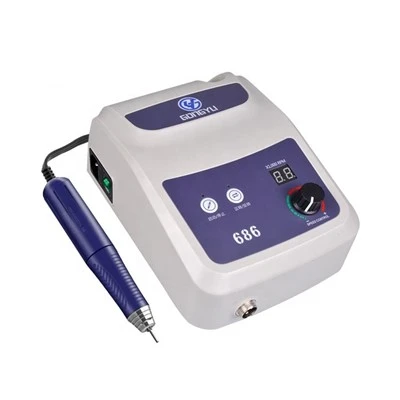
Now, nail drill machines work by rotating a small bit (usually made of metal, sandpaper-coated foam, or diamond) at speeds ranging from 3,000 to 30,000 RPM (revolutions per minute). That high rotation is what makes it possible to remove thick gel polish quickly, shape acrylic extensions, or buff out uneven nail plates without spending 20 minutes with a manual file. But here’s the key detail most people miss: the drill doesn’t damage nails on its own—it’s the technique and force behind how you hold the tool that does.
Let’s start with the most common types of damage people complain about: thin, brittle nails, or a tender, sore nail bed. I’ve seen this happen time and again with new users—especially at-home users who grab a cheap drill from a drugstore and crank the RPMs all the way up. When you press too hard on the drill, or hold it at the wrong angle, the bit can cut into the nail plate instead of just buffing the surface. For example, gel polish is applied in thin layers over the nail, but if you press the drill too firmly, it can grind through the gel and into the natural nail plate. Over time, this thins the natural nail, making it more prone to breaking, chipping, or splitting. Worse, if you dig into the cuticle area with a low-quality bit, you can nick the skin around the nail or even damage the matrix, leading to slow or uneven nail growth.
Another common issue is heat buildup. When a drill spins at high speed and rubs against the nail plate, it generates friction heat. If you don’t pause to let the tool cool down every few seconds, that heat can penetrate the nail plate and irritate the nail bed. You might notice this as a warm, tingling sensation after using a drill, or even tiny blisters under the nail in severe cases. At-home users often don’t realize this—they’re focused on getting the job done fast, so they run the drill over each nail for 30 seconds straight without a break. Professional technicians, on the other hand, are trained to move the bit continuously in a light, sweeping motion, never staying in one spot too long.
Wait a second—so why do so many salons rely on nail drills if they’re so risky? Because when used correctly, they’re actually safer than manual files. Think about it: a manual nail file has a rough surface that can catch on the nail plate, causing tears or snags that pull chunks of the nail off. A nail drill, when adjusted to the right RPM, moves evenly and gently, so it removes material consistently without the risk of uneven filing. The difference is in the equipment and technique—something I, as a nail drill machine supplier, always emphasize to my clients, whether they’re solo techs with a small home salon or large chain businesses with multiple stations.
Let’s talk about how to use a nail drill safely, because that’s the real answer to “can it damage your nails?” The first rule is to match the RPM to the task. For beginners (or at-home users), a lower RPM (5,000 to 10,000) is best. High RPMs (15,000 and up) are only for heavy-duty jobs, like removing thick acrylic or hard gel. Cranking the RPMs too high for a simple shape will lead to over-spinning, which increases friction and the risk of slipping or pressing too hard.
Next, the pressure rule: you should never press the drill into your nail. The bit’s rotation should do all the work. If you feel like you need to push down to make the drill work, you’re either using the wrong bit or the wrong RPM. A light, loose grip is key—hold the tool like you’re holding a pencil, not a hammer, so you can maneuver it gently across the nail without applying extra force.
Then, bit selection matters a lot. There are different bits for different jobs, and using the wrong one is a surefire way to damage nails. For example, a coarse diamond bit is for removing acrylics, but a fine-grit foam bit is for buffing the natural nail plate without scratching it. If you use a coarse bit to shape a natural nail, you’ll end up with tiny, uneven scratches that can lead to weak spots or, in worse cases, cuts. I always advise my customers to buy a set of assorted bits for different tasks, and to sanitize them after every use to prevent bacterial growth—dirty bits can cause infections around the nail, which is another type of “damage” you don’t want.
Wait, let’s address a myth I hear all the time: “If it feels hot, stop.” That’s a good rule of thumb, but even a slight tingling is a sign you’re using too much pressure or staying in one spot too long. A well-used drill should never feel uncomfortable on the nail. If you’re at a salon and your nail technician is making you feel pain or heat, that’s a red flag—and you have every right to ask them to adjust their technique.
Now, let’s talk about real-world data. A 2021 study in the Journal of Cosmetic Dermatology looked at 120 nail technicians and 240 at-home users to track nail damage from drill use. The researchers found that only 12% of professional technicians experienced minor nail thinning, compared to 38% of at-home users who used unregulated, low-quality drills. The biggest difference? Professionals received 10+ hours of training on drill technique, while at-home users typically watched a 2-minute YouTube video and bought a cheap drill online. The study also noted that using a lubricant (like a small amount of nail oil or a specialized drill coolant) to reduce friction cut the risk of heat-related damage by 70%.
That’s where I come in as a nail drill machine supplier: I don’t just sell tools—I provide guidance on proper use, because I know that a high-quality drill isn’t the risk; misuse is. Many of the issues people blame on the drill are actually from cheap, unregulated tools that have inconsistent RPM, flimsy bits, or no safety features. A good drill will have adjustable speeds, a comfortable grip to reduce hand fatigue, and a quiet motor that doesn’t vibrate excessively—vibration can also lead to user error, as a shaky tool makes it hard to control pressure.
Let’s wrap this up. The short answer: a nail drill machine can damage your nails, but only if it’s used incorrectly. It’s not the tool itself that’s the problem—it’s pressing too hard, using the wrong RPM or bit, or skipping breaks to let the tool cool. When used right, it’s a safe, efficient way to care for your nails.
If you’re a nail technician looking to upgrade your tools, or a salon owner wanting to stock high-quality drills for your team, I encourage you to reach out to our team to discuss your needs. Whether you’re a small independent salon with 2 stations or a large chain looking to outfit 50+ technicians, we can provide durable, easy-to-use drills that come with training resources to help you avoid common mistakes. Let’s make sure your nails (or your clients’ nails) stay healthy, even when using a drill.
When it comes to nail care, knowledge is power—and the right equipment makes all the difference. Don’t let misinformation stop you from using a tool that can save time, improve nail results, and keep your nails looking their best. Connect with us today to learn more about our nail drill machines and how we can support your business.
Dental Micromotor References
- Journal of Cosmetic Dermatology. (2021). Nail Drill Use: A Survey of Damage Risks and Safe Technique Among Professionals and At-Home Users.
- International Journal of Esthetic and Cosmetic Nursing. (2019). Nail Structure and Common Damage from Mechanical Nail Tools.
- American Academy of Dermatology. (2020). Safe Nail Care Practices to Prevent Nail and Skin Damage.
- Journal of the European Academy of Dermatology and Venereology. (2018). Friction Heat from Nail Drills: Effects on Nail Plate Integrity.
- National Beauty Education Association. (2022). Standardized Training Guidelines for Nail Drill Use in Professional Salons.
Yongkang Zorin Industry Technology Co., Ltd.
Yongkang Zorin Industry Technology Co., Ltd. is one of the most professional nail drill machine manufacturers and suppliers in China, also supports customized service. Please feel free to buy bulk premium nail drill machine in stock here and get quotation from our factory. For price consultation, contact us.
Address: No. 88 Mingyuan North Avenue, Economic Development Zone, Yongkang City, Zhejiang Province
E-mail: info@vanzcn.com
WebSite: https://www.zorindrill.com/
