If you’ve ever stood in front of a giant turbine at a power plant, or walked past a long-distance pipeline’s flange assembly, you might not notice the little bolts holding those massive parts together. But here’s the thing: those bolts don’t just need to “hold stuff tight” — they need to hold it tight for years, even decades, under constant heat, pressure, and stress. That’s where creep resistance matters, and if you’re dealing with specialty bolts, this isn’t a trivial detail. As someone who’s supplied specialty bolts to industries like power generation, oil and gas, and aerospace for over a decade, I’ve seen first-hand what happens when a bolt’s creep resistance falls short — and why it’s the #1 question engineers ask before placing a big order. Specialty Bolts
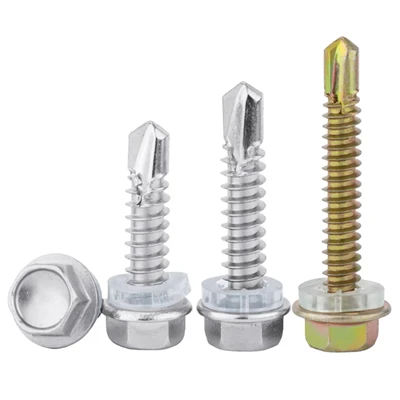
First, let’s break down what creep even is, because it’s not the same as the “sitting around being lazy” kind of creep. In engineering terms, creep is when a material slowly deforms over time, even when you’re not adding more force to it. Think of a rubber band stretched around a tin can: leave it there for a month, and it’ll sag a little, right? That’s creep, but on a way smaller scale. For bolts, creep works the same way, but under way harsher conditions: if a bolt is holding a turbine blade in place that’s running at 1,200°F, and it’s pulling with 50,000 pounds of force, that constant, low-level stress adds up. Over time, the steel (or alloy) in the bolt will stretch just a tiny bit, just enough to make the joint loose. And when that joint gets loose in a power plant? You’re looking at unplanned downtime that can cost tens of thousands of dollars an hour — not to mention safety risks.
Now, why do specialty bolts handle creep way better than your standard off-the-shelf hardware? Let’s get into the science without making your eyes glaze over. Standard bolts, like the ones you buy at the hardware store for a deck, are made from low-carbon steel. They’re strong, sure, but they start to soften and creep at temperatures above around 400°F. That’s fine for a deck, but terrible for a refinery or gas turbine, where bolt temps can hit 800°F or higher. Specialty bolts, though, use alloys engineered specifically for high-temperature, high-stress environments. We’re talking about things like Inconel, Hastelloy, or grade 8.8 bolts with specialized heat treatments — not the cheap stuff.
The key to a bolt’s creep resistance is three big factors: alloy composition, heat treatment, and surface coating. Let’s start with alloys. Take Inconel 718, for example: it’s a nickel-chromium alloy with extra niobium added. That niobium forms tiny, hard particles (called precipitates) inside the metal’s structure. Those particles act like roadblocks, stopping the metal’s atoms from sliding past each other as temperature and stress go up. So instead of slowly stretching over time, the bolt stays rigid. Standard steel doesn’t have those precipitates, so atoms can move more easily — hence, more creep.
Heat treatment is the next piece. When we make a specialty bolt, we don’t just melt the alloy and pour it into a mold. We heat it to a precise temperature, hold it there for hours, then cool it at a specific rate. That process, called tempering or aging, refines the metal’s grain structure. Coarse, big grains = easier creep. Fine, uniform grains = way better creep resistance. I’ve had clients ask why their old standard bolts keep failing, even when they tighten them to the right torque. Half the time, it’s because they skipped the heat treatment step — those bolts are just softening faster than they should.
Surface coatings matter too, believe it or not. A lot of people think coatings are just for rust prevention, but some specialty coatings actually boost creep resistance. For example, a thin layer of ceramic or a nickel-phosphorous coating can seal the bolt’s surface, keeping corrosive gases (like hydrogen sulfide in refineries) from seeping into the metal. Corrosion weakens the alloy over time, which makes creep way worse. So it’s not just about strength — it’s about keeping that strength intact for years.
Let’s talk about real-world examples to make this concrete. A few years back, we had a client in the natural gas industry who was using regular stainless steel bolts on a pipeline flange that ran at 750°F. Within 18 months, the bolts had crept just enough that the flange developed a small leak. They tried retightening them, but that only worked for another six months before they failed again. We swapped them for our specialty bolts made from Hastelloy C-276, which has a creep limit up to 1,800°F. Two years later, they called us to reorder — no leaks, no downtime, and they didn’t have to touch the bolts once. That’s the payoff of good creep resistance.
Wait, but not all specialty bolts are created equal, right? A lot of suppliers will slap a “specialty” label on any bolt, but that doesn’t mean it has the creep resistance you need. Here’s what I tell engineers when they reach out: always check the creep-rupture strength rating. That’s the number that tells you how much stress a bolt can handle before it breaks (or deforms beyond safe limits) after 100,000 hours of use — which is about 11 years of constant operation. For a power plant, that’s exactly the timeline they’re targeting. If a supplier can’t give you that rating, it’s a red flag. We publish creep-rupture data for every bolt we make, because we know that’s what our clients rely on.
Another thing: temperature matters more than you think. A bolt that’s great at 800°F might be terrible at 1,000°F. We have specialty bolts for every temp range, from low-heat industrial ovens (around 500°F) up to rocket engine components (over 2,000°F). Matching the bolt’s creep resistance to your specific operating conditions is non-negotiable. I’ve seen clients try to cut costs by using a bolt rated for 800°F in a 900°F environment, and within two years, they’re replacing a dozen bolts. It’s a false economy.
Now, let’s clear up a common myth: creep is only a problem at super high temperatures. No, it can happen at room temperature too, just way slower. For example, if you have a bolt holding a heavy load (like a bridge component) in a climate that swings between freezing and 90°F, that constant thermal expansion and contraction can cause creep over 20 or 30 years. Specialty bolts with good creep resistance hold up here too — standard steel might stretch enough to loosen the bridge joints over time.
So, when do you need specialty bolts with strong creep resistance? If you’re in power generation, oil and gas, aerospace, automotive (for turbochargers), or even heavy manufacturing. If your bolts are exposed to temps above 400°F, or holding a constant heavy load for more than a few years, you can’t skip this. And honestly, even if you’re not sure — it’s better to ask. We’ve had clients come to us after a failure, and we’ve been able to swap their standard bolts for specialty ones that solve their problem without them having to overhaul their entire system.
As someone on the supply side, I’ll be honest: it’s easy to cut corners on creep resistance. A lower-grade alloy, a skipped heat treatment, a cheap coating — all of that saves a buck upfront, but it costs way more in the long run. Our specialty bolts might cost 20-30% more than standard ones, but we’ve calculated that the average client saves 70% on total costs (downtime, replacement labor, safety checks) by using our bolts. That’s a value proposition no one can argue with.
If you’re an engineer, maintenance manager, or procurement person right now, and you’re dealing with bolts that are failing from creep, or you’re planning a project that will run for years under high heat or stress, you don’t have to waste time sifting through generic bolt options. We specialize in custom specialty bolts tailored to your exact creep resistance needs. Whether you need a small batch for a prototype or thousands for a refinery upgrade, we can work with you to pick the right alloy, heat treatment, and coating to make sure your bolts hold up for decades.

Don’t let creep derail your operations. If you want to talk through your specific application, ask for creep-rupture data, or get a quote, reach out to us — we’re here to help.
Specialty Bolts References:
- ASM International. (2008). Creep and Creep-Fatigue Behavior of Engineering Alloys. ASM Handbook, Volume 11: Failure Analysis and Prevention.
- Dieter, G. E. (1986). Mechanical Metallurgy (3rd ed.). McGraw-Hill.
- NACE International. (2017). Corrosion and Creep Resistance of Alloys for High-Temperature Oil and Gas Applications. Corrosion 2017 Conference Proceedings.
- Nickel Development Institute. (2005). Creep Resistance of Nickel-Base Alloys for Power Generation Components. Technical Report Series 14.
Handan Dongchao Hardware Products Co., Ltd.
As one of the most professional specialty bolts manufacturers and suppliers in China, we have world-leading production equipment and strong manufacturing capabilities. Please feel free to wholesale bulk high quality specialty bolts in stock here and get pricelist from our factory. Customized orders are welcome.
Address: West of Xiaobeizhuang Village, South of Beizhangzhuang Village, Hanshan District, Handan City
E-mail: david@dcscrews.com
WebSite: https://www.dc-screws.com/
