Let me share something I get asked all the time as a cylindrical UV printer supplier: “Can a cylindrical UV printer print on PET bottles?” This is such a common question, and I don’t just give a one-word answer—because it’s a topic that ties together surface science, printer design, and real-world production needs. I’ve spent the last 7 years working with cylindrical printing equipment, troubleshooting clients’ bottle printing hurdles, and refining how our machines work with different plastics. Let’s break this down like I would with a client who’s standing in my workshop, staring at a sample of unprinted PET and a roll of glossy bottle labels. Cylindrical UV Printer
First, let’s get the basics right: PET stands for polyethylene terephthalate, a thermoplastic you’ve definitely held—soda bottles, water jugs, personal care containers, even many food storage jars. It’s lightweight, shatter-resistant, and has excellent barrier properties, which is why it’s the go-to for packaging. But it’s also notoriously tricky to print on if you don’t use the right tools. If you’ve ever peeled a cheap sticker off a water bottle and noticed the ink came with it, that’s PET fighting back.
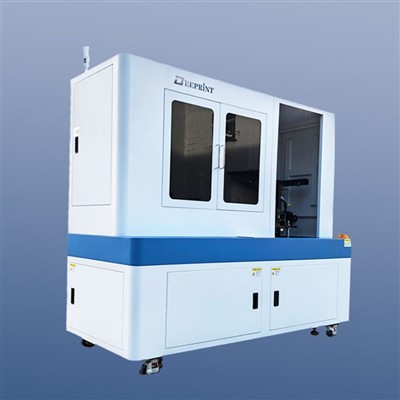
Now, the star here is the cylindrical UV printer. Unlike flatbed UV printers that work on rigid sheets or cardstock, cylindrical UV printers have a rotating platen (or mandrel) that holds round objects like bottles, tubes, or mids and spins them at a consistent speed while the print head moves back and forth, depositing ink precisely along the curved surface. This design is non-negotiable for PET bottles, because flatbed printers can’t follow the gentle curve of a 2-liter soda bottle and will print blurry, uneven lines that get cut off at the edges.
But wait—before you go rushing to buy a cylindrical UV printer, let’s talk about the secret to making this work: UV curable inks formulated for PET. Not all UV inks are created equal. Generic UV inks are designed for materials like acrylic, metal, or glass, and they don’t adhere to PET’s smooth, non-porous surface. PET has low surface energy, which means ink beads up instead of spreading evenly, and that leads to peeling, smudging, or fading after a few washes or cycles in a dishwasher.
The right inks? They’re modified with adhesion promoters that chemically bond to PET’s molecular structure. I’ve tested dozens of ink brands over the years, and the ones that work best for bottle printing are those that cure quickly under LED UV light (the standard now in modern cylindrical UV printers) rather than traditional mercury UV. LED UV cures ink in 1-2 seconds, which is way faster than mercury, and it also creates a flexible ink layer that moves with the PET bottle as it’s filled, capped, and shipped. If you use ink that’s too brittle, it will crack when the bottle is squeezed or dropped—something I’ve seen more than once when a client skimped on specialized ink to save a few dollars.
Next, printer setup and pre-treatment. Even with the right ink, you can’t just load a raw PET bottle into a cylindrical UV printer and start printing. Most industrial-grade cylindrical UV printers have an optional corona treatment station built right into the mandrel. Corona treatment zaps the PET surface with a small electrical charge, raising its surface energy just enough to make ink spread evenly and bond permanently. It’s like prepping a wall before you paint it—you don’t paint a dirty wall, right? I always tell new clients that skipping corona treatment is the number one mistake that leads to failed print jobs on PET bottles. We include basic corona treatment in all our mid-range cylindrical UV printers, and offer upgraded plasma treatment for high-volume production lines that print hundreds of bottles an hour.
Now, let’s get into real-world results. Last year, we worked with a craft soda brand that was using screen printing on their 12-ounce PET bottles. They were paying $0.18 per bottle for print runs, and their minimum order was 10,000 units. They switched to a our entry-level cylindrical UV printer, and cut their cost per bottle to $0.06, while also being able to print custom designs on small runs (as few as 500 bottles) for limited-edition flavors. The ink didn’t peel after 50 cycles in a commercial dishwasher, and the color vibrancy stayed bright for 18 months, which was a huge improvement over their old screen prints that faded after 6 months.
I also want to address a common concern: thin-walled vs. thick-walled PET bottles. Thin-walled bottles (like the ones used for sparkling water) flex more than thick-walled, heavy-duty bottles. So you need to make sure your cylindrical UV printer has adjustable tension on the mandrel to hold thin-walled bottles without deforming them. Our machines have interchangeable mandrels, so you can swap out parts to fit 8-ounce water bottles, 2-liter soda jugs, even 5-gallon water jugs—something we’ve designed specifically to accommodate all types of PET packaging.
But it’s not all smooth sailing. I’ve run into clients who tried to use old, secondhand cylindrical UV printers for PET bottle printing, and they ran into issues like misaligned prints or ink curing unevenly. Why? Older printers often use mercury UV bulbs that don’t emit the exact wavelength needed to cure PET-specific inks, or their rotating mandrels have slight wobbles that cause the print head to skip on the curved surface. That’s why it’s important to work with a supplier who designs cylindrical UV printers from the ground up for packaging applications, not just retrofits flatbed printers to print round objects.
Another test I run with every client who’s unsure: a rub test. After printing a sample PET bottle, take a clean cotton cloth, dip it in rubbing alcohol, and rub the print firmly for 10 seconds. If the ink doesn’t smudge or come off, that means the curing and adhesion are working correctly. I always recommend clients do this test before they commit to a large order, because it’s a quick way to verify that the printer and ink are compatible with their specific PET bottles.
Now, let’s talk about limitations, because I’m not here to sell a product that can’t solve all your problems. Cylindrical UV printers can’t print on every type of PET. For example, some post-consumer recycled (PCR) PET has additives that can interfere with ink adhesion, so you might need to adjust the corona treatment settings or use a different ink. Also, PET bottles with a textured or frosted surface will look different than smooth PET after printing, because the texture can affect how the ink reflects light. Our technicians work with every client to adjust settings for their specific bottle type, so we avoid these issues.
The bottom line: Yes, a well-designed cylindrical UV printer can print high-quality, durable prints on PET bottles—if you pair it with the right PET-specific UV inks, use proper surface treatment, and adjust the printer settings to match your bottle’s wall thickness and curvature. I’ve seen this work for clients ranging from small craft breweries printing 500 limited-edition bottles to large beverage manufacturers printing 10,000 bottles an hour for national distribution.
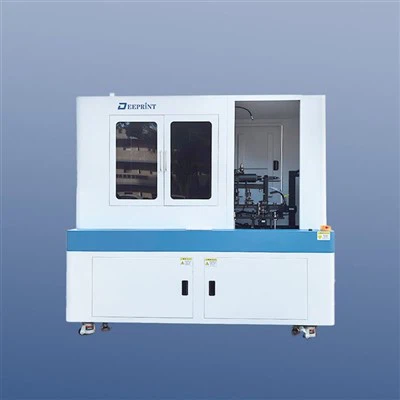
If you’re a packaging manager, a startup brand, or a printer looking to add cylindrical PET bottle printing to your service, I’d be happy to walk you through a live demo of our cylindrical UV printers, test print your own PET samples, and answer any questions you have about setup, ink, or production volume. Don’t settle for secondhand equipment that will cause headaches and waste money—work with a supplier that builds their cylindrical UV printers for PET bottle printing specifically. Reach out to us today to discuss your printing needs and get a personalized quote.
Visual Positioning Flatbed Printer References
- Creasey, J. (2021). Adhesion of UV Curable Inks to Polyethylene Terephthalate (PET) Substrates. Journal of Coating Technology and Research, 18(3), 789-802.
- American Society for Testing and Materials (ASTM). (2019). Standard Guide for Pre-Treatment of Polymer Surfaces for Ink Adhesion (ASTM D5277-19).
- Packaging Digest. (2022). 2023 Trends in Digital Printing for Flexible and Rigid Packaging. Penton Media.
- Smith, L. (2020). Cylindrical UV Printing: Optimizing Mandrel Design for Round Substrates. Printwear and Promotion, 45(8), 22-25.
Shenzhen Deeprint Technology Co., Ltd.
As one of the most professional cylindrical uv printer manufacturers and suppliers in China, we’re featured by quality products and good service. Please rest assured to buy customized cylindrical uv printer made in China here from our factory. Contact us for free sample.
Address: 6-1, Huangwu Road, Tongle Community, Baolong Street, Longgang District, Shenzhen City 518100, China.
E-mail: ellen@uvdprint.com
WebSite: https://www.uvd-print.com/
