If you’ve ever walked into a dental office, noticed the crisply wrapped instrument trays sitting in a dedicated sterilization area, and wondered how that critical piece of kit gets there, you’ve thought about dental autoclaves. As someone who’s been supplying these systems for over a decade, I get this question all the time: “How much does a dental autoclave cost?” It’s not a straightforward answer, and if any supplier tells you it is, they’re either skipping over critical details that will cost you down the line or lowballing you to make a quick sale. Let’s break this down like I would with any client who’s sitting across my desk, trying to figure out what they actually need, not just what a price tag says. Dental Autoclave

First, let’s get one thing straight: a dental autoclave isn’t just a box that heats up. It’s the backbone of patient safety. The CDC, OSHA, and every dental regulatory body around the world mandates that all reusable instruments—drills, probes, forceps, suction tips—be sterilized with saturated steam under pressure at 121°C (250°F) for a minimum of 15 minutes, or 134°C (273°F) for 3 minutes, depending on the load. A cheap unit that skips that, or doesn’t maintain consistent pressure, isn’t just a waste of money—it’s a liability. I’ve seen practices save $500 on a knockoff autoclave, then get cited for non-compliance, have to re-sterilize every tray for a month, and even face a patient safety claim. That’s the last thing any small practice owner needs, especially with overheads already tight after the pandemic.
So, when it comes to cost, there are three main factors that drive the price, and none of them are arbitrary: size and capacity, type of cycle (and features that come with it), and whether it’s new or used. Let’s start with capacity, because that’s the biggest divide for most practices.
A solo practitioner with a single operator will have a very different need than a multi-location group practice with five dentists and a hygienist team. The smallest autoclaves we supply are bench-top units, designed for a 2 to 8 operatory practice, processing between 4 and 8 small instrument sets per cycle. These are the workhorses for most general dentists, pediatricians, and small specialty practices like endodontists. The average price for a reliable, bench-top autoclave here is between $1,200 and $3,500. Wait, that’s a huge gap—why? Because some of these units have basic controls, no built-in data tracking, and a steel chamber that will rust in five years, while others have digital displays, automatic door locks, and a stainless steel chamber that’ll last 15+ years. A unit at the $1,200 end is fine for someone who only does occasional fillings and exams, but if you do oral surgery or use heat-sensitive instruments like handpieces, you need a unit that can adjust cycles and track that every load was done correctly. That’s where the $3,000+ bench-top units come in, and they’re worth every penny.
Next, floor-standing autoclaves. These are for practices with 10 or more operatories, specialty clinics, or even dental schools that process high volumes of instruments every day. A standard floor-standing unit will process between 15 and 30 instrument sets per cycle, with chambers that can hold bulkier items like impression trays, surgical tools, and even endodontic files in large batches. The price range here is wider, though—from $4,000 up to $12,000 or more. The difference comes down to features that matter for high-volume use. For example, units with fully automatic load balancing, built-in printers or digital logging that syncs to your practice management software, and fast cycle times (some as short as 8 minutes, vs. 15 for basic models) will cost more, but they cut down on staff time and reduce the risk of human error. I had a client last year who switched from a basic floor-standing unit to a higher-volume model, and they told me they saved 2 hours a day on sterilization staff time alone— that’s $40,000 a year in labor, and the autoclave cost a fraction of that.
Then there’s the whole “used vs. new” question, which I get asked all the time. Let’s be clear: a used autoclave can be a great deal if you know what you’re buying, but it’s also a huge risk if you don’t. A decent 2-year-old bench-top autoclave in good condition will cost around $500 to $1,500, which seems like a steal—until you realize that most used units don’t come with calibration certificates, and you have no idea how often they’ve been serviced, or if their pressure seals are worn out. I’ve seen a practice buy a used unit for $800, and two months later it failed a CDC inspection because it wasn’t reaching the required temperature. They had to pay $1,000 to get it repaired, plus a $2,000 fine from OSHA. All of a sudden, that “great deal” cost them $3,800. If you do go used, make sure it’s from a reputable supplier, comes with a 90-day warranty, has a recent service record, and has been certified to meet ADA and CDC standards. But for most practices, especially those that want peace of mind, a new unit is the better long-term investment.
Now, let’s talk about the hidden costs that most people don’t factor into their autoclave budget, and these can add thousands of dollars to your total spend. First, installation. A basic bench-top unit is easy to plug in, but floor-standing models need proper electrical and plumbing setups, and sometimes require dedicated ventilation. Installation can cost between $150 for a bench-top unit up to $1,500 for a floor-standing unit that needs new wiring or a water line. Then there’s routine maintenance: every 6 to 12 months, your autoclave needs to be calibrated, have its pressure test run, and seals replaced. Service contracts can cost $200 to $500 a year, and if you skip that, you’re looking at expensive breakdowns. Then there’s the cost of accessories: you need sterilization pouches or wrapping, chemical indicators to make sure each load was properly sterilized, biological test kits to run monthly (or weekly, depending on your state) spore tests to verify efficacy, and water distillers or demineralized water to use in the autoclave—tap water has minerals that will clog the chamber and ruin the unit. All that adds up to a few hundred dollars a year, and it’s non-negotiable if you want compliance.
I also want to address a common misconception: “Higher price means better quality.” Not always, but it does mean better features that match your needs. I’ve had clients come in saying they saw a unit for $800 online, but when I checked the specs, it didn’t have a heat-sensitive cycle, which is required for handpieces. That unit is useless for a practice that does any restorative work. On the flip side, I don’t sell $10,000 autoclaves to solo practitioners who only do exams—they don’t need all those extra features, and they’re throwing money away. The key is matching the unit to your practice size, scope of work, and regulatory requirements.
Let me give you a real example to make this concrete. Last year, I worked with a new dentist who was opening a solo general practice, with 2 operatories, and planned to do fillings, cleanings, and minor extractions. They initially wanted the cheapest bench-top unit they could find, around $1,000. But after talking through their needs, we went with a mid-range bench-top unit for $2,200. It had a stainless steel chamber, a 10-minute cycle for small instruments, and basic digital logging. We added a service contract for $250 a year, installation for $150, and the necessary accessories for $300. Total initial spend was around $2,900, which was within their budget. Six months later, they told me it was the best purchase they’d made—no compliance issues, their sterilization time was cut by half, and they hadn’t had any breakdowns.
Compare that to a multi-location group practice with 12 operatories that I worked with two years ago. They were upgrading from old units that were 10 years old, and they needed high-volume units that could handle surgical instruments, handpieces, and bulk loads. We went with two floor-standing units, each around $8,500, plus installation, service contracts, and integration with their practice management software. Total initial spend was around $19,000, but they told me they saved over $12,000 a year in labor because they no longer had to run sterilization loads twice a day, and they passed every inspection with zero notes.
So, to sum up, the cost of a dental autoclave ranges from roughly $1,200 for a basic bench-top unit for small practices, up to $12,000+ for high-volume floor-standing models for large groups or specialty clinics. The final cost depends on capacity, features, whether you buy new or used, and the hidden costs of installation, maintenance, and supplies.
But here’s the thing: I don’t just sell autoclaves. I’m here to help practices make the right choice, not the cheapest one. The last thing I want is a practice owner cutting corners and putting their patients, and themselves, at risk. If you’re in the market for a dental autoclave, don’t just look at the price tag. Ask yourself: How many instruments do I process a day? Do I use heat-sensitive tools? Do I need to track load data for inspections? Can I afford to pay for repairs or compliance fines if my unit fails?
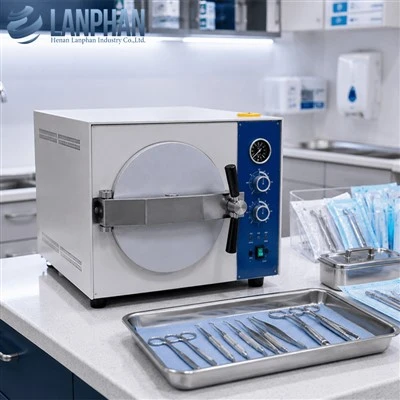
If you’re ready to talk through your specific needs, or have questions about pricing, features, or maintenance, I’m here to help. We can walk through your practice size, your scope of work, and find a solution that fits your budget and keeps your patients safe. Reach out to our team to schedule a consultation and get a custom quote that’s right for you.
References
Autoclave Centers for Disease Control and Prevention. (2021). Guidelines for Infection Control in Dental Health-Care Settings. U.S. Department of Health and Human Services.
Occupational Safety and Health Administration. (2022). Bloodborne Pathogens Standard for Dental Settings. U.S. Department of Labor.
American Dental Association. (2020). Dental Practice Sterilization Guidelines. American Dental Association.
Henan Lanphan Industry Co., Ltd.
We’re well-known as one of the leading dental autoclave suppliers in China, featured by quality products and good price. Please rest assured to wholesale durable dental autoclave for sale here from our factory. For more information, contact us now.
Address: Room 801, East Tower, Xiyuan Square, Zhongyuan District, Zhengzhou City, Henan Province
E-mail: lanphanindustry@lanphan.com
WebSite: https://www.lanphanindustry.com/
