Hey everyone, Gate Valve
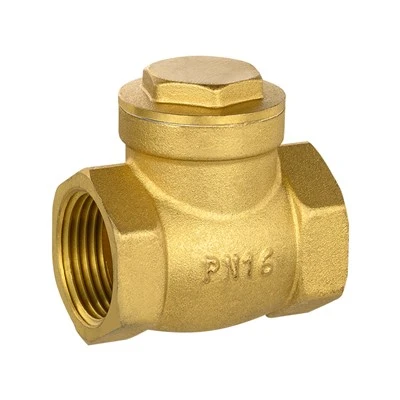
If you’re here reading this, chances are you’re either in the market for industrial valves, already dealing with a gate valve in your facility, or just curious about how these workhorse components hold up over time. As someone who’s been a gate valve supplier for nearly a decade now, I’ve seen firsthand how these valves get hailed as the go-to for big, on-off jobs in pipelines, refineries, water treatment plants, and even construction sites. But let’s be real—no valve is perfect. Today, I want to pull back the curtain and talk about the real disadvantages of gate valves, the ones that don’t make it into the glossy product brochures, and why paying attention to these can save you a ton of headache down the line.
First, let’s start with the basics so we’re all on the same page. A gate valve works like a sliding door: there’s a thin, wedge-shaped gate that you lower into the pipeline to block flow, or lift up fully to let water, oil, gas, or whatever medium you’re using pass through. That full-open design is why people love them—when they’re wide open, there’s almost no turbulence, right? No pressure drop, no wear from fluid slamming against constricted parts. But that very design is also where a lot of their problems start.
Let’s jump into the first big downside: they’re terrible for throttling. Wait, throttling is when you partially open a valve to control flow rate, like turning a faucet handle instead of yanking it all the way on or off. Gate valves aren’t made for that. If you leave the gate halfway up, it rattles back and forth with the flow of fluid. Over time, that constant vibration erodes the gate and the valve seat—those are the two parts that seal when the valve’s closed, right? I’ve had customers come to me saying their gate valve is leaking after only two years of use, and 9 times out of 10 it’s because they were trying to adjust flow with it instead of using a globe valve or a ball valve, which are built for that exact job. Even if you don’t notice the wear right away, that partial position creates turbulence that can mess up your process too. For example, in a chemical pipeline, that uneven flow might mix chemicals when you don’t want it to, or cause cavitation—those little bubbles that form and collapse, eating away at metal from the inside. It’s a silent killer, and gate valves are way more prone to that than most other types.
Next up, size and weight. Gate valves are bulky. Like, really bulky. Let’s say you’re working with a 12-inch pipeline— a gate valve for that might weigh over 500 pounds, and take up twice the space of a comparable ball valve. Why? Because the gate has to slide perpendicular to the flow, so the valve body has to be long enough to fit that stroke. If you’re retrofitting an old facility where space is tight, that extra length and weight can be a nightmare. You might have to reinforce pipe supports, hire a crane to lift it, which adds cost and downtime. I remember a customer in a food processing plant last year—they were replacing a 6-inch gate valve in a confined utility tunnel, and they had to cut a section of wall just to get the new valve in. That’s the kind of logistical hassle no one plans for. And don’t even get me started on how heavy they are to maintain. When you have to take the valve apart to repack the stem (that’s the seal around the screw that opens and closes the gate), you’re lifting a huge metal gate out, which is not a one-person job. That leads me to another point: maintenance can be a pain.
Wait, maintenance. Let’s talk about that. Gate valves are often called “full-port” valves, which sounds good, but when you have to service them, you have to lift that entire gate out of the body. If the valve’s been sitting closed for years—say, in a pipeline that only needs to be shut off once a decade—you might not be able to open it at all. The gate seizes up, rusts to the seat, or mineral deposits (if it’s a water line) glue it in place. I’ve had customers come to me in a panic when their plant’s emergency shut-off gate valve won’t budge during a test. The fix? You have to heat the valve, hammer on the stem, sometimes even cut it out of the pipe. That’s way more expensive and time-consuming than, say, a ball valve, which you can usually take apart without cutting the pipe. Also, the stem on a gate valve— the part that you turn to move the gate—can bend if someone uses a power tool to open or close it too hard. A lot of workers think “bigger tool = faster job,” but a bent stem means the gate doesn’t seal right when you close it, leading to leaks. And replacing that stem? It’s not a cheap part, and it takes specialized tools.
Another disadvantage: sealing problems. When a gate valve is closed, it relies on the gate pressing against the valve seats to make a tight seal. But if the gate isn’t perfectly aligned—if it’s a little warped from heat or corrosion, or if the seats are worn down—you get leaks. External leaks too, not just internal. The stem packing (the seals around the stem) can dry out or crack over time, especially if the valve is outside in extreme temperatures—freezing cold in winter, scorching heat in summer. I’ve seen gate valves on oil pipelines in Texas go from no leaks to dripping in a matter of months because the packing failed from constant temperature swings. Also, for high-pressure applications, gate valves need a lot more torque to close tightly than other valve types. If you’re not using the right actuator (the motor or handwheel that turns the stem), you might not get a proper seal, leading to fugitive emissions—those little leaks of gas or chemicals that are bad for the environment and bad for your bottom line. The EPA has strict rules about that now, so a leaking gate valve can mean fines, not just wasted product.
Wait, what about cryogenic or high-temperature service? Gate valves aren’t the best here either. Let’s take cryogenic, like liquid nitrogen or LNG. The metal in the valve can contract when it’s super cold, and the gate might not seal properly because of that contraction. Or for high temperatures—above like 500 degrees F—gate valves can have thermal expansion issues. The body of the valve might expand unevenly, warping the seats and the gate, leading to leaks. A lot of people think “gate valve = for all pipelines,” but that’s not true. For extreme temps, you’re way better off with a globe valve or a bellows-sealed valve, not a gate.
And don’t forget about cost. Wait, I know gate valves are often cheaper upfront. But let’s do the math over time. If you’re using a gate valve for throttling, it’ll last 2-3 years instead of 10, so you’re replacing it every few years. Add in the downtime—when you have to shut down a pipeline to replace it, that’s lost production. For a refinery, an hour of downtime can cost tens of thousands of dollars. Compare that to a ball valve that lasts 20 years with minimal maintenance, even if it’s a little more expensive upfront. I had a customer in a municipal water treatment plant switch from gate valves to ball valves last year. They said they were replacing 8 gate valves a year, costing them $4,000 each, plus $10,000 in downtime. Now they replace 1 ball valve every 10 years, costing $8,000, with almost no downtime. That’s a no-brainer for them.
Wait, let’s also clear up a common misconception. A lot of people think gate valves are good for isolation, which they are, but only if you never need to use them again. If you’re going to open and close the valve frequently, like once a day, a gate valve’s gate and stem will wear out fast. That’s because the gate slides along the seat every time you open or close it, creating friction. With a ball valve, the ball rotates, so there’s less contact friction, so it lasts way longer. I always tell customers: use a gate valve if you need a valve that’s only on or off, and you won’t touch it for years. If you need to operate it regularly, or throttle flow, go with something else.
So who does that leave gate valves good for? Honestly, mostly for mainline isolation in big pipelines, where they’re rarely operated, and space isn’t a huge issue. But for a lot of other applications, their disadvantages make them a bad fit.
Now, I know what some of you are thinking: “I have a gate valve that works fine, why should I care?” That’s great, but odds are you’re using it for the right job. If you’re having issues with leaking, seized valves, or frequent replacements, then it’s probably the wrong valve for what you’re doing.
At the end of the day, every valve has its pros and cons. I sell gate valves, but I’ll be the first to tell you when a customer should look at another type. Because I’d rather you get a valve that works for your application than buy a gate valve that’s going to give you headaches. If you’re not sure what kind of valve you need, or you’re dealing with a bad gate valve that’s causing problems, hit me up to talk through your setup. We can go over your pipeline specs, how often you operate the valve, the temperature and pressure of your medium, and find the right solution for you—whether that’s another type of valve or a gate valve modified for your needs.

Don’t waste more time and money on a valve that’s not built for what you’re using it for. Reach out, let’s chat.
Bibcock References
- Valve Manufacturers Association (VMA) Handbook: Selection, Application, and Installation of Industrial Valves
- Energy Institute Guidelines for the Specification of Industrial Valves for Oil and Gas Pipelines
- U.S. Environmental Protection Agency (EPA) Fugitive Emission Standards for Valves and Pumps
- ASME B16.34: Standard for Valves – Flanged, Threaded, and Welded End
- Hydraulic Institute: Selection and Sizing of Valves for Fluid Power Systems
Yuhuan East-Asia Valve Industrial Co., Ltd.
As one of the most experienced gate valve manufacturers and suppliers in China, we also support customized service. We warmly welcome you to wholesale high quality gate valve for sale here from our factory. If you have any enquiry about quotation, please feel free to email us.
Address: Bingang Industrial Park,Shamen Town,Yuhuan City,Zhejiang Province.
E-mail: sales@dongyavalve.com
WebSite: https://www.eastasiavalves.com/
