Hey everyone, if you’re a business owner or someone new to importing/exporting, you’ve probably Googled “how much does sea freight customs clearance cost from China to Australia” at least once. As someone who’s run a China-Australia sea freight company for 7 years, I get it—this stuff feels super vague at first. You might see a base rate for shipping a 20ft container, then get hit with random fees at the port that you didn’t plan for. Let me break this down like I would with a client sitting across my desk, no jargon, no hidden numbers. China-Australia Sea Freight
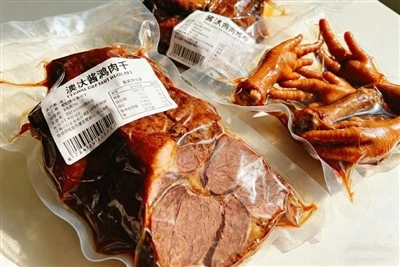
First, let’s get one thing straight: there’s no one-size-fits-all price for customs clearance. It depends on 5 big variables: what you’re shipping, how much, where it’s going in Australia, and even how fast you need it. I’ve had small businesses shipping a single pallet of hand sanitizer pay $120 AUD total, and a factory importing a whole container of heavy machinery pay over $800 AUD. That’s a huge gap, so let’s dive into each part step by step.
First, let’s talk about the basic “customs clearance fee” itself. This is the charge from your freight forwarder (that’s us, by the way) to handle the paperwork with both Chinese customs when the goods leave and Australian customs when they arrive. For most small to medium shipments—like 1-2 pallets, or a partial container load (LCL)—that fee is usually between $110 and $150 AUD. For a full 20ft or 40ft container (FCL), it’s a bit lower, around $90 to $130 AUD. Why the difference? LCL shipments are spread across multiple boxes, so the paperwork is more tedious—you have to match your goods to the other shippers’ in the container, make sure all labels line up, and flag where yours is. FCL is a single consignment, so we don’t have to do that extra legwork.
But wait, that’s just the forwarder’s fee. The Australian government also charges two mandatory fees you can’t skip. The first is the Border Protection levy. Right now, that’s 0.1% of the total value of your goods, with a minimum of $50 AUD and a maximum of $1,000 AUD. So if you’re importing $10,000 worth of home decor from Guangzhou, that’s $10 AUD? No, wait, no—the minimum applies here, so you’d pay the $50 flat. If you’re importing $200,000 worth of industrial equipment, that’s 0.1% so $200 AUD, which is way under the max. The second government fee is the GST—Goods and Services Tax, which is 10% of the total value of your goods plus the shipping cost plus any insurance. That one adds up fast, especially if you’re shipping high-value stuff. For example, if you’re importing a $15,000 batch of electronics with $1,000 in shipping, GST would be 10% of $16,000 = $1,600 AUD. I’ve had clients try to skip that by undervaluing their goods, but Australian customs checks that super closely now—they flag any shipment listed under $1,000 AUD automatically for a review, so don’t even try. You’ll just get hit with a penalty fee on top of the GST.
Now, the variable fees—these are the ones that trip people up. Let’s start with the commodity code. Every product has a specific HS code (Harmonized System code) that tells customs what it is, and that changes a lot. If you’re shipping a plastic cup, the code is 3924.10, which is straightforward—clearance fees are low. But if you’re shipping something like a battery-powered power tool, the code might be 8508.11, and you have to provide a test report to prove it meets Australian safety standards. That means we have to do extra paperwork, so the clearance fee goes up by $50 to $80 AUD. And if you’re shipping restricted goods? Like food, cosmetics, toys, or plant-based products? Those need inspection by Australia’s Department of Agriculture, Water and the Environment. For food, that’s a $70 AUD inspection fee, plus $30 to $40 for the paperwork. I once had a café owner import a pallet of coffee beans—he thought it was just a regular shipment, but got a $120 AUD bill for the biosecurity check. It’s not a scam, it’s to keep pests out, which is a real thing. Australian farms and forests depend on that.
Next, where is your goods going in Australia? If it’s a major port like Sydney, Melbourne, or Brisbane, clearance is straightforward. But if you’re shipping to a smaller city like Adelaide, Perth, or even a regional town like Townsville, you have to pay a “freight on-carriage fee” from the port to your warehouse, plus sometimes a “remote area surcharge” for clearance. That surcharge is usually $30 to $50 AUD. I’ve had clients in Perth get slapped with an extra $60 AUD total because their goods had to be transported from Fremantle Port to a warehouse on the other side of the state. Makes sense, but you have to plan for that.
Then there’s LCL vs FCL. If you’re doing LCL, which is when you share a container with other shippers, you might also pay a “destuffing fee.” That’s when we open the container at the port in Australia to take your goods out, and that fee is usually $40 to $60 AUD per pallet. If you’re FCL, you don’t pay that, obviously, because your goods are the whole container. Also, if you need fast clearance—like express customs, which takes 1-2 days instead of the standard 5-7—you’ll pay an extra $50 to $70 AUD. I know, it’s tempting to pay for fast clearance if you need stock for a busy season, but most of my clients just go with standard because it saves them money.
Wait, let’s also talk about penalties, because those are the worst. If you don’t have the right paperwork—like if you forgot to include a commercial invoice, or the HS code is wrong, or you undervalued the goods—customs will hold your shipment until you fix it, and they charge a “storage detention fee” at the port. That’s usually $50 to $100 AUD per day, and it adds up fast. I once had a client who waited 10 days to get their goods, that was $800 AUD in storage fees alone. Avoid that by making sure you have all your documents: a commercial invoice with accurate value, a packing list with every item and quantity, a bill of lading, and any necessary permits or test reports. We send a checklist to all our clients before shipping, so that’s easy.
Now, let’s put all this together with real examples, because numbers are easier to get than abstracts. Let’s say you’re a small business importing 2 pallets of handmade mugs from Shenzhen to Sydney. The mugs are worth $3,000 AUD total, LCL shipment. Let’s break down the costs:
- Forwarder clearance fee: $120 AUD
- Border Protection levy (0.1% of $3,000 = $3 AUD, but min $50): $50 AUD
- GST (10% of $3,000 + $800 shipping + $100 insurance = $3,900, so 10%): $390 AUD
- Destuffing fee for 2 pallets: $50 AUD
- No biosecurity fees (mugs are not restricted)
Total: $120 + $50 + $390 + $50 = $610 AUD. That’s about right for that type of shipment.
Another example: a medium business importing a full 20ft container of industrial tools from Shanghai to Melbourne, worth $25,000 AUD. FCL shipment, no restricted goods. Let’s break it down:
- Forwarder clearance fee (FCL): $100 AUD
- Border Protection levy (0.1% of $25,000 = $25 AUD, min $50, so $50 AUD)
- GST (10% of $25,000 + $2,000 shipping + $500 insurance = $27,500, so 10%): $2,750 AUD
- No destuffing fee (FCL)
- No remote surcharge (Melbourne is major)
Total: $100 + $50 + $2,750 = $2,900 AUD. That’s also in line with what I charge, no hidden stuff.
Now, what are the common mistakes people make that add to their cost? Let me list them:
- Using a generic HS code: I can’t tell you how many times clients send me a code that’s wrong, leading to extra fees. For example, if you code a kids’ toy as a plastic novelty instead of a children’s product, customs makes you submit extra safety docs, which adds $70 to the fee.
- Undervaluing goods: Customs uses their own valuation tool, so if you put your $1,000 shipment as $500, they’ll charge GST on their valuation, not yours. And they might fine you 10% of the total GST, which is way more than the GST you tried to skip.
- Forgetting biosecurity checks: If you’re importing food, cosmetics, or anything organic, you have to tell us. I had a client import 50 boxes of organic skincare without telling us, and they got a $120 biosecurity fee. If he’d told us upfront, we would have warned him, but it’s no big deal—we can handle it.
- Choosing the wrong port: If you ship to a small port in Australia, the clearance fees are often higher because the staff is smaller and slower. Major ports have more resources, so fees are lower. We can help you choose the best port for your needs, though—sometimes a slightly more expensive port saves you money on clearance.
As a China-Australia sea freight provider, I don’t just give you a quote and disappear. I walk you through every step, so you know exactly what you’re paying for. I’ve been in this game for years, and I’ve seen so many people get ripped off by forwarders who charge hidden fees, so my thing is transparency. That’s why I tell clients exactly what’s included, and what’s extra, before they book.
Now, if you’re planning a shipment soon, don’t guess the clearance cost. Send us the details: what you’re shipping, the value, where it’s going, and if it’s LCL or FCL. We’ll give you a breakdown that’s accurate, no surprises. We also help with all the paperwork so you don’t have to stress—no more sitting there trying to figure out what a HS code is.
Wait, one last thing: people often ask if using a forwarder is cheaper than doing customs themselves. Let’s be real—if you do it yourself, you might save $50 on the clearance fee, but you’ll spend 10 hours on paperwork, phone calls to customs, and fixing mistakes. For most businesses, especially small ones, the peace of mind and accuracy of using a forwarder like us is worth the extra cost. I’ve had clients who tried to do it themselves and ended up with $1,000 in storage fees because they messed up the paperwork. So yeah, we’re worth it.
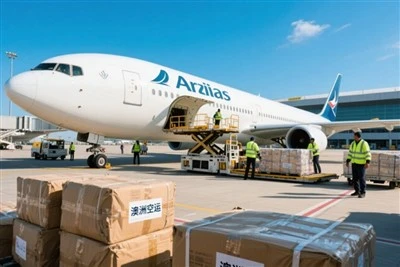
If you have questions, or want a custom quote, feel free to reach out. We work with everyone from small Etsy sellers to big manufacturing companies, and we tailor every shipment to your needs. No generic rates, no fine print, just honest numbers.
China To Australia Air Freight Line References:
- Australian Border Force. (2024). Border Protection Levy. Retrieved from official ACG tariff documentation.
- Australian Taxation Office. (2024). GST on Imported Goods. Retrieved from ATO import guidelines.
- Department of Agriculture, Water and the Environment. (2024). Biosecurity Clearance Fees for Sea Freight. Retrieved from DAWE cargo inspection policies.
- International Trade Administration. (2024). HS Classification Guidelines for China-Australia Trade. Retrieved from ITA tariff classification resources.
Shenzhen Kuaihui International Logistics Co., Ltd.
Shenzhen Kuaihui International Logistics Co., Ltd. is a leading China-Australia dedicated logistics service provider in China. As a professional agent and platform, we are committed to providing high quality china-australia sea freight with low price. Welcome to contact us for pricelist.
Address: 3rd Floor, Building 6, Nanbiantou Industrial Zone, Xifang, Songgang Street, Bao’an District, Shenzhen City, Guangdong Province
E-mail: info@kkhwl.com
WebSite: https://www.kuaihuiexp.com/
