If you’ve ever walked into a bustling restaurant at 8 a.m. and watched the line of line cooks waiting for hot water to rinse fresh produce, or listened to a hotel maintenance manager complain about overnight guest showers running cold, you know how critical a commercial water heater is to any business. Unlike residential units, these systems aren’t just about warming water for a single family—they power dishwashing stations, laundry rooms, sanitation cycles, and guest amenities for dozens or hundreds of people daily. As a commercial water heater supplier, I get asked this question at least three times a day: “How much does it cost to install a commercial water heater?” The short answer is, it’s not a one-size-fits-all number. It depends on your building’s needs, the type of unit you choose, and the hidden costs most vendors don’t mention upfront. Today, I’m breaking down every line item so you can budget accurately, no guesswork required. Commercial Water Heater
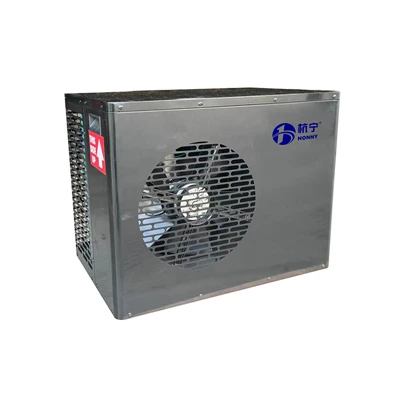
First, let’s start with the big ticket: the water heater unit itself. Residential water heaters typically top out at 50 gallons, but commercial units range from 100 gallons all the way up to 1,000 gallons or more, depending on your peak demand. A small café or retail shop might only need a 100–200 gallon unit, while a full-service restaurant, gym, or mid-sized hotel needs 500 gallons or higher. The two most common types are storage tank water heaters and tankless (on-demand) water heaters, and their price tags vary dramatically.
Storage tank units are the workhorses of commercial settings. They hold a large reserve of hot water, so you never have to wait for a shower or a dishwasher cycle to finish. A basic 100-gallon electric storage tank runs between $1,200 and $2,500, while a gas-fired 200-gallon unit (which is 20–30% more efficient than electric, making it a better long-term bet for high-demand spaces) will set you back $2,500 to $4,000. Tankless commercial systems, on the other hand, heat water as it flows, so you never run out during peak use—no more mid-brunch dips in hot water. But they’re pricier upfront: a small tankless unit for a café starts at $3,000, while a large commercial tankless for a hotel can cost $10,000 or more. It’s easy to fixate on that initial cost, but I always tell customers to factor in utility savings. A gas tankless unit can cut water heating bills by 20–30% compared to a standard gas storage tank, so that higher upfront cost pays for itself in 3–5 years.
But wait—if that’s just the unit, what else are you paying for? Installation costs are where a lot of first-time business owners get sticker shock. A lot of vendors will quote you a rock-bottom unit price and then load you up with hidden labor fees, but at our company, we’re transparent about every expense. First, there’s the rough-in work: if your old water heater is being replaced, your team has to cut new pipes, adjust gas lines, or reroute electrical connections to fit the new unit. For example, if you’re switching from a 100-gallon electric tank to a 300-gallon gas storage tank, you’ll need to upgrade your gas line to support the higher BTU output, which costs $500 to $1,500, depending on how far the line has to run. If you’re moving a water heater to a different part of the building, that adds another $1,000 to $2,000 in pipework and drywall repairs.
Next, labor. A commercial water heater installation isn’t a DIY project. These systems require permits, compliance with local building codes, and testing to make sure they’re safe for daily use. Most commercial plumbers charge $150 to $250 an hour, and a full installation takes 4 to 8 hours for a small unit, up to 12 hours for a large tankless system. That translates to $600 to $2,000 in labor, on average. But there are extra labor costs too: if your building’s water pressure is too high (a common issue in older commercial spaces), we’ll need to install a pressure regulator, which adds $200 to $400. If your area has hard water, a water softener or pre-filter is a smart investment to extend your water heater’s lifespan—another $300 to $800, depending on the unit.
Don’t forget about permits and inspections. Every city and county requires a permit for commercial plumbing work, and the cost varies wildly: in small towns, permits might be $100 to $200, while in major cities like New York or Los Angeles, they can run $500 to $1,000. You’ll also need a final inspection from your local building department to make sure the unit meets fire, safety, and plumbing codes. Skipping this step might save you a few dollars now, but it can lead to fines down the line, or worse, a safety hazard if the unit is installed incorrectly.
Another often-overlooked cost is venting and combustion. Gas-fired water heaters need proper venting to release carbon monoxide, which is toxic and can be fatal if vented improperly. If your old unit used a simple chimney, a new high-efficiency gas unit might require a PVC vent system, which costs $500 to $1,200, depending on the length of the vent run. Electric water heaters don’t need venting, but if your unit requires a dedicated 240-volt circuit (which most commercial electric units do), an electrician will need to run new wiring, adding $300 to $700.
Now, let’s talk about specific use cases to give you a real sense of total costs, not just numbers on a page. Let’s start with the smallest commercial space: a 1,000-square-foot café that serves 50 customers a day, uses hot water for dishwashing, coffee, and handwashing. A good fit here is a 200-gallon gas storage tank. The unit costs $2,800, installation labor is $800, permit is $150, gas line adjustment is $400, and basic water pressure regulator is $250. That adds up to $4,400 total. If you opt for a tankless gas unit for the same café, the unit is $3,500, installation labor is $1,000, permit is $150, and venting adjustment is $300, coming to $4,950. The tankless is a bit pricier upfront, but if the café runs a lot of back-to-back dish cycles, it will never run out of hot water, and monthly utility bills will be about $30 lower, saving $360 a year.
Now a mid-sized space: a 5,000-square-foot gym with locker rooms, a small kitchen for staff, and a group fitness studio that uses hot water for cleaning mats. They’ll need a 500-gallon gas storage tank to handle 100+ daily users. The unit is $4,200, installation labor is $1,500, permit is $300, gas line upgrade is $1,000, water softener for hard gym water is $600, and venting is $700. Total here is $8,300. If the gym upgrades to a tankless system, they’d need two medium tankless units (to cover peak demand) for a total of $12,000, installation labor of $2,500, permit $300, venting $1,200, and water softener $600, for a total of $16,600. That’s a bigger upfront cost, but for a gym that never wants to deal with cold showers after a spin class, it’s a long-term win.
Finally, a full-service 100-room hotel, which needs to supply hot water for 200+ guests, laundry rooms, and kitchen dishwashing. They’ll need a high-capacity gas storage tank or a large commercial tankless system. A 1,000-gallon gas storage tank is $8,000, installation labor $2,800, permit $800, gas line upgrade $1,800, water softener $1,000, and venting $1,500. Total: $15,900. A large commercial tankless system for the hotel is $18,000, installation labor $3,500, permit $800, venting $2,000, water softener $1,000, for a total of $25,300. For a hotel, downtime from a broken water heater means lost revenue—so the tankless’s ability to provide endless hot water is often worth the extra cost.
But here’s the thing: installing a commercial water heater isn’t just about buying a unit and plugging it in. There are factors that can push your costs higher, or save you money. For example, if you’re replacing an old water heater that’s still functional, you might qualify for a trade-in discount. We often offer 10–15% off a new unit when you turn in your old one, which can cut $200–$500 off your total. Another way to save is to choose energy-efficient units that qualify for local or federal rebates. Many utility companies offer rebates of $500–$1,500 for gas or electric high-efficiency commercial water heaters, and some government programs for small businesses offer additional tax credits. I recently worked with a small restaurant that saved $1,200 on their new gas water heater through a state energy rebate—enough to cover their installation permit twice over.
On the flip side, there are costs you can’t avoid if you want your water heater to last. A lot of business owners skip annual maintenance to save money, but that’s a mistake. Commercial water heaters need annual flushing to remove sediment (which builds up in tanks and reduces efficiency by 10–20% over time) and inspections of gas lines, vents, and pressure relief valves. Annual maintenance costs $200–$300 a year, which sounds like a lot, but it prevents costly repairs (like a broken heating element or a leaking tank) that can run $1,000 or more, and extends your water heater’s lifespan from 8–10 years to 15–20 years. We’ve seen too many businesses cut corners on maintenance, only to have their water heater fail during a busy weekend, leading to hundreds or thousands in lost revenue from closed operations.
I know this all sounds like a lot to parse, but the key takeaway is that commercial water heater installation costs are unique to your business. A small retail shop will never need the same unit, labor, or permits as a full-service hospital, and there’s no one “right” number. The worst thing you can do is go with the lowest quote you find online—many of those quotes leave out critical costs like permits, gas line upgrades, or maintenance, and end up costing you more in the long run.
If you’re in the market for a new commercial water heater, or you’re thinking of replacing your current one, my team is here to help. We don’t push the most expensive unit—we work with you to assess your daily hot water needs, your building’s infrastructure, and your budget, to give you a transparent, itemized quote with no hidden fees. We handle all permits and inspections, and our installation team is certified to work on every type of commercial water heater, so you can trust the job is done right the first time.
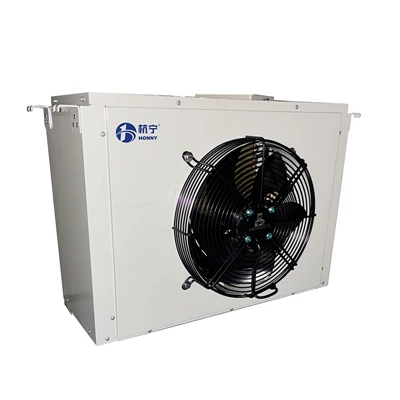
Ready to stop guessing about your commercial water heater costs and start planning for a unit that keeps your business running smoothly? Reach out to our team to discuss your needs, and we’ll put together a customized proposal tailored to your space and budget.
Heat Pump Water Heater References
- U.S. Department of Energy, Energy Efficiency and Renewable Energy. Commercial Water Heaters.
- International Code Council. 2021 International Residential Code (IRC) and International Plumbing Code (IPC) for Commercial Plumbing.
- Air Conditioning, Heating, and Refrigeration Institute (AHRI). Commercial Water Heater Performance Standards.
- National Association of Water Companies. Commercial Water Heating Costs and Rebate Programs.
- Plumbing-Heating-Cooling Contractors Association (PHCC). Commercial Water Heater Installation Best Practices.
Hangzhou Honny Heat Energy Technology Co., Ltd.
We are one of the most experienced commercial water heater manufacturers and suppliers in China. With a professional production team, we are able to meet the needs of the majority of our customers. Please feel free to wholesale customized commercial water heater from our factory. Also, quotation is available.
Address: Dingshan Village, Wenyan Subdistrict, Xiaoshan District, Hangzhou City, Zhejiang Province
E-mail: 524435406@qq.com
WebSite: https://www.hnrnkj.com/
