Let’s cut to the chase—if you’ve ever worked with linear actuators, you’ve probably heard the phrase “iron core” thrown around, maybe assumed it’s just a random chunk of metal inside, and moved on. But if you’re in the market for actuators (or already know the headache of underperforming ones), that iron core is the unsung hero that makes or breaks everything from your robot arm’s precision to the automated door at your local warehouse. As someone who’s supplied custom iron core parts to actuator manufacturers for 12 years now, I’ve talked to so many engineers who skip over this small component and end up paying for it later—big time. Let’s break this down like I would over a coffee, no stuffy engineering jargon that makes your eyes glaze over. Iron Core
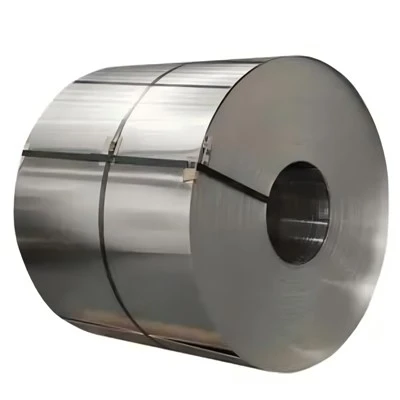
First, let’s start with what a linear actuator actually does, super simplified. It’s the part that converts electrical energy into straight-line motion, right? Think of them as the muscle in everything from factory assembly lines to electric vehicle door latches to even those fancy window blinds in your smart home. Most common actuators use a magnetic field to generate that push or pull, and that’s where the iron core comes in. At its most basic, it’s a solid (or sometimes laminated) piece of magnetic metal—usually soft iron or a specialized steel alloy— that sits inside the actuator’s coil winding. It’s not there just to fill space, I promise.
Here’s the core science (pun fully intended) that no one tells you at first. When you run electricity through the coil, it creates a magnetic field. Iron is way more permeable than air, which means it can hold and direct that magnetic field way better than empty space could. Without an iron core, that magnetic field would spread out willy-nilly, like a flashlight bulb without a reflector—most of the energy would just dissipate into the air, and you’d need a way bigger power source to get any meaningful motion. Stick an iron core in that coil, though, and it acts like a magnet highway. It concentrates the magnetic flux (that’s the fancy term for the magnetic field’s strength) right where it needs to be, focused on the actuator’s moving part (usually a rod or armature). That means you get way more push/pull force for the same amount of electricity, which translates to smaller motors, lower energy bills, and longer component life.
Wait, but not all iron cores are created equal, right? That’s the biggest mistake I see engineers making—they grab the cheapest off-the-shelf core and wonder why their actuator is burning out in 6 months instead of 5 years. Let’s get into the types, because that’s where the magic (and the cost savings) lives. The two main kinds are solid iron cores and laminated iron cores. Solid is just what it sounds like: one chunk of iron. Laminated is stacks of thin, insulated iron sheets, glued or pressed together. Why does that matter? It comes down to something called eddy currents—tiny, unwanted electrical currents that form when a magnetic field moves through metal. Eddy currents waste energy as heat, which is bad for efficiency and can overheat the coil, wearing it out fast. Solid cores get way more eddy current buildup, especially when the actuator is cycling on and off quickly (like in a high-speed pick-and-place robot). Laminated cores, though, the thin sheets and the insulation between them break up those eddy currents, so less heat, more efficiency, and longer life. That’s why we specialize in both—we’ll help you pick which one fits your application, not just sell you a one-size-fits-all.
Let’s put this in real-world examples, not textbook terms. Say you’re building a linear actuator for a medical device—something that adjusts a patient’s bed height or moves a surgical tool. You need precision, low noise, and super reliable performance, no overheating when it’s cycling 20 times an hour. For that, you’d want a high-grade laminated silicon steel core—silicon adds extra magnetic stability, and the laminations keep heat down. On the flip side, if you’re making a simple actuator for a garage door opener that only moves a few times a day, a solid low-carbon iron core might work fine and save you a few bucks upfront. But if you try to use that same solid core in a factory assembly line actuator that’s running 24/7? By month 3, that core is so hot from eddy currents, the coil burns out, and you’re facing $10k in downtime repairs. I’ve seen that exact scenario three times last year alone—engineers went cheap on the core, paid way more in the end.
Another thing that’s non-negotiable: material quality and manufacturing precision. Not all soft iron is the same. There’s commercial-grade iron that has impurities like carbon and manganese that mess up magnetic performance, and then there’s electrical-grade steel that’s refined specifically for magnetic applications. At our shop, we source only electrical-grade materials for our cores—no cutting corners there. And precision matters more than you’d think. If the core’s dimensions are off by even a few thousandths of an inch, it doesn’t sit evenly inside the coil winding, which creates uneven magnetic flux, causes wobble in the actuator’s motion, and can add extra stress on the moving parts. I remember one customer who switched to our cores from a cheap overseas supplier—his actuator’s positional accuracy jumped from ±0.5mm to ±0.1mm, just from a perfectly aligned core. He said that saved him hundreds of dollars per unit in scrap parts from misaligned assembly.
Wait, let’s also clear up a common myth: iron cores are only for big, industrial actuators. No way. Those tiny linear actuators in your phone’s camera that adjust the lens? They have a micro iron core, too—just scaled down. Same principle, just a fraction of the size. Even electric vehicle throttle actuators use iron cores, because EVs need every bit of efficiency they can get to extend range. So no matter what size actuator you’re working on, the iron core is there doing its job.
Here’s the thing that really frustrates me: most actuator manufacturers treat the iron core like an afterthought, when it’s actually one of the highest-impact parts of the whole system. You can put a $100 motor and $200 linear rod in an actuator, but if you pair it with a $2 iron core from a no-name supplier, you’re throwing that $300 away. Conversely, a $10 custom iron core can make a $50 motor perform like a $100 motor. It’s a tiny part with a massive return on investment, if you get it right.
I’ve been in this game long enough to see trends, too. In the last 5 years, demand for higher-efficiency actuators has exploded, thanks to smart factories and EVs. That’s pushed more engineers to stop ignoring the iron core. We’ve had to adapt, too—we now do custom machining, coatings for corrosion resistance (super important for outdoor actuators in construction or agriculture), and even prototype runs for startups that are testing new actuator designs. Last quarter, we made 12,000 custom iron cores for a company building automated greenhouse ventilation actuators—they needed cores that could hold up to high humidity and temperature swings, so we added a specialized epoxy coating that didn’t mess with magnetic performance. That’s the stuff generic suppliers can’t do.

So if you’re reading this, you’re probably either an engineer designing actuators, a purchasing manager trying to cut costs without sacrificing quality, or someone who’s had an actuator fail out of nowhere and is trying to figure out why. Let’s be real—no one wants to deal with actuator downtime, whether it’s a robot line at a factory or a piece of medical equipment in a clinic. The iron core is the first thing you should check when your actuator is underperforming: is it getting too hot? Is it not generating the force it used to? Is the motion wobbly? 9 times out of 10, the core is the culprit.
Transformer Accessories If you’re in the market for iron cores for your linear actuators, whether you need standard sizes or custom-made for your specific application, I’m here to help. We work with startups, small manufacturers, and big industrial clients alike, so no job is too small or too large. We’ll send you a free sample if you want to test our cores against what you’re using now, no strings attached. Just reach out to our team to start a conversation about your needs.
References
- Bose, T. K. (2010). Modern Power Magnetics: Materials, Design, and Applications. CRC Press.
- Hendry, A. (2018). “Eddy Current Losses in Laminated Iron Cores for Linear Actuators.” IEEE Transactions on Industrial Electronics, vol. 65, no. 4, pp. 3122–3130.
- Miller, T. J. E. (2014). Brushless Permanent Magnet and Reluctance Motors. Oxford University Press.
Wuxi Zhongpu Electric Co., Ltd.
As one of the most professional iron core manufacturers and suppliers in China, we also support customized service. Please feel free to wholesale bulk high quality iron core made in China here from our factory. Welcome to contact us for pricelist.
Address: No.52 Jiankang Road, Donggang Town, Xishan District, Wuxi City, Jiangsu Province
E-mail: 13585006135@163.com
WebSite: https://www.zhongpuelectric.com/
