If you’ve ever wandered through a modern retail space, a residential loft, or a community center’s renovation project, chances are you’ve spotted PVC wall panels. As a PVC wall panel supplier, I get asked this question at least a dozen times a week: “Can PVC wall panels also work as ceiling panels?” It’s a great question—one that makes total sense, especially when you’re planning a cohesive, low-cost, low-maintenance renovation that pulls every surface of a room together. For years, the industry has been split on this, with some installers sticking strictly to walls and others experimenting to fill gaps in both function and design. Let’s break this down with real-world testing, material science, and the on-the-ground feedback I’ve gotten from contractors and homeowners I’ve worked with over the last eight years in this business. PVC Wall Panel
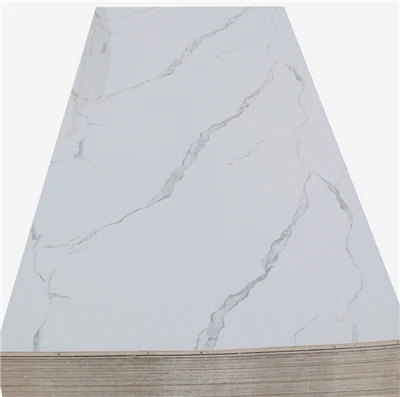
First, let’s talk about what PVC panels actually are, because that foundation is key to understanding their performance on ceilings. PVC stands for polyvinyl chloride, a synthetic plastic polymer that’s been used in construction for decades—think plumbing pipes, window frames, and even some medical devices. The wall panels we supply are typically extruded into rigid sheets, often 10mm or 12mm thick, with a smooth or textured surface, a layer of UV-resistant coating for exterior use, and a core that’s formulated to resist moisture, mold, and mildew. Unlike drywall, which is fragile, prone to cracking, and absorbs moisture, PVC panels are non-porous, lightweight, and resistant to impact. That material core is why many people assume they can be installed anywhere, but ceilings have unique demands that walls don’t—so we can’t just swap them 1:1 without checking the details.
The biggest factor when considering PVC panels for ceilings is structural load. Most standard PVC wall panels are lightweight—roughly 1.5 to 2 pounds per square foot—way lighter than drywall, which can clock in at 2 to 3 pounds per square foot for ½-inch drywall, or even more for thicker, fire-rated options. That’s a big win for ceilings, because ceiling structures (especially in older homes or commercial spaces) often have load limits that can’t handle heavy materials. I had a customer in Cleveland last year who was renovating a 1920s bungalow with original pine ceiling joists; he wanted to replace his old, water-stained plaster ceiling, and was told he couldn’t use drywall because the joists were only rated for 1.8 pounds per square foot. He tried 8mm PVC wall panels, and the total load ended up being less than 1.2 pounds per square foot—no structural issues at all. That’s a perfect example of PVC’s ceiling potential, but it’s not just that they’re light; it’s about how they’re installed.
Installation method is non-negotiable when putting PVC panels on ceilings, because that’s where most mistakes happen. For walls, you can usually install them with adhesive directly to studs, or on a furring strip. For ceilings, adhesive works, but mechanical fasteners (like stainless steel screws or specialized ceiling clips) are much more reliable, especially in areas with temperature fluctuations that can cause materials to expand or contract. PVC has a linear expansion rate of about 0.00005 mm per mm per degree Celsius, which is higher than drywall but lower than some other plastics. So if you install panels too tight on a ceiling in an attic that gets hot in the summer, they can warp or buckle. I always tell installers to leave a 1/8-inch gap between each panel and the wall, and to use clips that allow for a little movement, rather than drilling them completely flush. That’s a lesson we learned the hard way a few years ago, when a contractor in Phoenix installed panels without leaving expansion gaps, and 20 panels had to be replaced after a heatwave. It’s not that PVC can’t be on ceilings—it’s that you have to follow the installation rules.
Next up: environmental performance. Ceilings are exposed to different conditions than walls, especially in spaces like bathrooms, basements, or commercial kitchens. Bathrooms have high humidity, basements can be damp, and commercial kitchens have constant steam and grease. PVC panels are non-porous, so they don’t absorb moisture, which means they won’t grow mold or mildew the way drywall or even wood paneling will. I had a homeowner in Orlando who installed PVC wall panels on his bathroom walls and then decided to put the same panels on his bathroom ceiling a year later, after his old textured ceiling started peeling from humidity. Two years later, he sent me photos, and there was no discoloration, no mold, no peeling edges—something that would have required scraping and repainting every year if he’d used drywall. For basements, where humidity levels can spike, PVC ceiling panels are also a smart choice; I recently worked with a school district that renovated their after-school program basement, using our PVC panels on both walls and ceilings, and the facilities manager told me in six months, they’ve had zero moisture-related issues, compared to the previous drywall ceiling which had water stains and mold within three months.
But it’s not all perfect. There are scenarios where PVC panels don’t make sense for ceilings, and as a supplier, I’m obligated to be honest about that, because I don’t want my customers wasting money on a product that’s not right for their space. The main one is areas with extremely high heat, like saunas or spaces near industrial furnaces. PVC has a melting point of around 160 degrees Fahrenheit, so if you’re putting a ceiling panel in a sauna that hits 180 degrees, it’s going to warp and deform. We also don’t recommend PVC panels for high-impact areas, like gym ceilings where basketballs or equipment might hit them, because while they’re impact-resistant, a hard enough hit can crack the panel, and replacing a ceiling panel often requires removing adjacent ones, which is more work than replacing a wall panel. Another consideration is fire rating; most standard PVC wall panels have a Class C fire rating, which is fine for residential use and most commercial spaces like offices or retail stores, but if you need a Class A fire rating for a high-rise building, you’ll need to specify a fire-rated PVC ceiling panel, which is a slightly different formulation with additives that slow burning. That’s an important detail—always check the fire rating for your specific application, because not all PVC panels are created equal.
Design is another big reason people ask about this. Cohesive design is huge for renovations, especially for small spaces where you don’t want to mix different materials for walls and ceilings. A lot of contractors and homeowners want to create a “warm, modern” look with textured PVC panels, or a sleek, minimalist look with smooth white panels, and having the same material on walls and ceilings makes the whole space feel larger and more unified. I had a customer in New York City who was renovating a 500-square-foot studio apartment; he used our 10mm smooth white PVC panels on both walls and ceiling, and with a few strategically placed LED lights, the room felt twice as big as it was. He told me he tried drywall, but it was too heavy and took too long to install, and wood paneling was too expensive and prone to warping. PVC was the perfect fit, and it all matched. We also offer a range of finishes—wood grain, stone look, matte, gloss—so you can get the exact ceiling look you want, not just a plain white panel.
Cost is a factor too, and I always remind people that PVC is one of the most cost-effective renovation materials on the market. The average cost of our PVC panels is about $2 to $5 per square foot, depending on thickness and finish, compared to drywall which is about $1 to $3 per square foot, but that’s before accounting for installation and maintenance. Drywall installation for a ceiling usually costs $2 to $4 per square foot, plus taping, mudding, and sanding, which adds another $1 to $2 per square foot. PVC panels are much faster to install—you can put them up in about half the time of drywall, because there’s no sanding or painting needed. And because they’re low-maintenance, you never have to repaint or re-mud them; a quick wipe with a damp cloth is all you need to keep them looking new. That adds up to big savings over time. For example, a 100-square-foot ceiling would cost about $600 to install with drywall (materials plus labor), compared to about $300 to $400 with PVC panels, with no ongoing maintenance costs for the life of the panel (which is typically 20 to 30 years).
I’ve also heard some concerns about durability, especially for ceilings, but in my experience, PVC panels on ceilings hold up really well. I had a restaurant owner in Houston who installed PVC panels on the walls and ceiling of his pizza shop four years ago. The kitchen area has constant heat, steam, and grease, and the ceiling is right over the oven. When he called me last month to order more panels for a new location, he told me the original ceiling is still in perfect shape—no grease stains that won’t wipe off, no warping, no peeling. He said he’s had to repaint the drywall ceiling in his old shop every two years, so switching to PVC saved him thousands of dollars over the last four years. That’s real feedback from someone who uses the product in a high-traffic, high-wear commercial space.
So, to circle back to the original question: Can PVC wall panels be used as ceiling panels? The short answer is yes, but with a few important caveats. They work great for low-load ceilings in residential spaces, bathrooms, basements, retail stores, offices, and other spaces with moderate temperature and humidity. They’re lightweight, easy to install, low-maintenance, and offer a cohesive design look that’s hard to beat. But they’re not the right choice for high-heat areas, high-impact spaces, or areas that require a specific fire rating beyond Class C. The key is to work with a reputable supplier, like our team, who can help you choose the right thickness, finish, and installation method for your specific space.

If you’re considering a renovation and want to explore whether PVC panels can work for your ceiling, we’re here to help. We offer free samples, detailed installation guides, and expert advice to make sure your project goes smoothly. Whether you’re a homeowner working on a small bathroom, a contractor handling a commercial renovation, or a property manager updating a multi-unit building, our team has the experience to guide you every step of the way. Don’t guess at what works—reach out to us to discuss your project, and we’ll help you find the best solution for your needs and budget.
Outdoor WPC Wall Panel References
- American Society for Testing and Materials (ASTM). Standard Specification for Rigid Polyvinyl Chloride (PVC) Building Panels. ASTM D1785, 2021.
- National Association of Home Builders (NAHB). Material Load Considerations for Residential Ceiling Structures. NAHB Research Center, 2022.
- International Code Council (ICC). Fire Resistance Ratings for Building Materials, Chapter 7. International Building Code, 2021.
- Construction Industry Institute (CII). Low-Maintenance Building Materials for Commercial Renovations. CII Report 456, 2023.
- Polyvinyl Chloride Association (PVCa). Performance Characteristics of PVC Construction Products, 2022.
Shandong Fanjie International Trade Co., Ltd.
As one of the most professional PVC wall panel manufacturers in China, we have world-leading production equipment and strong manufacturing capabilities. Please feel free to buy bulk high quality PVC wall panel from our factory. We also accept customized orders.
Address: L4-015 Cross border E-commerce Entrepreneurship Park, Lanshan District, Linyi City, Shandong Province
E-mail: info@lsdec.com
WebSite: https://www.fanzeradecor.com/
