Hey everyone, it’s [Your Name] here, straight from the shop floor of the flow meter company I run—no stuffy jargon, just real talk about something I get asked all the time: how do our flow meters handle sudden changes in flow rate? Let’s cut to the chase, because this isn’t some abstract lab question; it matters if you’re running a manufacturing line, a water treatment plant, or a chemical processing facility. If your flow jumps or drops out of nowhere, your meter’s response can make or break your whole operation. Flow Meter

First, let’s ground this in what “sudden changes” actually mean here. We’re not talking about a slow bleed or a gradual shift—this is like slamming a valve shut, tripping a pump, or a pipe rupture that sends flow spiking or plunging in milliseconds. Think of it like driving a car: steady cruising is normal flow, but slamming on the brakes or flooring it is a sudden change. Every flow meter type reacts differently, and that’s where a lot of people get tripped up. As a supplier, I’ve seen folks buy the cheapest meter they find and then wonder why it can’t keep up when their process gets janky.
Let’s start with the most common meter we sell: ultrasonic flow meters. These work by sending sound waves through the fluid, right? Their response time is usually pretty quick—like 10 to 50 milliseconds, depending on the model. But here’s the catch: sudden flow changes create turbulence, that choppy, chaotic flow you get when you stir water fast. Turbulence messes with the sound waves, so your ultrasonic meter might not hit exactly the right number immediately. If your flow spikes from 50 to 500 gallons per minute in 20ms, the ultrasonic meter isn’t going to jump to 500 instantly—it’ll smooth it out a little, which is actually a good thing if you’re trying to avoid false alarms. But if you need super precise, real-time data for something like batch processing, you’ll want a faster sampling rate. I always tell people: “Don’t buy a meter with a 100ms sampling rate if your process is changing every 20ms—it’s like using a slow Wi-Fi for Zoom calls; you’ll freeze mid-meeting.”
Next up, turbine flow meters. These have a little propeller inside that spins with the flow, and the faster it spins, the higher the flow rate. Their response time is similar to ultrasonic, maybe a touch faster—10 to 30ms. But here’s the problem with turbines: sudden changes in flow can put a ton of stress on that tiny propeller. If flow slams shut, the propeller can stop dead in its tracks, and when it starts back up, it might have a little “slip” where the readings are off for a split second. We’ve had clients call us panicking because their turbine meter showed zero for two seconds after a valve closed, but that’s normal. It’s not broken—it’s just the propeller adjusting. The good news is, modern turbines have bearings that handle this way better than the old ones we used to sell 10 years ago, so slip is way less of an issue now. But if you’re dealing with super high flow rates, that propeller can bend if the change is too sudden, so we always recommend over-sizing them a little for those cases.
Then there’s electromagnetic flow meters, or mag meters. These are my personal favorite for a lot of industrial applications because they work with conductive fluids, no moving parts. Their response time is usually between 50 and 200ms, which is a little slower than ultrasonic or turbine, but here’s the thing: they’re way more consistent when flow is turbulent. Turbulence doesn’t mess with the magnetic field, so even if your flow is jumping around, the mag meter’s readings are way more reliable than the others. I see people avoiding mag meters because of the slower response time, but for 90% of the sudden change scenarios we encounter, it’s totally adequate. Unless you’re doing something like measuring the flow of a fuel injection system where every millisecond counts, mag meters will hold their own. We once had a food processing client that was having issues with their ultrasonic meter glitching when they opened a large valve suddenly. Switched to a mag meter, and their error rate dropped by 95%—they still use those units today, 5 years later.
Now, what about the bad actors here—like positive displacement (PD) meters. These are the ones that use gears or pistons to measure exact amounts of fluid. Their response time is actually really slow, like 200 to 500ms, because those gears can’t spin instantly. If flow suddenly jumps, the PD meter will lag behind hard. I’ve seen a client lose thousands of dollars because their PD meter didn’t catch a flow spike fast enough, leading to over-dispensing of a high-value chemical. That’s why we never recommend PD meters for processes with frequent sudden flow changes. They’re great for steady, consistent flow, but if your process is dynamic, pass on PD.
But wait, it’s not just the meter type that matters—your installation plays a huge role too. I can sell you the fanciest ultrasonic meter in the world, but if you install it right after a 90-degree elbow, all that turbulence from the elbow will mess up its response to sudden changes. You need straight pipe runs before and after the meter, usually 10x the pipe diameter upstream and 5x downstream. I’ve had clients say, “But we don’t have space for that!” and we have to work with them—maybe a compact ultrasonic meter that’s less sensitive to turbulence, or a mag meter that doesn’t need as much straight pipe. It’s all about matching the meter to the space and the process.
Another thing to consider: what do you actually need the meter to do when flow changes? If you’re just logging data for monthly reports, a slower response time is fine. But if you’re using the meter to trigger automatic shutoffs or alarms when flow gets too high, you need a faster response. That’s where our team at the company will sit down with you and map out your process: when do flow changes happen, how fast do they happen, and what do you need the meter to do in those moments. We don’t just sell a meter and send you on your way—we’ll walk through your operation, maybe even do a test run with a temporary meter to see how it handles your specific sudden flow spikes or drops.
Let’s talk about a real example we had last year. A mining client reached out because their slurry pipeline would suddenly surge when they switched between pumps, and their old flow meter was giving false overpressure alarms every time. The old meter was a cheap turbine unit with a 100ms response time, and when the flow surged, the propeller would spin so fast it would briefly hit its upper limit, triggering a false alarm. We swapped it for a rugged ultrasonic flow meter with a 20ms sampling rate, and adjusted the alarm threshold to account for the tiny, natural spike. The false alarms stopped, and their downtime went from 12 hours a month to less than an hour. That’s the kind of impact getting the right meter’s response right makes.
Now, let’s clear up a common myth: people think the “faster” response time is always better. But not always. If your meter responds in 5ms to a sudden flow change, but that change is just a tiny blip from turbulence, you’ll get a lot of false readings. That’s called “ringing” in the industry, and it’s annoying. Our meters have built-in dampening features that let you adjust how much they smooth out short, sudden changes. You can crank the dampening up if you don’t want blips, or turn it down if you need every millisecond of data. It’s a setting we help our clients tweak once they get the meter installed, because every process is different.
What about when flow drops suddenly? Like a pipe rupture, or a pump turning off. All the meters we sell will react, but again, type matters. Ultrasonic and turbine meters will drop quickly because they’re tied directly to the flow speed. Mag meters will also drop, but they might have a tiny delay because they need to stabilize the magnetic field when flow stops. PD meters? They’ll just sit there, showing the last flow rate for a second, which is why they’re bad for leak detection. If you need to catch a pipe rupture fast, you don’t want a PD meter—you want something with a quick response time, like ultrasonic or our high-speed turbine units.
I should also mention that all our meters are calibrated to handle these sudden changes. We don’t just test them at steady flow rates; we run tests where we slam valves, change flow 5x in 10ms, and check how the meter responds. That’s why our clients trust us—we don’t sell meters that break the first time a flow change happens. We have a whole lab here just for testing response times under dynamic conditions, so when you buy from us, you know the meter has been put through the wringer.
Wait, let’s make sure this is practical. If you’re dealing with sudden flow changes, here’s my quick checklist:
- Don’t assume a “fast response time” is the only thing you need—make sure it’s matched to your turbulence level.
- Avoid PD meters if your flow changes more than once a week.
- Ask about straight pipe requirements—installation is half the battle.
- Tweak the dampening setting once the meter is up and running; one size doesn’t fit all.
- Call us if you’re not sure—we’ll help you figure it out, no sales pressure, just real advice.
At the end of the day, flow meters aren’t just gadgets that sit on a pipe. They’re like the nervous system of your operation, and their response to sudden changes is what keeps your process running smoothly. I’ve seen operations shut down for days because they picked the wrong meter, and I’ve seen them run 24/7 without a hitch because they got the right one.
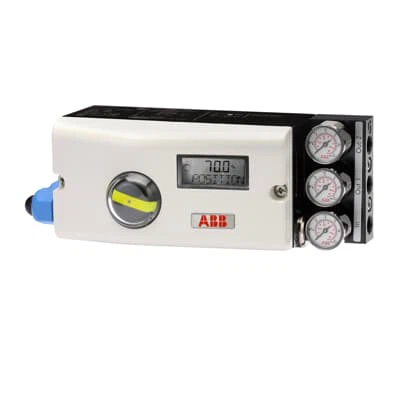
If you’re dealing with flow spikes, false alarms, or just want to make sure your current meter is holding up to sudden changes, hit up our team. We’ll talk through your specific needs, send over a case study that matches your industry, and even help you run a test if you want. No fine print, no pushy sales calls—just people who know flow meters inside and out, and want to help your operation work better.
ABB Valve Positioner References:
- Miller, R. W. (2004). Flow Measurement Engineering Handbook (3rd ed.). McGraw-Hill.
- Spitzer, D. W. (2013). Industrial Flow Measurement (2nd ed.). ISA Press.
- American National Standards Institute (ANSI). (2018). ANSI/ISA-TR7.2-2018: Dynamic Response of Flow Meters. International Society of Automation.
Iges Instrument Co., Ltd.
With abundant experience, we are one of the most professional flow meter suppliers in China. Please feel free to buy high quality flow meter in stock here and get quotation from our factory. Good service and low price are available.
Address: No. 103, 1st Floor, Dacheng Commercial Building, Chezhan Avenue, Lucheng District, Wenzhou City
E-mail: igesinst@gmail.com
WebSite: https://www.iges-inst.com/
