If you’ve ever stood on the factory floor and watched a robotic arm weld a car frame with pinpoint accuracy, or seen a conveyor line adjust its speed mid-shift to avoid jamming, you’ve probably stared at digital sensors without even realizing it. I’ve been supplying these little workhorses for 8 years now, and I still get surprised by how often people—even folks deep in industrial operations—underestimate how central they are to automating everything from snack packaging to pharmaceutical manufacturing. They’re not just “parts” on a bill of materials; they’re the nervous system of modern industrial automation, the thing that turns a static, pre-programmed process into something that actually adapts to the mess of real-world factories. Digital Sensor
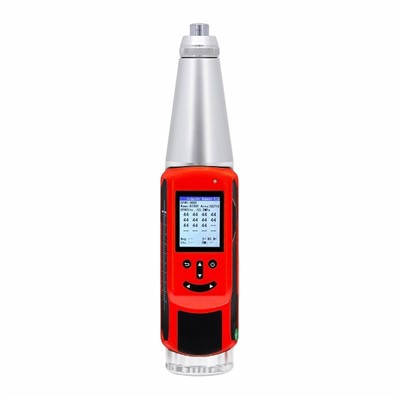
Let’s start with the basics, because a lot of my clients, especially smaller operations that are just dipping their toes into automation, ask me: “What’s the difference between digital and analog sensors anyway?” Analog sensors spit out a continuous signal—think a dimmer switch on a lamp, where the light can be 10% bright or 90% bright, any number in between. Digital sensors? They operate on binary: on or off, 1 or 0, presence or absence. Wait, that sounds too simple, right? But that binary core is exactly what makes them the backbone of industrial automation. Machines don’t “think” in shades of gray, so digital sensors give them the clear, reliable inputs they need to make every decision. For example, a photoelectric digital sensor on a snack conveyor line doesn’t measure how crumbly a cookie is—it only tells the robotic packer: “Here’s a cookie” (1) or “No cookie here” (0). That’s the data the machine needs to do its job, no guesswork.
One of the biggest roles digital sensors play is boosting uptime, and let’s be real—uptime is everything in industrial automation. A factory that has to shut down for even an hour loses thousands in output; shutdowns for unplanned repairs? Way worse. Digital sensors catch issues before they turn into full-blown breakdowns. Take a temperature sensor we supply for motorized conveyor belts, for example. It’s calibrated to trigger an alert the second the belt’s internal temp spikes 10 degrees above normal, instead of waiting for it to seize up and stop entirely. I had a client in the packaging industry tell me last year that switching to our digital temperature sensors cut their unplanned downtime by 32% in 6 months. That’s not just a number—it’s less overtime for maintenance teams, fewer lost production runs, and a lot less stress on plant managers.
Uptime ties straight into quality control too, another area where digital sensors are irreplaceable. In traditional manual manufacturing, a human might catch a defective part every now and then, but they can’t check every single item going down a line at 100 parts per minute. Digital sensors can. Let’s talk about a pressure sensor used in medical device manufacturing—say, insulin pen components. Each pen part needs to have exactly the right amount of lubricant applied, within a 0.01 mL tolerance. Our digital pressure sensors measure that in real time, and if the pressure strays even a little, they flag the part as defective before it moves to assembly. Before, this client had a 2% defect rate, which cost them $120k a month in wasted materials and rework. After switching to our digital sensors? Defects dropped to 0.1%. That’s not just better quality—it’s a huge cost savings. And here’s the kicker: digital sensors do this consistently, 24/7, no fatigue, no distracted workers missing a tiny flaw. They turn “sampling” quality checks into 100% full inspection, which is a game-changer for industries where even a tiny mistake can be dangerous (hello, medical devices, automotive parts, aerospace components).
Another underrated role of digital sensors is making automation scalable. A lot of small to mid-sized manufacturers hold back on automating because they think they need a full, expensive rework of their entire factory floor. But digital sensors are modular—you don’t have to rip out your old conveyor line to add them. Let’s say you run a craft bakery and you want to automate your bread packaging. You can start with a single digital photoelectric sensor to count loaves, then add a pressure sensor to check if the bread’s volume is right, then a temperature sensor to monitor proofing ovens, one at a time. Each sensor talks to your existing PLC (programmable logic controller, the “brain” of most industrial automation setups) without needing a complete overhaul. That flexibility is huge for small businesses that don’t have the budget for a big automation project all at once. We work with a lot of family-owned food processing plants that started with just 2 digital sensors 5 years ago, and now they’ve got a full automated line—all because those initial sensors were easy to add, no custom wiring or fancy tech required.
Wait, but digital sensors aren’t just for factory floors anymore. They’re the link between the physical factory and the digital world—aka Industry 4.0, which is all about connecting machines, data, and people. A lot of people think Industry 4.0 is just robots and big data, but without digital sensors, there’s no data to collect. Think about it: a cloud-based dashboard that tracks how a conveyor line is performing? It’s pulling data from digital sensors every second. Predictive maintenance algorithms that tell you “this motor will fail in 2 weeks”? That data comes from the temperature and vibration digital sensors mounted on the motor. We supply a lot of sensors with built-in Bluetooth or Ethernet connectivity now, so they don’t just send a binary on/off signal—they send actual data that you can use to optimize operations. For example, a client in the automotive parts industry uses our vibration sensors to track how their stamping presses are performing. The sensors pick up tiny irregular vibrations that would be invisible to the human ear, and the cloud algorithm uses that data to adjust press settings, reducing wear and tear on the machines by 18% a year. That’s Industry 4.0 in action, and digital sensors are the middleman between the physical machine and the digital insights.
But let’s be honest—digital sensors aren’t perfect, and that’s why a lot of manufacturers come to us because they don’t want to deal with the hassle of bad sensors. One of the biggest pain points with digital sensors is signal noise. If a sensor is mounted too close to a big metal machine, or there’s electrical interference from other equipment, it might send a false on or off signal, which can mess up the whole line. We spend a lot of time testing our sensors to make them resistant to that noise—we’ve got IP67-rated sensors that work in dusty, wet factory environments, and models with electromagnetic interference (EMI) shielding for areas with heavy machinery. I’ve had clients try to save a few bucks on cheap, uncalibrated digital sensors from no-name brands, and they end up with a line that shuts down 10 times a week because of false signals. It’s way more expensive in the long run than investing in a reliable sensor from a supplier who knows industrial environments.
Another thing people don’t talk about enough is how digital sensors handle harsh conditions. Industrial factories are not like your office—they’re dusty, hot, cold, sometimes wet, full of chemicals. Analog sensors can struggle with that harshness, getting corroded or misaligned, but digital sensors are built to take a beating. For example, we have a photoelectric sensor that’s made for meat processing plants—they use it to check if a cut of meat is the right size, and the sensor has to be washable with high-pressure water and harsh sanitizers. It works flawlessly even after 10,000 washdowns, whereas an analog sensor would have rusted out long ago. That durability is a huge part of their role: they don’t just work when things are perfect, they work when things are messy, which is 99% of the time in industrial settings.
Let’s circle back to why I care about this stuff, since I’m a sensor supplier, not just a sales guy. I started out as an industrial technician before starting my own supply business, so I’ve been on the factory floor dealing with broken sensors, missed deadlines, and the frustration of trying to get a reliable part that actually works for the job. A lot of suppliers treat digital sensors like a commodity—just another part to plug in. But the best digital sensors are tailored to the industrial environment, and that’s what I focus on. I work with clients to figure out exactly what they need, not just push the most expensive sensor. For example, a small craft brewery might only need a basic digital level sensor to track beer tank levels, while a pharmaceutical plant needs a high-precision sensor that meets FDA standards. I don’t sell a one-size-fits-all; I sell a solution.
At the end of the day, the role of digital sensors in industrial automation boils down to one thing: they make automation work for real factories, not just textbook examples. They don’t just make machines move—they make machines move accurately, reliably, and adaptively, so factories can produce better products, spend less money, and keep up with demand. Whether you’re a 10-person family business or a 1,000-worker automotive plant, digital sensors are the quiet, essential backbone that holds your operations together.
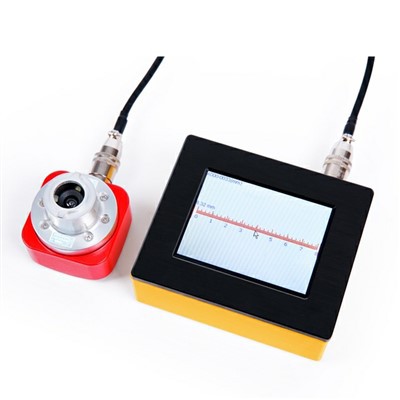
If you’re looking to upgrade your current sensor setup, troubleshoot a line issue, or just want to chat about how digital sensors can make your automation work better, reach out to our team to discuss your specific needs. We can help you find the right sensor for your environment, budget, and goals, no pressure, no confusing tech jargon.
Level Meter References
- International Society of Automation (ISA). (2022). Industrial Sensors for Automation: Performance and Application Guidelines. Research Triangle Park, NC: ISA Press.
- McKinsey & Company. (2021). Industry 4.0: The Hidden Drivers of Operational Efficiency. New York, NY: McKinsey Global Institute.
- Food and Drug Administration (FDA). (2020). Quality System Regulation for Medical Device Manufacturing. Silver Spring, MD: U.S. Food and Drug Administration.
- Automation World. (2023). Uptime and Quality: The Impact of Industrial Sensors on Production Output. Pittsburgh, PA: Automation World Media.
Dalian Yheng Technology Co., Ltd.
Dalian Yheng Technology Co., Ltd. is one of the leading digital sensor manufacturers and suppliers in China, also supports customized service. We warmly welcome you to buy high quality digital sensor in stock here from our factory. Contact us for more details.
Address: F1605, NO.10 Huoju road, High-tech Industrial Zone, Dalian, China
E-mail: admin@dlyheng.com
WebSite: https://www.yhengphmeter.com/
