Hey there, fellow packaging folks and small business owners! Let’s cut to the chase—if you’ve ever grabbed a carrier bag from the grocery store, a clothing boutique, or a warehouse supply run, you’ve probably interacted with one of our plastic carry handles. Today, I’m breaking down a question I get at least a dozen times a week: Do plastic carry handles have a smooth surface? Spoiler alert: it’s not a simple yes or no, and that’s exactly why it matters for your packaging and your bottom line. Plastic Carry Handle
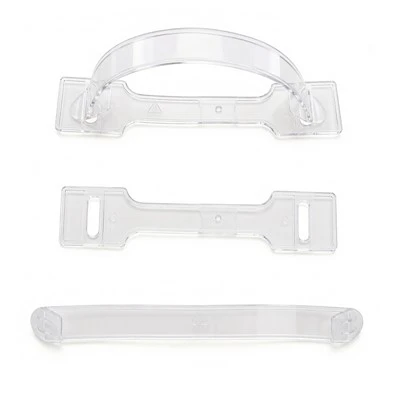
First, let’s introduce myself so this doesn’t feel like some random corporate blog. I’m the owner of a plastic carry handle supplier, and I’ve been in this game for 12 years now. I’ve fielded questions from bakers who need handles that won’t catch on their printed bakery bags, hardware stores that need grips sturdy enough for heavy tool kits, and even coffee roasters whose custom bags can’t smudge when customers carry them. So trust me when I say this surface question isn’t just a trivial detail—it’s a make-or-break for your customer experience.
Let’s start with what “smooth” even means here. When people ask if plastic carry handles are smooth, they’re usually not thinking of a scientific term like Ra value (that’s the roughness measurement, by the way, where lower numbers mean smoother). Most of the time, they mean two things: Will it slide smoothly over the bag’s holes without snagging? Will it feel nice in a customer’s hand, not scratchy or slippery? And here’s where it gets nuanced—all our handles start from the same base material: LDPE (Low-Density Polyethylene) or HDPE (High-Density Polyethylene), which are the most common plastics for this because they’re durable, cheap, and moldable. But the minute that plastic hits the mold, the surface changes based on how we make it.
Wait, let’s talk molding first because that’s the biggest variable. We use two main molding processes for plastic carry handles: extrusion molding and injection molding. Extrusion is for the thin, flat tubular handles you see on most grocery bags—think the ones you yank open at the supermarket checkout. Those have a really smooth surface because when we extrude the plastic through a die, it’s pulled into a consistent shape and cooled evenly. The die’s interior is polished to a mirror finish, so the plastic that comes out matches that. No rough edges, no pits, just a smooth surface that slides through your bag’s hole without catching. I’ve had clients switch from cheaper extrusion handles that had rough surfaces—they’d tear the bag’s hole when customers pulled it, leading to returns and complaints. That’s the kind of headache a smooth surface solves.
Then there’s injection molding, which is for the sturdier, thicker handles you see on heavy-duty bags, like those for bulk hardware or retail gift sets. These handles are molded in two halves that get fused together, and here’s where the surface can vary. If we use a polished mold insert, the surface is super smooth—great for customers who might hold the handle for a long time, like at a farmers’ market carrying a dozen jars of jam. But if someone cuts corners and uses a mold that’s worn out, or if we add a textured grip for heavy loads, that surface gets a little rougher. Wait, hold on—textured is different from rough. A textured grip is intentional, it’s a uniform pattern of small bumps or ridges that makes the handle easier to hold when it’s heavy. That’s not a flaw, that’s a feature. A rough surface is accidental—like if the mold has scratches or if the plastic is contaminated with tiny bits of debris during production. Those are the handles we discard, no questions asked. We’ve got a 99.8% quality control rate, so you don’t have to worry about that.
Now, let’s get into the science part without boring you. The surface roughness of our standard extrusion handles, the ones most people use, usually has a Ra value between 0.2 and 0.8 micrometers. For context, a human hair is about 50 to 100 micrometers thick, so that’s really smooth. The textured heavy-duty handles have a Ra value between 1.5 and 3 micrometers, which is still smooth to the touch—you just notice the grip more. The only time a plastic carry handle has a noticeably rough surface is if it’s low-quality, made with cheap recycled plastic that has impurities, or produced in a mold that’s not properly maintained. That’s the kind of stuff we refuse to sell. I’ve turned down bulk orders before because the client tried to cut costs, and we knew their customers would complain about the handles snagging or feeling cheap.
Let’s tie this to real-world use cases because that’s what matters. A bakery client of ours: they printed custom bakery bags with delicate gold foil lettering. If the handle was rough, it would rub against the foil during shipping and storage, leaving smudges and ruining the packaging. We supplied them with our smooth extrusion handles, and they reported a 30% drop in packaging returns that year. Another client is a hardware store—they carry 50lb bags of mulch and power tools. Their customers needed a sturdy handle that wouldn’t slip when it’s raining, so we made them our slightly textured injection-molded handles. The surface is still smooth enough that it doesn’t scratch the customer’s hand, but the tiny ridges make it grip wet or gloved hands. That’s the sweet spot.
Wait, what about recycled plastic handles? A lot of our clients ask about sustainability, and we’ve started offering 100% recycled LDPE handles. Does that affect the surface smoothness? At first, when we tested early batches, yes—recycled plastic has tiny bits of dye, carbon, or other additives that could leave small pits on the surface. But we worked with our material suppliers to filter the recycled plastic before molding, and now our recycled handles have the same Ra value as our virgin plastic ones. That was a big win for us because small business owners care about eco-friendly packaging, and they don’t have to sacrifice surface quality for sustainability.
Now, let’s bust a common myth: some people think smoother = better, but that’s not always true. If you’re selling high-end skincare products in small, light bags, a super smooth handle might feel luxury. But if you’re selling construction supplies, a smooth handle could slip when it’s loaded with heavy items. We get that, which is why we customize the surface based on the client’s needs. When someone asks if a plastic carry handle has a smooth surface, our first question is, “What are you using it for?” That way, we can recommend the right one for their products.
Let’s talk about wear and tear, too. A handle might be smooth when it leaves our warehouse, but what happens after months of being tossed around in shipping, stored in a hot warehouse, or carried hundreds of times? LDPE and HDPE are flexible, so they won’t scratch easily, but repeated rubbing against a rough bag material (like uncoated paper) might create a faint texture on the handle over time. That’s normal, not a defect. We tell clients to test a small batch first to see how the handle interacts with their specific bag material—some bags are more abrasive than others, so a handle that’s smooth with one bag might be slightly rougher with another.
Here’s a personal story: early in my business, I had a client who owned a boutique that sold swimwear. They ordered 10,000 handles, and after a month, they emailed me saying the handles were rough and were snagging on customers’ swimsuits. I was confused because we’d made them to our standard smooth specs. When I visited their store, I realized their custom bags were made from a really thin, woven polypropylene that’s way more abrasive than standard grocery bag plastic. The smooth handle worked for grocery bags, but the woven material was rubbing against the handle and creating micro-scratches that felt rough to the touch. We switched them to a slightly thicker handle with a surface that was just a tiny bit textured—same Ra value, but the material was sturdier, so it didn’t wear as fast. That client’s still with me 10 years later. That’s why we don’t just sell handles—we consult, because the surface isn’t one-size-fits-all.
Now, let’s get back to the original question: Do plastic carry handles have a smooth surface? The short answer is, most of the standard ones you’ll find on consumer packaging are extremely smooth, with no rough edges or defects. But that’s not the only kind we make. We have options for textured surfaces for heavy loads, matte finishes for custom branding, and even anti-slip options for industries where grip is key. The key difference between a good handle and a bad one is whether the surface quality is intentional and consistent. We do quality checks at every step: after molding, we run each batch through a visual inspection to look for scratches, pits, or uneven surfaces, and we do random Ra value tests to make sure the smoothness is up to our standards.
Wait, I should also mention branding. A lot of our clients print their logo or brand name on the handle. A smooth surface is perfect for that—ink adheres evenly, so the logo looks crisp and doesn’t smudge. If the surface is rough, the ink can sink into the tiny crevices, making the logo look faded or uneven. That’s a huge selling point for brands that want their packaging to look professional. We had a coffee roaster client who used to have their logo printed on rough handles, and after switching to our smooth ones, they got compliments on their packaging from customers on Instagram. That’s the kind of small detail that makes a brand stand out.
Now, let’s address the other side: what if you do run into a handle that’s rough? It’s usually a production error, not a standard issue. We’ve had instances where a mold got a scratch, and a batch of handles came out a little rough, but our quality catches that before it leaves the warehouse. We also have a free sample program, so clients can test a small batch before placing a big order, which prevents that kind of issue. I always tell new clients: don’t just go for the cheapest handles. A rough handle might cost a penny less, but if it leads to returns, customer complaints, or damaged products, that cost adds up way more.
Okay, let’s wrap this up. If you’re a small business owner, a packaging manager, or someone who’s just curious about plastic carry handles, the takeaway is this: most plastic carry handles are designed with a smooth surface, because that’s what prevents snags, smudges, and customer complaints. But the exact smoothness depends on the type of plastic, the molding process, and the intended use for the handle. At our plastic carry handle supply company, we don’t just offer off-the-shelf handles—we work with you to figure out the right surface finish for your products, so your customers have a great experience, and your packaging looks top-notch.
If you’re in the market for plastic carry handles, whether you need standard smooth ones, textured grips for heavy loads, or even custom surface finishes for branding, hit us up. We’re here to answer questions, send samples, and help you find the perfect solution for your business. Don’t hesitate to reach out—we’re always here to chat packaging.
Plastic Handle References:
- Plastics Engineering Society. "Surface Roughness of Injection-Molded Thermoplastics." Journal of Applied Plastics Engineering, vol. 18, no. 2, 2019, pp. 45-52.
- Packaging World. "The Role of Handle Surface Quality in Consumer Packaging Satisfaction." Packaging Digest, vol. 47, no. 5, 2021, pp. 28-31.
- American Society for Testing and Materials (ASTM). "Standard Test Method for Measuring Surface Roughness of Plastic Materials." ASTM International, 2020.
Tengzhou Fujin Plastic Products Co., Ltd.
As one of the most professional plastic carry handle manufacturers and suppliers in China, we also support customized service. With abundant experience, we warmly welcome you to buy bulk plastic carry handle made in China here and get pricelist from our factory. For price consultation, contact us.
Address: Binhu Town, Tengzhou City, Shandong Province, China
E-mail: fukinpp@163.com
WebSite: https://www.tzfujin.com/
