If you’re an ag equipment owner or operator, you know how inconsistent farm conditions can be. One minute you’re working in a 95°F sun with high humidity inside your cab, and the next you’re hauling equipment through dusty, cool fields at dawn. That’s why getting your agricultural AC compressor’s control parameters right isn’t just a “nice-to-have”—it’s what keeps you comfortable, protects your gear, and cuts down on energy waste. As someone who’s supplied ag AC compressors for years, I’ve seen way too many folks skip this step and end up with AC that blows hot mid-harvest or burns out the compressor before its time. Let me break this down in plain terms, no jargon overload, so you can tweak those settings like a pro. Agricultural AC Compressor
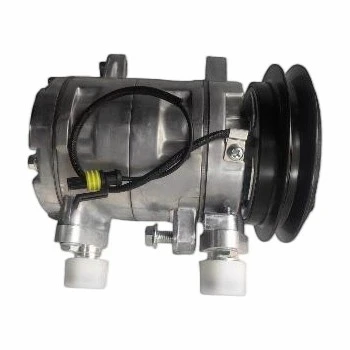
First, let’s make sure we’re on the same page about what control parameters actually matter here. Unlike your residential AC, ag AC compressors are built to handle way bigger swings—extreme temps, dusty environments, and constant on/off cycling when you’re bouncing across fields. The key parameters you’ll adjust are suction pressure, discharge pressure, superheat, and run-time delay. These aren’t just numbers on a screen; they directly tie to how your compressor performs and lasts.
Let’s start with suction pressure. That’s the low-side pressure where cold, low-pressure refrigerant comes into the compressor from the evaporator (the part that blows cold air in your cab). For ag use, this isn’t a one-size-fits-all number. If you set suction pressure too high, your evaporator won’t pull enough heat from the cab—so you’ll feel like you’re sitting in a sauna even with the AC cranked. Too low, and you risk “flooding” the compressor, where liquid refrigerant gets pulled in and damages the internal parts. Here’s the thing: ag cabs often have extra space (for monitors, tools, even extra seats) so your evaporator is a bit bigger than a small car’s. I usually recommend starting with 25 to 30 PSI for most row-crop tractors, 22 to 27 PSI for smaller utility machines, and bump it up 3 PSI if you’re working in temps over 100°F. Why? Higher outside temps mean your condenser is working harder, so the suction pressure needs a tiny boost to keep things balanced. And always check this with a calibrated low-side gauge—cheap gauges from the auto parts store can be off by 5 PSI, which messes everything up.
Next, discharge pressure. That’s the high-side pressure where hot, high-pressure refrigerant leaves the compressor on its way to the condenser. This is where a lot of ag guys mess up, especially in dusty conditions. If your condenser is caked with dirt (which it will be after a few days in a grain bin or dusty field), discharge pressure spikes way too high. A discharge pressure that’s too high makes the compressor work overtime, burning out bearings and seals fast. For ag, target discharge pressure between 225 and 250 PSI at sea level. If you’re working at high altitude (over 5,000 ft), drop that to 200 to 225 PSI—thin air means the condenser doesn’t reject heat as well, so lower discharge pressure reduces strain. I always tell customers to check discharge pressure right after they clean their condenser, not when it’s covered in dust. If it’s over 260 PSI, either your condenser’s clogged or you’ve set the charge wrong, and that’s a quick fix that saves you hundreds in compressor repairs.
Then there’s superheat. This is the temperature difference between the refrigerant leaving the evaporator and the boiling point of the refrigerant at that pressure. Basically, it tells you if all the liquid refrigerant evaporated before it hit the compressor. For ag AC, you want superheat between 8 and 12°F. Too low (under 8°F), and you have liquid refrigerant going into the compressor—flooding risk, as I mentioned earlier. Too high (over 12°F), and you’re not getting enough cooling, and your compressor might run dry for a few seconds each cycle, wearing out parts. Here’s a trick to measure it without fancy tools: use a digital thermometer on the suction line right where it connects to the compressor, and compare that temperature to the boiling point of your specific refrigerant (most ag ACs use R134a these days—boiling point is -15°F at 0 PSI, so adjust for your measured suction pressure). If your superheat’s 15°F, you need to add a tiny bit of refrigerant; if it’s 5°F, bleed a little out. I see so many techs overcharge ag ACs because they think more refrigerant = colder air, but that’s the opposite—overcharging kills superheat and shortens compressor life.
Now, the control parameters that aren’t pressure-related: run-time delay and cycle thresholds. Ag equipment doesn’t sit idle like a car—you’re shutting it off and starting it every few hours, especially if you’re jumping between fields or moving from the yard to a job site. If you don’t set a run-time delay, every time you restart the engine, the AC compressor fires up right away, which creates a huge power spike. That spike stresses the compressor motor and can blow a fuse or burn out the clutch. I always recommend setting a 3-minute run-time delay for ag compressors. That gives the system’s pressure to equalize before the compressor kicks in. Also, set a cycle threshold so the compressor doesn’t turn on and off every 2 minutes. For most ag setups, a 10-minute minimum run time is good—unless you’re in a super cold cab in winter, in which case you can drop it to 5 minutes. Why? Short cycles make the compressor wear out 2x faster than it should, and they waste fuel, too. Your tractor’s engine doesn’t like constant on-off cycling, and neither does the AC compressor.
Wait, let’s talk about how your specific compressor model changes these settings. Over the years, I’ve supplied a ton of ag AC compressors, and some of them have built-in controls vs. manual adjustment. If yours is a newer model with electronic controls, you might have a display on the compressor that shows suction and discharge pressure, and you can adjust the setpoints right from the cab. For these, don’t just use the default factory settings—they’re set for mild conditions, not 100°F days on a harvest field. For example, our heavy-duty ag compressors (the ones for 400+ HP tractors) have a default superheat of 10°F, but you can bump it to 12°F if you’re dealing with really dusty air to reduce liquid flood risk. For smaller compressors on ATVs or utility task vehicles (UTVs), you’ll want to keep superheat closer to 8°F because those machines don’t have as much space for evaporators and condensers, so they run tighter.
Common mistakes I see ag operators making all the time: First, ignoring altitude. A lot of factory settings are for flat land, so if you’re working in Colorado or Wyoming, you can’t use the same numbers. Second, skipping pressure checks before long trips. If you’re heading out for a 12-hour harvest day, check suction pressure before you start—chances are, the refrigerant level shifted overnight, and you’ll be stuck with hot air halfway through. Third, not adjusting for season. In winter, when you’re heating the cab (yes, some ag ACs double as heaters), you’ll want to lower the discharge pressure a bit because you’re not using the condenser for cooling, just heating. I drop discharge pressure to 200 PSI in winter to keep the compressor from working too hard on heating cycles.
Another big one: dust. Ag environments are way dustier than regular vehicle use, so your compressor’s control parameters have to account for that extra debris. Dust clogs the condenser, which makes discharge pressure go up, so you need to adjust your cycle threshold to be a bit longer—maybe 12 minutes instead of 10—so the compressor doesn’t strain as much. Also, set your superheat to the higher end of the range (10-12°F) when dust is bad, because the clogged condenser can sometimes cause uneven pressure in the lines, leading to liquid refrigerant getting into the compressor. I always remind customers to clean their condenser every 50 hours of use, but if you’re in a super dusty area (like a grain farm), do it every 25 hours. That simple step will keep your discharge pressure from spiking and save you a lot of hassle.
Let me walk you through a quick, real-world example. Last year, a customer in Iowa reached out to me saying his 350 HP tractor’s AC was blowing hot during noon harvest. He’d tried adding refrigerant, but it only lasted a day. I asked him to check his suction pressure, and it was at 18 PSI—way too low, especially for a 98°F day. His discharge pressure was 270 PSI, which was through the roof because his condenser was clogged with corn dust. I had him clean the condenser first, then adjust suction pressure to 28 PSI, drop discharge pressure to 230 PSI, and set superheat to 11°F. He texted me a week later saying his AC was back to blowing cold, and he didn’t have any issues the rest of harvest. That’s the kind of fix that works when you get the parameters right, not just guessing.
Now, if you have a compressor with a clutch instead of electronic controls, the process is a little different. Clutch-type compressors rely on mechanical switches, so your run-time delay is often adjustable via a small dial on the compressor’s wiring harness. I always tell people to set that dial to the “ag” position, not the “car” position—car positions are usually 1 minute, which is too short for tractors that take time to equalize pressure. Also, for clutch compressors, make sure the pressure cut-out is set so the compressor doesn’t turn off when pressure dips too low. For ag, set the low-pressure cut-out to 20 PSI, so if you’re working in a really hot cab, the compressor keeps running instead of cycling off too early.
Wait, let’s talk about refrigerant types for a second, because that affects your parameters too. Most modern ag compressors use R134a, which is standard, but some older models use R12. If you have an R12 system, you’ll need to adjust your superheat a bit—boiling point for R12 is -21°F at 0 PSI, so your target superheat is still 8-12°F, but your suction pressure will be a little lower (around 22 PSI for 95°F temps). If you’re converting an old R12 system to R134a, don’t just use the same parameters—you’ll need to tweak suction and discharge pressure, because the two refrigerants have different properties. That’s where a tech with experience in ag AC comes in, instead of a regular auto tech, because auto techs might not know the altitude and dust adjustments that matter for farms.
How often should you check these parameters? I recommend doing a full check every 100 hours of use, and before any big job like planting season or harvest. If you notice your AC blowing warm air, making weird noises (like a hissing or grinding sound), or the compressor cycling more than usual, check the parameters right away. Don’t wait until it breaks down mid-job—emergency AC repairs during harvest are way more expensive, and they can cost you time and money.
Now, a quick note on when to get professional help. If you’re not comfortable working with refrigerant, or your compressor has electronic controls that you don’t understand, it’s better to reach out to someone who works on ag AC systems, not a regular mechanic. We (as ag AC compressor suppliers) often work with techs across the country, so if you have questions about your specific model, you can reach out and we can point you to the right settings or a trusted tech. We don’t just sell compressors—we want you to get the most out of them, because we know how much your equipment means to your operation.
At the end of the day, setting up your agricultural AC compressor’s control parameters isn’t rocket science. It’s about adjusting for your specific environment—altitude, dust, cab size—instead of just using factory defaults. It’s about checking in regularly and making small tweaks before small problems become big ones. If you take the time to get these settings right, your AC will keep you comfortable, your compressor will last longer, and you won’t have to stress about hot air when you’re in the middle of a 12-hour day in the field.
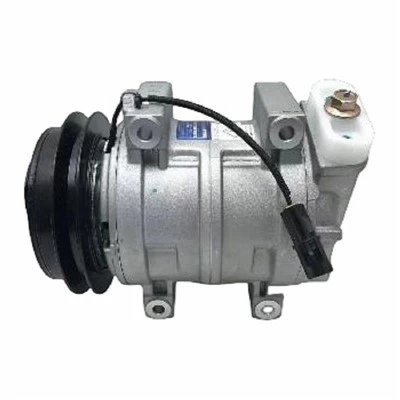
If you’re in need of a new agricultural AC compressor, or you have questions about tuning up your existing one, reach out to connect for purchasing and technical consultation. We’re here to help you get the right setup for your farm equipment, no hassle, no fancy jargon.
Construction Compressor References
- ASHRAE Handbook: HVAC Applications, Agricultural and Farm Facilities Section, 2023
- Mobile Air Conditioning Society (MACS) Worldwide, Agricultural AC System Best Practices, 2022
- John Deere Equipment AC System Service Manual, 2021
Jiangsu Nuoyan New Energy Vehicle Air Conditioning Co., Ltd.
With abundant experience, we are one of the most professional agricultural ac compressor manufacturers and suppliers in China. We warmly welcome you to buy customized agricultural ac compressor at competitive price from our factory. Also, quotation is available.
Address: No. 7 Xingyuan Road, Huangqiao Economic Development Zone, Taixing City, Jiangsu
E-mail: nuyantech2026@163.com
WebSite: https://www.nuyantech.com/
