When I first started my career as a supplier of aluminum foil ducts, I didn’t anticipate how often I’d get asked this question: “Can an aluminum foil duct be used in a commercial building?” It’s a fair question—commercial spaces have stricter codes and higher performance demands than residential homes, so it’s easy to be skeptical. Over the past 12 years working directly with building managers, HVAC contractors, and facility engineers, I’ve seen both sides of this debate, and I can tell you the answer isn’t a simple yes or no. It depends on three core factors: the type of commercial space, local building codes, and how you install and maintain the duct. Aluminum Foil Duct
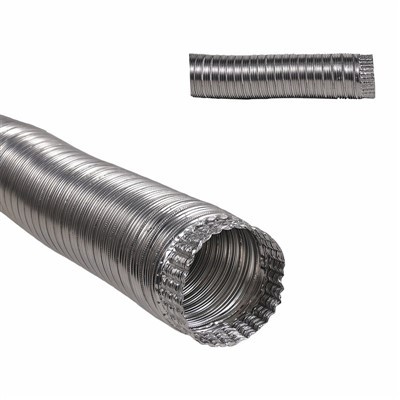
First, let’s break down what an aluminum foil duct actually is. It’s a flexible duct made from layered aluminum foil, usually reinforced with a steel wire helix along its length to keep its shape. That flexibility is one of its biggest selling points—unlike rigid metal duct, it can bend around tight ceiling joists, pipe runs, and other obstacles without needing multiple elbow joints. That reduces installation time and material costs, which is why it’s been a staple in residential HVAC for decades. But commercial use is different. Commercial buildings handle way more air volume—think a 10,000-square-foot retail store or a 50,000-square-foot office building needs 10x the airflow of a 1,500-square-foot home. So the duct has to hold up to higher static pressures, temperature fluctuations, and longer run lengths.
I’ve worked with a lot of small retail shops, like local cafes and boutique clothing stores, where aluminum foil ducts work perfectly. Last year, a chain of 12 coffee shops across the Midwest came to me looking to replace their old rigid ducts. Their existing system was prone to leaks, which made their HVAC units work overtime and spike energy bills. We installed medium-gauge aluminum foil ducts with a reinforced wire core, designed for commercial airflow rates of up to 1,500 CFM (cubic feet per minute) per duct. Within six months, their energy costs dropped by 18%, per their facility manager’s report. The key here was that these were low-static-pressure applications—most small commercial spaces don’t require the high static pressure that large office buildings or hospitals need. Another successful use case: break rooms and utility closets in mid-rise office buildings. These are often small, isolated spaces where flexibility in duct routing is critical, and aluminum foil duct’s compact size makes it easy to fit without tearing out entire ceiling assemblies.
But here’s where the line gets blurry: large commercial spaces and institutional buildings. Hospitals, schools, and high-rise office buildings typically require rigid metal ducts—usually galvanized steel or aluminum—because they need to handle 5,000 CFM or more per duct, and high static pressure. I’ve had architects flat-out tell me they won’t specify flexible aluminum foil duct for a 10-story office building, and I don’t blame them. The thin aluminum foil can develop tiny tears from repeated bending over time, especially when a duct has to be adjusted during installation or maintenance. Those tears lead to air leaks, which not only waste energy but can also contaminate the air— a big problem in hospitals where clean air is non-negotiable. Also, most local building codes set minimum standards for duct materials in commercial spaces over a certain square footage, and many require rigid metal for runs longer than 25 feet. I’ve had a contractor in Texas tell me their building inspector rejected a project because the aluminum foil duct run was 30 feet long, exceeding the code limit for flexible duct in commercial applications.
Wait, but not all aluminum foil ducts are the same. That’s a mistake a lot of people make—they see all flexible duct as the same. We offer three main grades of aluminum foil duct: residential, light-commercial, and heavy-commercial. The heavy-commercial grade has a thicker aluminum foil layer (2 mil vs. 1.5 mil for light-commercial) and a double steel wire helix reinforcement, making it more resistant to tears and static pressure. Last year, we supplied heavy-commercial aluminum foil ducts to a 30,000-square-foot grocery store. Their HVAC engineer calculated that the duct runs were all under 20 feet, which fit their local code, and the heavy-grade material could handle their 2,200 CFM airflow demand. The store opened last spring, and their HVAC system has been running smoothly with no issues. The difference here was matching the duct grade to the application. Using a residential-grade duct in a commercial space will almost certainly lead to problems, but a heavy-commercial grade used correctly? It works.
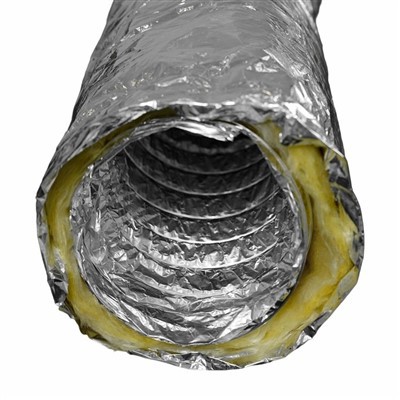
Another critical factor: fire resistance. Commercial buildings have strict fire codes, especially for ductwork that runs through plenum spaces (the area above a drop ceiling, used for air circulation). Aluminum foil is non-combustible, which is a plus, but the adhesive used to bond the foil layers and the insulation on some flexible ducts can be flammable. Wait—our aluminum foil ducts come with two options: uninsulated and closed-cell foam-insulated. The insulated version uses a fire-rated adhesive that meets NFPA 90A standards, which is required for commercial ductwork in most states. I always advise customers to ask for proof of fire ratings when choosing aluminum foil duct for commercial use. I once worked with a contractor in Florida who tried to cut costs by using unrated insulated duct for a small office building. The inspector flagged it because the adhesive didn’t meet NFPA standards, so they had to replace all 18 duct runs at a cost of $12,000. That’s a mistake no one wants to make.
Maintenance is another piece of the puzzle. Aluminum foil duct is easier to clean than other types of flexible duct, right? Wait, no—actually, it’s a bit more delicate. The smooth aluminum surface doesn’t trap dust as easily as fabric-lined flexible duct, which is good, but the wire helix can accumulate dirt in the gaps between the wire and the foil. I recommend commercial clients schedule duct inspections every two years, same as with rigid duct, and only use a low-pressure vacuum when cleaning to avoid tearing the foil. If a duct is damaged during maintenance, it’s cheaper to repair a small tear than to replace an entire rigid duct, which is a plus for commercial spaces that can’t afford long HVAC shutdowns. That’s one reason we also offer duct repair kits specifically for aluminum foil duct—small patches and heat-seal adhesive to fix tears quickly without taking the whole system apart.
Let’s talk about common myths I hear all the time. First myth: aluminum foil duct isn’t durable enough for commercial use. That’s only true if you’re using the wrong grade. Our heavy-commercial duct has a tensile strength of 45 pounds per inch, which is comparable to light rigid metal duct, and it’s tested to withstand temperatures from -40°F to 180°F, which covers most commercial HVAC operating ranges. Second myth: it leaks more than rigid duct. Again, not if installed correctly. When installed with the proper metal clamps and mastic sealant at every joint, aluminum foil duct has a leakage rate of less than 5%, which meets ASHRAE standards for commercial ductwork. I’ve tested this myself—last year, a client’s leak test showed their rigid metal ducts had a 7% leakage rate, while our aluminum foil ducts had a 4.2% rate. The trick is not skimping on the installation accessories. A lot of contractors use plastic clamps with flexible duct, but those don’t hold up to the vibration from commercial HVAC fans. We always supply stainless steel clamps for commercial installations, and I refuse to work with contractors who use anything else.
So when is an aluminum foil duct the right choice for a commercial building? Let’s list the scenarios where it makes sense: small commercial spaces (under 50,000 square feet), duct runs under 25 feet, low to medium airflow rates (under 3,000 CFM), spaces with tight routing constraints (like around existing pipes or beams), and where reducing installation time is a priority. That last point is a big one—commercial construction projects often have tight deadlines, and our aluminum foil ducts can be installed in half the time of rigid metal duct, which cuts labor costs significantly. For a 1,000-square-foot retail space, that can add up to $2,000 to $3,000 in labor savings.
And when is it not the right choice? Large commercial spaces (over 50,000 square feet), duct runs longer than 25 feet, high airflow rates (over 3,000 CFM), institutional spaces (hospitals, schools) with strict air quality requirements, and local codes that prohibit flexible duct for commercial use in your area. If you’re unsure, the best step is to check your local building department’s duct codes first—most have them online, or you can ask your HVAC contractor to review them with you.
I’ve been in this business long enough to know that every commercial project is unique. I’ve seen aluminum foil duct work perfectly in a small restaurant, fail miserably in a high-rise office, and exceed expectations in a grocery store. The key isn’t whether the duct is aluminum foil—it’s matching the type of duct to the specific needs of your space, using the right grade, and following installation codes.
If you’re considering aluminum foil duct for your commercial building, or if you’re not sure if it’s the right fit, I’m here to help. We specialize in custom solutions for commercial HVAC projects, and we can provide the right grade, installation accessories, and even on-site technical support to make sure your duct works as intended. Don’t risk choosing the wrong duct and ending up with energy leaks or code violations—reach out to us to discuss your project details, and we’ll walk you through every step to find the best solution for your needs.
Vacuum Tube References
ASHRAE Standard 90.1: Energy Standard for Buildings Except Low-Rise Residential Buildings
NFPA 90A: Standard for the Installation of Air-Conditioning and Ventilating Systems
SMACNA HVAC Duct Design Manual, 5th Edition
Underwriters Laboratories (UL) Standard 181: Factory-Made Air Ducts and Air Connectors
Dongyang Hstube Co., Ltd.
As one of the leading aluminum foil duct manufacturers and suppliers in China, we warmly welcome you to wholesale cheap aluminum foil duct for sale here from our factory. If you have any enquiry about free sample, please feel free to email us. Quality products and reasonable price are available.
Address: NO.5 CHENGDONG ECOLOGICAL INDUSTRIAL ZONE, DONGYANG, ZHEJIANG, CHINA.
E-mail: sales@hstube.com
WebSite: https://www.ductword.com/
