If you’re reading this, chances are you’re either in the market for a large scale air separation unit (ASU) – the kind that powers steel mills, chemical plants, or industrial gas suppliers with cryogenically separated oxygen, nitrogen, and argon – or you’re just curious about what goes into making sure these massive, high-stakes pieces of equipment are safe and compliant. As someone who’s spent the last 12 years designing, building, and supporting custom large scale ASUs for clients across 17 countries, I can tell you this: certification isn’t just a box to tick. It’s the difference between an ASU that runs reliably for 25+ years and one that causes shutdowns, safety hazards, or costly regulatory headaches before it even comes online. Large Scale Air Separation Unit

When I first started in this field, I thought certification was a one-and-done process: pass a few tests, get a stamp, ship the unit. That was before I worked with a steel client in South Africa who bought a cut-rate ASU from a non-certified supplier back in 2018. The unit failed a local pressure vessel inspection three months after startup, leading to a 10-day shutdown that cost them over $2 million in lost production, not to mention the OSHA fines for unregulated oxygen levels in their facility. That experience drove home how critical it is to understand not just that an ASU needs certification, but what specific certifications apply, and why each one matters.
Let’s break this down by category, because large scale ASUs aren’t a single machine – they’re a complex system of cryogenic distillation columns, compressors, heat exchangers, pressure vessels, piping networks, and control systems. Each component, and the system as a whole, has its own set of requirements, depending on where it’s going to operate. That’s one of the biggest mistakes I see clients make: assuming a certification that works for a unit in Europe will work for one in Southeast Asia or the U.S. It doesn’t. Geography, industry, and application all shift the bar.
First, let’s talk about core safety certifications, the non-negotiables that apply no matter where your ASU is deployed. The American Society of Mechanical Engineers (ASME) Boiler and Pressure Vessel Code is the foundation for pressure-containing components, and it’s used in over 100 countries. For large scale ASUs, the most critical sections are Section VIII (for unfired pressure vessels, which is exactly what our distillation columns and storage tanks are) and Section B31.3 (for process piping, which handles high-pressure oxygen, nitrogen, and argon). We don’t just get a generic ASME stamp – we have to document every step of the manufacturing process: the material testing for the stainless steel columns, the weld inspections, the hydrostatic pressure tests that prove the vessel can hold 1.5 times its operating pressure. I still remember one project in India where we had to rework a weld on a 12-meter distillation column because our third-party ASME inspector noticed a tiny imperfection in the radiography scan. It added three weeks to the timeline, but it saved the client from a potential leak or explosion down the line.
Another core standard here is the International Organization for Standardization (ISO) series, specifically ISO 14101, which covers the safety requirements for air separation plants. ISO 14101 isn’t just about pressure – it addresses cryogenic safety (these units operate at temperatures as low as -196°C, so frost buildup and improper handling of cold materials are major risks), oxygen enrichment hazards (oxygen can make even ordinary materials burn explosively), and emergency shutdown systems. For example, our control systems have to be certified to ISO 13849, the standard for safety-related control systems, so if a sensor detects an abnormally high oxygen concentration in the piping, the system shuts down automatically in less than two seconds. That’s not overengineering – that’s meeting the certification bar.
Now, things get more specific when you factor in regional and industry-specific certifications. If your ASU is going to the U.S., you have to comply with Occupational Safety and Health Administration (OSHA) standards, but also any state-specific rules, plus certifications from the Compressed Gas Association (CGA). CGA has specific standards for oxygen and nitrogen storage and handling, like CGA G-4.1 for oxygen systems, which dictates how piping is cleaned to remove any contaminants that could cause combustion. I had a client in Texas a couple of years ago who tried to install an ASU from a supplier that didn’t do CGA cleaning on the oxygen piping. The local fire marshal refused to sign off on the installation, so they had to pay us an extra $120,000 to disassemble, re-clean, and re-certify the piping. That’s avoidable if you work with a supplier who knows the regional rules from the start.
For clients in Europe, the big ones are the Pressure Equipment Directive (PED, now part of the EU’s Pressure Equipment Regulation) and the Machinery Directive. The PED requires that all pressure vessels over 1 bar operating pressure have a conformity assessment, and for large scale ASUs, that usually means a module B (EU type examination) and module D (quality assurance process) to ensure consistent production. The Machinery Directive covers the entire ASU as a machine, requiring risk assessments for things like moving compressors, cryogenic line hazards, and electrical safety. We also get CE marking for all our European-bound units, which is non-negotiable for selling or operating industrial equipment there. One of our recent projects in Germany had to undergo a full on-site audit of our quality management system (QMS) to get the CE stamp, which is part of the process, and it’s worth it because it means the client can avoid delays at customs or regulatory fines.
If you’re operating in the energy or chemicals sector, there are additional industry-specific certifications. For ASUs feeding power plants with carbon capture and storage (CCS), you might need certification to ISO 27001 for the control systems, since CCS facilities require secure, reliable data transfer for emissions reporting. For clients in the steel industry, the International Iron and Steel Institute (IISI) has guidelines for ASUs that supply oxygen for basic oxygen furnaces, which focus on continuous operation and delivery consistency – something our ASUs are designed to meet, with redundant compressors and control systems to avoid downtime during peak steel production.
Wait, there’s one more piece that a lot of people overlook: third-party inspection and verification. Certification is only as good as the third party that signs off on it. We work with globally recognized inspectors like TÜV SÜD, Lloyd’s Register, and Bureau Veritas, not just in design, but during manufacturing, assembly, and pre-commissioning. For large scale ASUs, the pre-commissioning test run – where we run the unit at 110% of its rated capacity for 72 straight hours – has to be witnessed by the inspector, and only after they sign off on that test do we ship the unit to the client. I’ve seen suppliers skip this step to save time, and it almost always leads to problems once the unit is installed. Last year, we had a client in Vietnam whose previous ASU supplier cut the pre-commissioning test, and when they turned it on, the argon recovery system failed, leaving them short on argon for their semiconductor factory for two weeks.
What about after the unit is installed? Certification isn’t a one-time thing. Most regulators require annual inspections of pressure vessels and piping, and some require re-certification every 5 to 10 years, depending on the ASU’s size and application. That’s why we offer ongoing support, including scheduled inspection guides, access to our global network of service technicians, and updates to certification standards if rules change in your region. We had a client in Malaysia who we supplied an ASU to in 2015, and when Malaysia updated their pressure vessel standards in 2020, we worked with them to conduct a voluntary audit and adjust maintenance procedures to meet the new requirements, avoiding any regulatory fines.
Let me be clear: there’s no one-size-fits-all list of certifications for large scale ASUs. The requirements depend on your location, your industry, the size of the unit, and even the operating pressures of the components. But what’s consistent is that cutting corners on certification will cost you more in the long run – in downtime, fines, or safety risks. As a supplier, our job isn’t just to build you an ASU that produces oxygen, nitrogen, and argon. It’s to build a unit that meets all the certifications required to operate safely, compliantly, and reliably for decades.
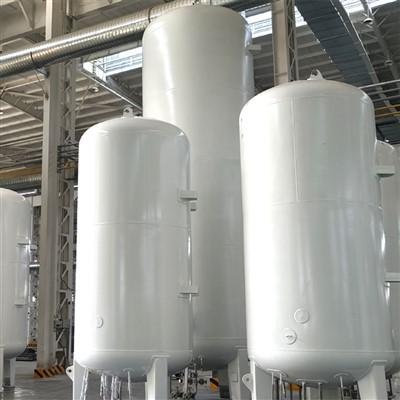
If you’re in the process of specifying a new large scale air separation unit, or you’re looking to upgrade an existing one to meet new certification standards, we’re here to help. We work with clients across every major industry and region, so we can walk you through the specific requirements for your project, design a unit that meets all necessary certifications, and support you through every step from manufacturing to commissioning and beyond. Reach out to our team to start a conversation about your ASU needs today.
Purification System References:
ISO 14101:2018, Cryogenic vessels – Safety requirements for air separation and gas separation plants
ASME BPVC Section VIII: Divisions 1 and 2, Pressure Vessels
Pressure Equipment Regulation (EU) 2014/68/EU
OSHA 29 CFR 1910, Process Safety Management of Highly Hazardous Chemicals
CGA G-4.1-2021, Cleaning Equipment for Oxygen Service
Xinxiang Jiale Intelligent Equipment Co., Ltd.
As one of the leading large scale air separation unit manufacturers and suppliers in China, we also support customized service. Please feel free to buy high quality large scale air separation unit for sale here from our factory. Contact us for more details.
Address: No.3913, 9th Floor, Unit 3, East Commercial and Office Complex, Baolong City Plaza, Hongqi District, Xinxiang City, Henan Province, China
E-mail: cc2397410@gmail.com
WebSite: https://www.jialeasu.com/
