Hey there! I’m a supplier of deep drawn parts, and today I wanna chat about the limitations of deep drawing thin – walled parts. Deep Drawn Parts

Let’s start with what deep drawing is. It’s a manufacturing process where a flat sheet metal is transformed into a three – dimensional shape, like a cup or a box. When it comes to thin – walled parts, we’re talking about parts with a relatively small thickness compared to their overall size.
One of the major limitations is material cracking. Thin – walled materials are more prone to cracking during the deep drawing process. You see, as we draw the material into the desired shape, there’s a lot of stress being applied. The outer surface of the material is stretched, and if the stress exceeds the material’s tensile strength, cracks will form. This is especially true for materials with low ductility. For example, some high – strength steels might be strong, but they don’t stretch very well. So, when we try to deep draw them into thin – walled parts, we often end up with cracked pieces. It’s a real pain in the neck because it means wasted materials and increased production costs.
Another limitation is wrinkling. Wrinkles can occur when the material isn’t properly supported during the deep drawing process. In thin – walled parts, this is even more of an issue. The thin material is more likely to buckle under the pressure. When we’re trying to form a part, if the blank holder force isn’t set correctly, the material can start to wrinkle around the edges or in the middle. And let me tell you, wrinkles are not something our customers want to see. They can affect the functionality of the part and also make it look unprofessional. Fixing wrinkles often requires additional processing steps, which again adds to the cost and time of production.
Springback is also a big problem. After the deep drawing process, the material has a tendency to spring back to its original shape to some extent. This is due to the internal stresses that are built up during the forming process. In thin – walled parts, springback can be more pronounced because the thin material has less resistance to these internal stresses. It means that the final dimensions of the part might not match the design specifications. We have to account for springback when designing the tooling, but it’s not always easy to predict accurately. Sometimes, we end up with parts that are slightly off – size, and that can cause problems when they’re assembled with other components.
Thickness variation is yet another limitation. During deep drawing, the thickness of the material can change. In thin – walled parts, this variation can be more significant. The areas of the part that are stretched more will have a thinner wall thickness, while the areas that are compressed will have a thicker wall thickness. This non – uniform thickness can affect the strength and performance of the part. For example, if a thin – walled part is used in a structural application, the areas with reduced thickness might be more likely to fail under load.
Now, let’s talk about the limitations related to the tooling. The tooling for deep drawing thin – walled parts needs to be very precise. Any small imperfection in the tool can cause problems. For instance, if the die has a rough surface, it can scratch the thin – walled material, which can lead to cracking or other defects. Also, the tooling needs to be designed to handle the specific characteristics of thin – walled materials. The clearances between the punch and the die need to be carefully adjusted. If the clearance is too large, the material might wrinkle. If it’s too small, the material can get stuck or cracked. And let’s not forget about the wear and tear on the tooling. Thin – walled materials can be more abrasive, so the tooling wears out faster. This means we have to replace the tooling more frequently, which is an added cost.
The size of the part also plays a role in the limitations of deep drawing thin – walled parts. Larger thin – walled parts are more difficult to deep draw. The larger the part, the more stress is required to form it, and the higher the risk of cracking and wrinkling. Also, it’s harder to control the material flow in larger parts. We might end up with uneven stretching and compression, which leads to thickness variation and other defects.
The speed of the deep drawing process is another factor. If we draw the material too fast, it can cause problems. In thin – walled parts, the material might not have enough time to flow properly, which can result in cracking or wrinkling. On the other hand, if the process is too slow, it can increase the production time and cost. Finding the right speed is a bit of a balancing act.
Now, despite these limitations, we’ve got some strategies to deal with them. We use high – quality materials that have good ductility to reduce the risk of cracking. We also invest in advanced tooling design and manufacturing techniques to ensure precise forming. We’ve got experienced engineers who can analyze the material flow and predict springback, so we can make the necessary adjustments to the tooling. And we continuously monitor the production process to catch any issues early on.
If you’re in the market for deep drawn parts, don’t let these limitations scare you off. We’ve been in this business for a long time, and we know how to overcome these challenges. We can work with you to design and produce high – quality thin – walled parts that meet your specific requirements. Whether you need a small batch for prototyping or a large – scale production run, we’ve got you covered.
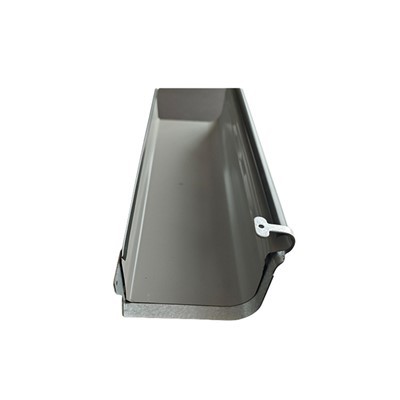
So, if you’re interested in our deep drawn parts, feel free to reach out to us. We’re always happy to have a chat about your project and see how we can help. Let’s work together to create the perfect deep drawn thin – walled parts for your needs.
Stamped Parts References:
- Smith, J. (2018). "Advanced Manufacturing Processes for Sheet Metal". Publisher: ABC Press.
- Johnson, M. (2020). "Challenges in Deep Drawing of Thin – Walled Materials". Journal of Manufacturing Technology, Vol. 15, Issue 2.
Yuyao Aozhou Metal Products Co., Ltd.
We are one of the most experienced deep drawn parts manufacturers and suppliers in China. With a professional production team, we are able to meet the needs of the majority of our customers. Please rest assured to buy customized deep drawn parts made in China here from our factory.
Address: No.6, Nanbailonggang, Wuma Industrial Zone, Lubu Town, Yuyao City
E-mail: xqr-2316@163.com
WebSite: https://www.cnaozhou.com/
