Hey there, it’s Mia from the plate condenser team—been working with these pieces of equipment for 7 years, and one question I get more than any other is: “What’s the right installation height for a plate condenser?” Plate Condenser
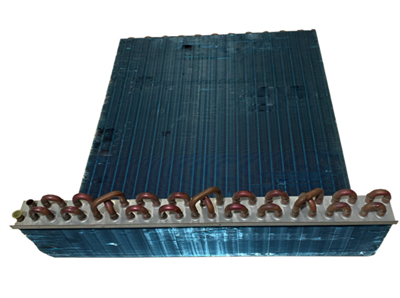
I used to brush this off as a basic spec, but after a customer in Wisconsin called me panicking last year—their new condenser ran 30% below capacity because someone installed it too low— I realized how critical this actually is. It’s not just a random number pulled from a manual; it’s a balance of fluid dynamics, temperature control, and even the type of process you’re running. Today, I’m breaking this down like I do for our new customers, with real-world examples, common mistakes, and the numbers that actually work.
First, let’s get the basics straight. A plate condenser is all about transferring heat from vapor to a cooling medium, right? Whether you’re distilling ethanol in a craft distillery, condensing solvent fumes in a pharmaceutical lab, or capturing volatile organic compounds (VOCs) in a chemical plant, gravity plays a huge role here. Vapor rises, condensed liquid falls— if the height is off, you get liquid backup, vapor loss, or just inefficient heat transfer. That’s why installation height isn’t a “one-size-fits-all” rule; it shifts based on two big factors: the type of condenser (horizontal vs. vertical plates) and your process needs.
Let’s start with the most common: vertical plate condensers, the ones we sell to 60% of our small to mid-sized process customers. For these, the general baseline is 12 to 18 inches above the vapor outlet of your process vessel. Wait, that seems low, I know— but hold on, that’s for standard atmospheric pressure processes. If you’re working under vacuum (super common in fine chemical and food manufacturing), we bump that up. Vacuum means vapor is lighter, moves faster, and needs a little more room to transition into the condenser without picking up condensed liquid and dragging it back (that’s called entrainment, by the way— and it’s a disaster for yield). For vacuum processes, that baseline jumps to 18 to 24 inches. I remember a client in Oregon who made specialty vanilla extracts; they were running under vacuum to preserve flavor, and their initial install was 10 inches above the still. Their yield was 10% lower than projected, and after moving the condenser up 10 inches, they hit exactly their target. No extra cost, just 10 inches of vertical space.
Now, horizontal plate condensers— these are the ones we use for higher-volume, higher-pressure operations, like beer brewing or industrial solvent recovery. The rules here are a bit different because horizontal plates have a larger surface area spread. For horizontal units, the key isn’t just height from the process vessel, but the slope. Most horizontal plate condensers need to be sloped ¼ to ½ inch per foot toward the outlet line— that’s how the condensed liquid flows out easily, no pooling. As for height above the process, we say 18 to 24 inches for standard pressure, and 24 to 30 inches for high-pressure. I had a craft brewery in Colorado call me last year; their horizontal condenser was installed perfectly level, so wort was pooling in the bottom plates and taking twice as long to cool. Once we adjusted the slope and lifted the unit 6 inches, their cooling time dropped by 25%— saved them hours of downtime every batch.
But wait, there’s more than just the process vessel height. You also have to account for the outlet line size. If you have a larger vapor line (say, 4 inches or bigger), you need to add 2 to 3 inches to the height. Why? Because a bigger line holds more vapor, so you need that extra vertical space to prevent velocity drops that cause liquid to back up. Smaller lines (under 2 inches) can stay at the lower end of the range, since they’re smaller and vapor moves through them faster without pooling. Another thing: if you’re adding a demister (that mesh pad that catches any leftover vapor droplets before they exit), you need to add another 2 to 4 inches to the height. The demister needs room to do its job, and if the condenser is too low, the demister won’t work right— you’ll lose product to the vent.
Now, let’s talk about the mistakes I see all the time, because that’s what really drives home why this matters. The biggest one? Installing the condenser too low to save space or cut costs. I mentioned the Wisconsin distillery earlier— they had a tight room around their still, so their contractor insisted on putting the condenser only 8 inches above the outlet. The result: liquid was backing up into the still, so the vapor couldn’t escape, pressure spiked, and they had to shut down operations for half a day to fix it. That cost them way more than the extra 10 inches of space would have. The second mistake? Ignoring gravity for sloped horizontal units. I had another chemical client in Texas who installed their horizontal condenser level, and after a month, the plates started corroding unevenly because the pooled liquid was sitting in one spot, causing pitting. Fixing that required replacing half the plates— a $15,000 mistake, all because of a ½ inch slope.
Wait, what about low-volume, lab-scale plate condensers? I get that too. For these, the height is a bit more flexible, but we still follow the core rule: enough space for vapor to flow without entrainment. For lab units (1 to 5 square feet of plate surface), we recommend 6 to 12 inches above the vapor outlet. But even here, don’t skimp. A pharmaceutical lab client once installed their lab condenser 4 inches above their reactor, and they kept seeing small amounts of solvent in their vent. Once we adjusted it to 8 inches, the entrainment dropped to undetectable levels. Small scale, big impact.
Is there ever a case where you need to adjust this? Of course. If you’re working with a high-boiling-point liquid, the height can be a bit lower, because the vapor condenses faster, so less risk of entrainment. If you’re working with a very volatile liquid (like ether), you might want to add 3 to 5 inches, since the vapor is so light and moves so fast— you need extra room to slow it down so it condenses properly. And if you have a system with multiple process vessels feeding one condenser, you’ll need to calculate the total vapor load and adjust height accordingly— but that’s a conversation for a custom quote, not a one-size-fits-all number.
Another thing I always tell customers: check your manufacturer’s specs first. Every condenser is a little different, based on plate size, flow rate, and pressure rating. For example, our standard line of plate condensers has a spec sheet that lists recommended height based on plate area, and I’m on every call with customers to confirm that number before they install. I’ve seen too many people rely on generic online advice that doesn’t account for the specific unit they bought. The right height isn’t just about following a rule— it’s about matching it to your equipment and your process.
Let’s circle back to why this matters for you, the end user. If you get the height right, you’ll see better heat transfer, higher yield of your product, less downtime, and lower energy costs. If you get it wrong, you’re looking at lost product, unplanned maintenance, and even safety risks (high pressure spikes, for example, are a big no-no in processing). It’s a small detail, but it adds up to a huge difference in your operations.
If you’re installing a new plate condenser, or troubleshooting an old one that’s not performing, don’t guess the height. Reach out— we’ve helped hundreds of customers get this right, from small breweries to large chemical plants. We can walk you through the steps, adjust based on your specific process, and even offer on-site support if you’re local.
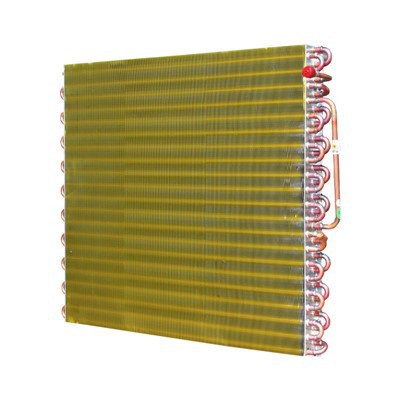
If you have questions about plate condenser installation, need help calculating the right height for your system, or want to learn more about our condenser line, reach out to our team to connect for a procurement conversation. We’re here to make sure your process runs smoothly, no headaches, no lost yield, no unnecessary costs.
Evaporator Now, for the references I’ve relied on over the years to make sure this advice is accurate, not just my 7 years of on-the-ground experience:
Perry’s Chemical Engineers’ Handbook, 8th Edition
ASHRAE Handbook: HVAC Systems and Equipment, 2020
Vapor-Liquid Separation: Principles and Practice, 1st Edition
International Society of Beverage Technologists (ISBT) Guidelines for Craft Brewery Process Equipment Installation
Distillation Operation and Application, 2nd Edition.
Xiangshui Derkang Refrigeration Equipment Co., Ltd.
Address: No. 2, Xiaojian Town Entrepreneurship Park, Xiangshui County
E-mail: 505745223@qq.com
WebSite: https://www.xsderk.com/
