Hey everyone, it’s Mia from [your supplement ingredient supplier name]—and let’s cut to the chase: I get this question at least twice a week from our clients, small brand owners, and even some home bakers who mix their own pre-workout blends. “Do dietary supplement ingredients actually expire?” The short answer is yes, but if you’ve ever dug into how we source, test, and store bulk ingredients at our facility, you’ll know it’s way more nuanced than the date on a random vitamin bottle you grab at the drugstore. Dietary Supplement Ingredient

I used to work in a retail supplement shop back in college, and I’d laugh (on the inside) when a customer would say, “My protein powder’s ‘expired’ by three months so I’m tossing it”—like, bro, that stuff’s just ground plant matter and amino acids, and we’re not talking milk here. But as I moved into ingredient sourcing full-time, I realized the line between “expired” and “still potent” isn’t just a marketing gimmick—it’s science, and it changes depending on what ingredient we’re dealing with.
Let’s start with why ingredients even go “bad” in the first place. Unlike prescription drugs that degrade into something harmful, most supplement ingredients lose their potency over time, or can get contaminated if stored wrong. The big culprits? Oxidation, moisture, and microbial growth. For example, omega-3 fatty acids (like fish oil or ALA from chia) are super prone to oxidizing—they go rancid, and that’s not just a weird fishy taste; it means the anti-inflammatory benefits you bought them for are basically gone. Then there’s things like vitamin C, which breaks down when exposed to heat or light, so if we ship a bulk vitamin C powder in a flimsy bag that gets left in a truck in the sun, its shelf life is cut in half.
Here’s the thing no one talks about: the “expiration date” on a bulk supplement ingredient isn’t a one-size-fits-all number. When we source ingredients, we run our own stability tests before setting a suggested shelf life—not just the testing from the supplier we buy from. For example, when we got a batch of organic ashwagandha root powder last quarter, the initial supplier said it has a 24-month shelf life, but after we stored it in our climate-controlled warehouse (60-70°F, 40-50% humidity, no direct light) for 12 months, we tested the withanolides (the active compound in ashwagandha) and it was still at 98% of its original potency. But if that same ashwagandha was stored in a hot garage for six months? We’d be seeing that potency drop to 70% or lower.
I also get a lot of questions about ingredients that “look fine” but are actually done. Last month, a client sent us a bag of what they thought was creatine monohydrate that had expired—they said it looked totally normal, no clumps, no weird smell. We tested it, and yep, the creatine had converted to creatinine, which doesn’t do anything for muscle performance. That’s the tricky part with powdered creatine: it doesn’t look like it’s gone bad, but its molecular structure changes over time, especially if there’s even a tiny bit of moisture in the bag. So that “fine” looking powder could be basically useless, even if it’s not moldy or smelly.
Another big one: pre-workout ingredients. Things like caffeine anhydrous and beta-alanine—those are pretty stable, right? Wait, no, not always. If a pre-workout blend has citrulline malate, that can break down when mixed with other ingredients that have a lower pH, and suddenly that “pump you in 10 minutes” ingredient is sitting there, inactive. We had a small brand reach out last year because their 6-month old pre-workout was selling but customers said it “did nothing”—turns out, they were storing their bulk citrulline malate in a non-airtight container in a hot back room, so half the compound was degraded before they even mixed it into their finished product.
Now, as an ingredient supplier, how do we handle this? We don’t just slap a date on a bag and ship it. Every bulk ingredient we send out has a “best by” date based on our in-house stability testing, and we print the lot number on every bag so if there’s ever a question, we can pull the test results for that exact batch. We also include storage instructions on every label: “keep in a cool, dry place, avoid direct sunlight, reseal after opening” (even for unopened bulk bags—if you leave a pallet in a truck for three days in July, that’s already cutting into the shelf life).
But here’s a pro tip for anyone working with supplement ingredients: don’t just go by the date. Test a small batch when you get it, and then every 6 months after that if you’re storing it long-term. We offer free mini-testing for our regular clients, because we know how expensive it is to source good ingredients, and no one wants to toss a whole pallet because of a random date. Also, some ingredients can be used beyond the “best by” date if stored correctly—we’ve had clients use omega-3s that were 3 months past the date, stored in our climate-controlled warehouse, and they still tested at 90% potency. But if they were stored in a hot, humid place? We’d tell them to toss it.
Wait, let’s clear up a myth too: the FDA doesn’t require supplement ingredients to have expiration dates, which is why some small brands might skip it or put a super long date to sound “fresh.” That’s why it’s so important to buy from a supplier that does their own testing, not just relies on what the raw material supplier says. We see this all the time—brands that buy cheap, untested ingredients from overseas get a “36-month shelf life” date, but when we test those 12 months later, the potency is already down 40%.
I also want to talk about the difference between bulk ingredients and finished products. A finished vitamin bottle has expiration date for a reason: once you mix all the ingredients, package it, and add fillers or binders, the stability changes. But as an ingredient supplier, our job is to send you raw, unadulterated ingredients that last as long as possible, so you can make a finished product that’s actually effective.
Let me share a recent example that stuck with me. A client reached out panicking because they had a batch of turmeric extract that was 2 months past its “best by” date, and they were scared to use it because they thought it was toxic. We tested it, and the curcumin content was still at 92%—totally fine to use. The only issue was, if they let it sit another 6 months in their hot warehouse, the curcumin would drop to 60%, and the anti-inflammatory benefit would be almost gone. That’s the thing most people miss: it’s not about toxicity, it’s about effectiveness. Most expired supplement ingredients won’t hurt you, they just won’t work like you paid for.
So, what should you do if you’re working with supplement ingredients? First, check the storage instructions—if it’s a powdered ingredient, airtight containers in a cool, dark place are non-negotiable. Second, don’t just trust the date, ask for test results if you’re unsure. Third, if you have an ingredient that’s past its date and you’re wondering if it’s still good, send us a sample (we can even help with that) and we’ll run a quick potency test for a small fee.
At the end of the day, I get that everyone’s looking for simple answers—like, “can I use this ingredient after 12 months?” But the reality is, it depends on the ingredient, how it’s stored, and how you test it. As someone who’s in the thick of this every day, I can tell you that skipping proper storage and testing is a quick way to end up with a finished product that doesn’t work, which is bad for you, bad for your brand, and bad for the people counting on your supplements.
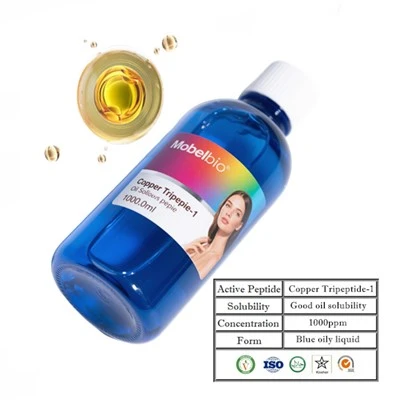
If you’re a brand owner, a formulator, or someone who just needs reliable supplement ingredients with clear, science-backed dates, hit us up. We’re not the biggest supplier out there, but we test every batch, label every bag with clear storage tips, and we’ll never send you something that’s past its prime. Let’s chat about your ingredient needs, whether you’re sourcing a small batch for a new product or a bulk order for your growing brand.
Collagen Booster Peptide References
- Journal of Dietary Supplements, "Stability Testing of Dietary Supplement Ingredients: A Review of Current Methods and Regulatory Considerations"
- National Center for Complementary and Integrative Health, "Understanding Expiration Dates on Dietary Supplements"
- Food and Drug Administration, "Quality Assurance in Dietary Supplement Ingredient Sourcing and Storage"
- Journal of Agricultural and Food Chemistry, "Oxidative Stability of Omega-3 Fatty Acid Supplement Ingredients Under Different Storage Conditions"
- USP Dietary Supplement Verification Program, "Best Practices for Ingredient Shelf-Life Determination"
Mobel Biomaterials Technology Co., Ltd.
As one of the most professional dietary supplement ingredient manufacturers and suppliers in China, we have world-leading production equipment and strong manufacturing capabilities. Please rest assured to buy bulk high quality dietary supplement ingredient made in China here from our factory. For more cheap products, contact us now.
Address: 25 No.Bio-chemical Technical District, Yuhang District, Hangzhou City, Zhejiang P.R China 310001
E-mail: service@mobelbiochem.com
WebSite: https://www.mobelbiochem.com/
